Home > Guides > Architecture Guides > Richmond > Loft Conversions in Richmond upon Thames: Design Ideas, Planning Permission & Costs (2026 Guide)
Loft Conversions in Richmond upon Thames: Design Ideas, Planning Permission & Costs (2026 Guide)
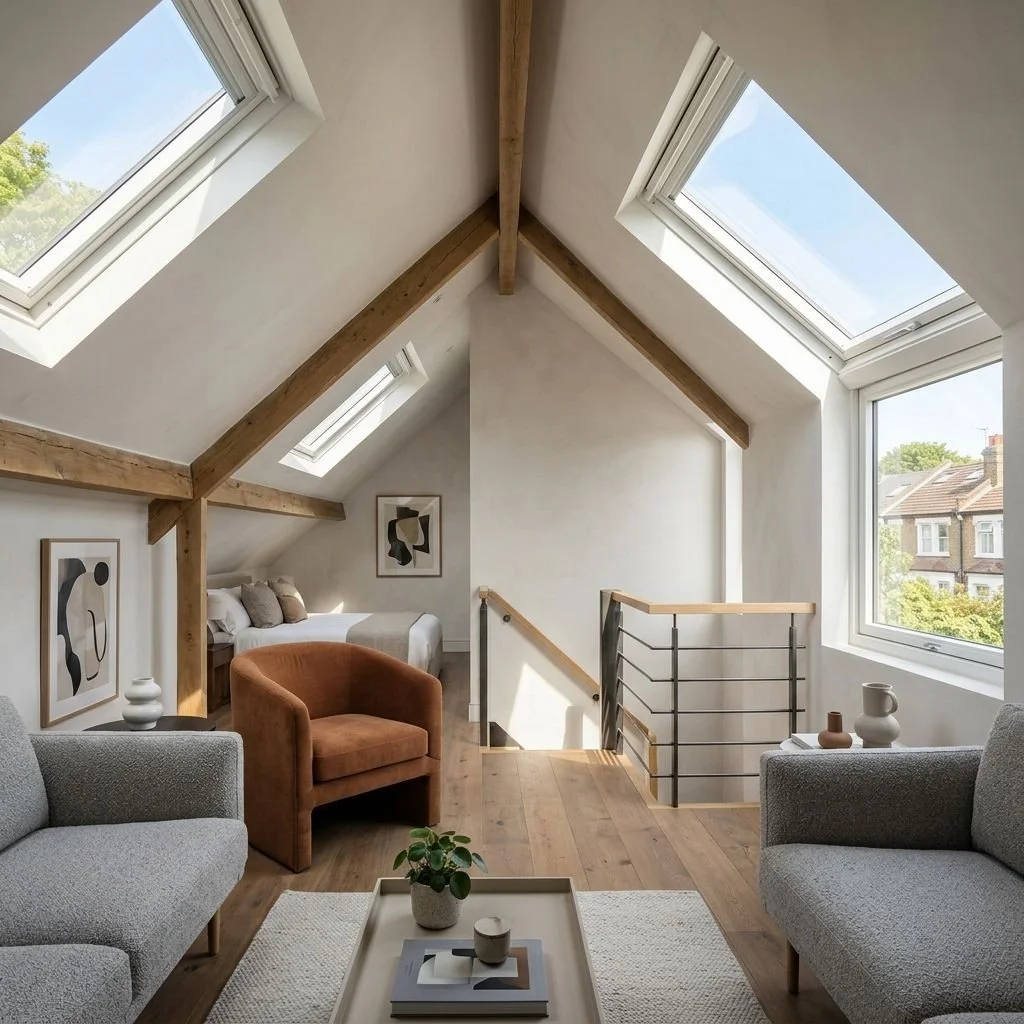
Understanding Loft Conversions Across the London Borough of Richmond upon Thames
Homeowners across the London Borough of Richmond upon Thames are increasingly choosing loft conversions as a practical alternative to moving home. Whether you own a Victorian terrace in Twickenham, an Edwardian property in Barnes, a riverside home in Richmond, a semi-detached house in Hampton, or a family home in Teddington, converting an unused roof space can provide valuable additional accommodation without extending into the garden.
With property prices remaining strong across the borough, many homeowners are choosing to improve rather than relocate. A well-planned loft conversion makes better use of existing space while enhancing how a property functions for modern family life. From creating an additional bedroom and en-suite to a home office, guest suite or flexible family room, a loft conversion can adapt to changing needs while making the most of the home's existing footprint.
The London Borough of Richmond upon Thames contains an exceptionally varied housing stock, including Victorian and Edwardian terraces, Georgian townhouses, 1930s semi-detached homes, detached family houses and riverside properties. Many of these homes have roof structures that are well suited to conversion, although each property presents its own design, structural and planning considerations.
As an architecture firm working on residential projects throughout Richmond upon Thames and South West London, Artist of Architecture helps homeowners assess the potential of their roof space, navigate planning requirements and develop designs that respond to the character of both the property and its surroundings.
This guide explains everything homeowners need to know about loft conversions across Richmond upon Thames, including the different conversion types, typical costs in 2026, planning permission, Building Regulations, design ideas and the factors that influence a successful project.
Why Loft Conversions Remain Popular Across Richmond upon Thames
Loft conversions continue to be one of the most popular home improvement projects throughout Richmond upon Thames. Rather than sacrificing valuable outdoor space with a rear extension or facing the significant expense of moving house, many homeowners choose to unlock the potential already available within their roof.
The borough's housing stock makes this particularly attractive. Many Victorian, Edwardian and early twentieth-century homes were constructed with generous roof voids that can often accommodate a loft conversion with relatively limited alterations to the existing structure.
Homeowners across Richmond, Barnes, East Sheen, Kew, Twickenham, Hampton and Teddington are investing in loft conversions for several reasons:
Rising property prices make moving increasingly expensive.
Many properties already have suitable roof height for conversion.
Additional accommodation can better support growing families.
Hybrid working has increased demand for dedicated home offices.
A well-designed conversion can improve both functionality and long-term property value.
Existing gardens remain unaffected.
Many projects can proceed under Permitted Development Rights, depending on the property.
Rather than viewing the loft as unused storage, homeowners increasingly see it as an opportunity to create an integral part of the home.
What Is a Loft Conversion?
A loft conversion transforms unused roof space into habitable accommodation that complies with current Building Regulations. While every property is different, most projects involve strengthening the existing floor structure, improving insulation, installing new windows, creating safe staircase access and upgrading fire protection throughout the property.
The completed space should feel like a natural continuation of the home rather than an isolated upper floor.
Common uses include:
Principal bedroom with en-suite bathroom
Additional family bedroom
Guest accommodation
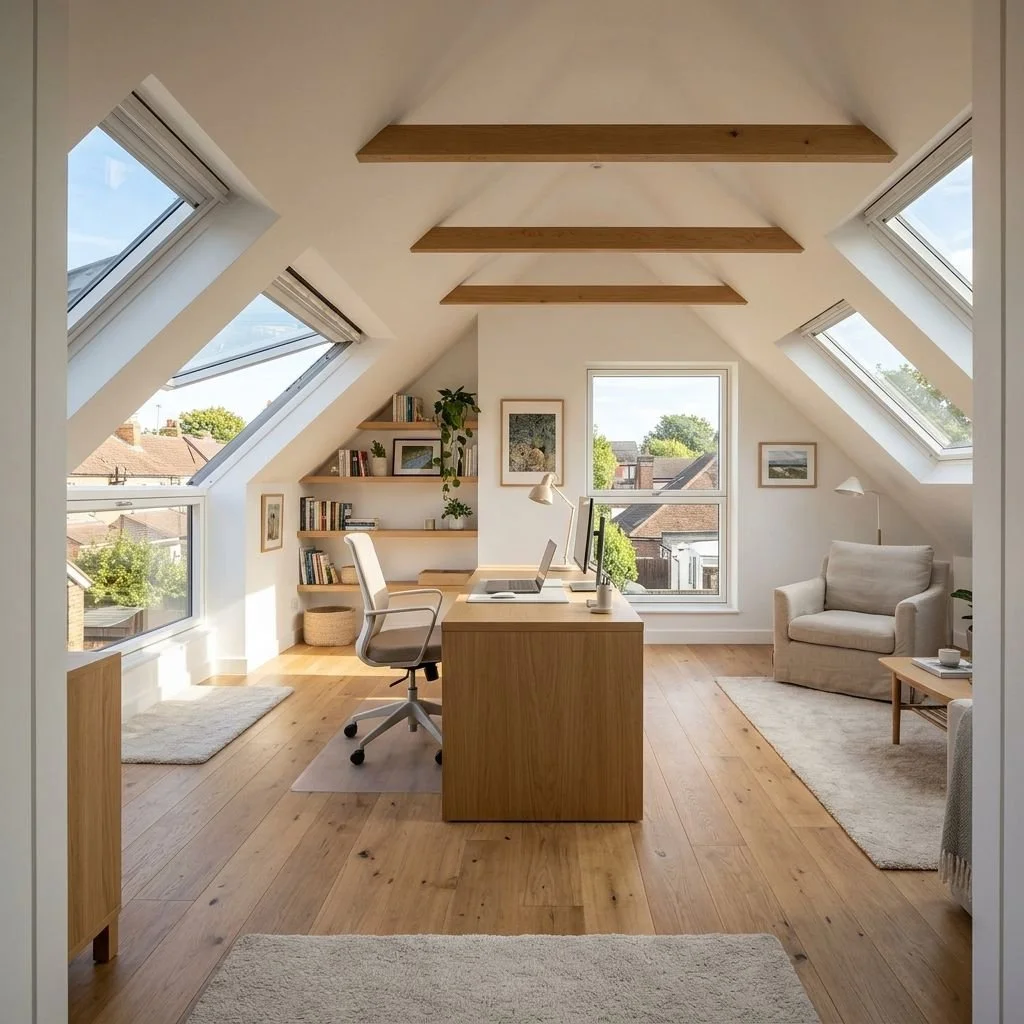
Home office
Children's bedroom
Study
Creative studio
Gym
Cinema room
Flexible multi-purpose room
The most successful loft conversions are carefully planned around the existing structure, natural light, circulation and storage rather than simply creating additional floor area.
Is Your Home Suitable for a Loft Conversion?
Not every property is identical, but many homes across Richmond upon Thames are excellent candidates for loft conversions.
Several factors influence suitability.
Existing Roof Height
One of the most important considerations is the available head height.
As a general guide, a roof should provide approximately 2.2 metres or more between the top of the existing ceiling joists and the underside of the ridge beam to allow a practical conversion. Roof spaces with less headroom may still be suitable, but they often require more extensive structural alterations, which can increase both complexity and cost.
Planning Portal – Planning a Loft Conversion (2.2m guidance) →
This is because, once the new floor structure, insulation and ceiling finishes have been installed, the completed loft should ideally provide a clear internal ceiling height of around 2 metres. While Building Regulations do not specify a minimum ceiling height for habitable rooms, 2 metres is widely regarded as the industry benchmark for creating a comfortable and practical space.
Roof Structure
Older homes typically have traditional cut roofs constructed with rafters and purlins. These often provide greater flexibility during the design process.
Many properties built from the 1960s onwards use prefabricated trussed roofs, which require additional structural work but can still be converted successfully.
Property Type
Across Richmond upon Thames, common property types include:
Victorian terraces in Twickenham and East Sheen
Edwardian family homes in Kew
Georgian townhouses around Richmond Green and Richmond Hill
Semi-detached homes in Hampton and Whitton
Detached family houses in Teddington
Riverside properties overlooking the Thames
Modern developments throughout the borough
Each property type presents different opportunities for creating additional accommodation within the roof space.
Types of Loft Conversions
Selecting the appropriate loft conversion depends on the property's roof form, planning constraints, structural layout and the amount of additional accommodation required.
Dormer Loft Conversion
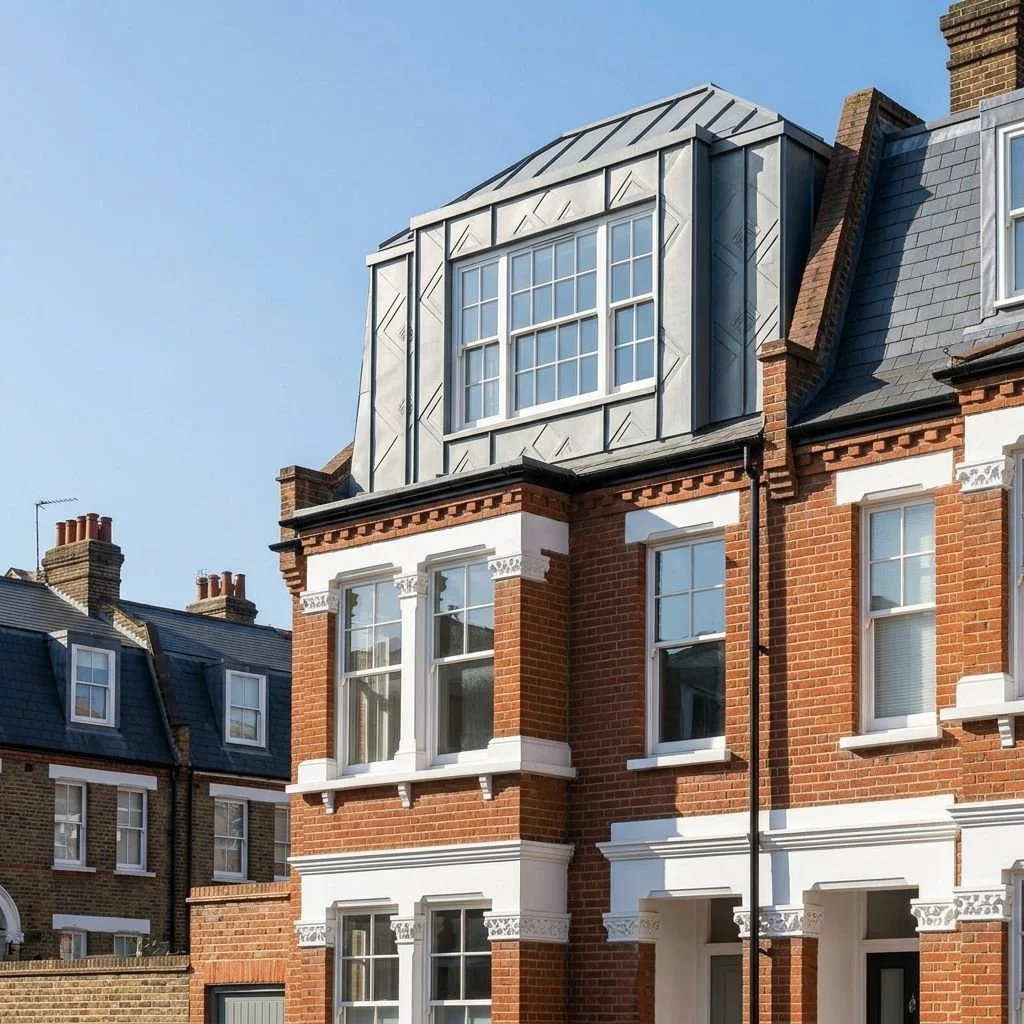
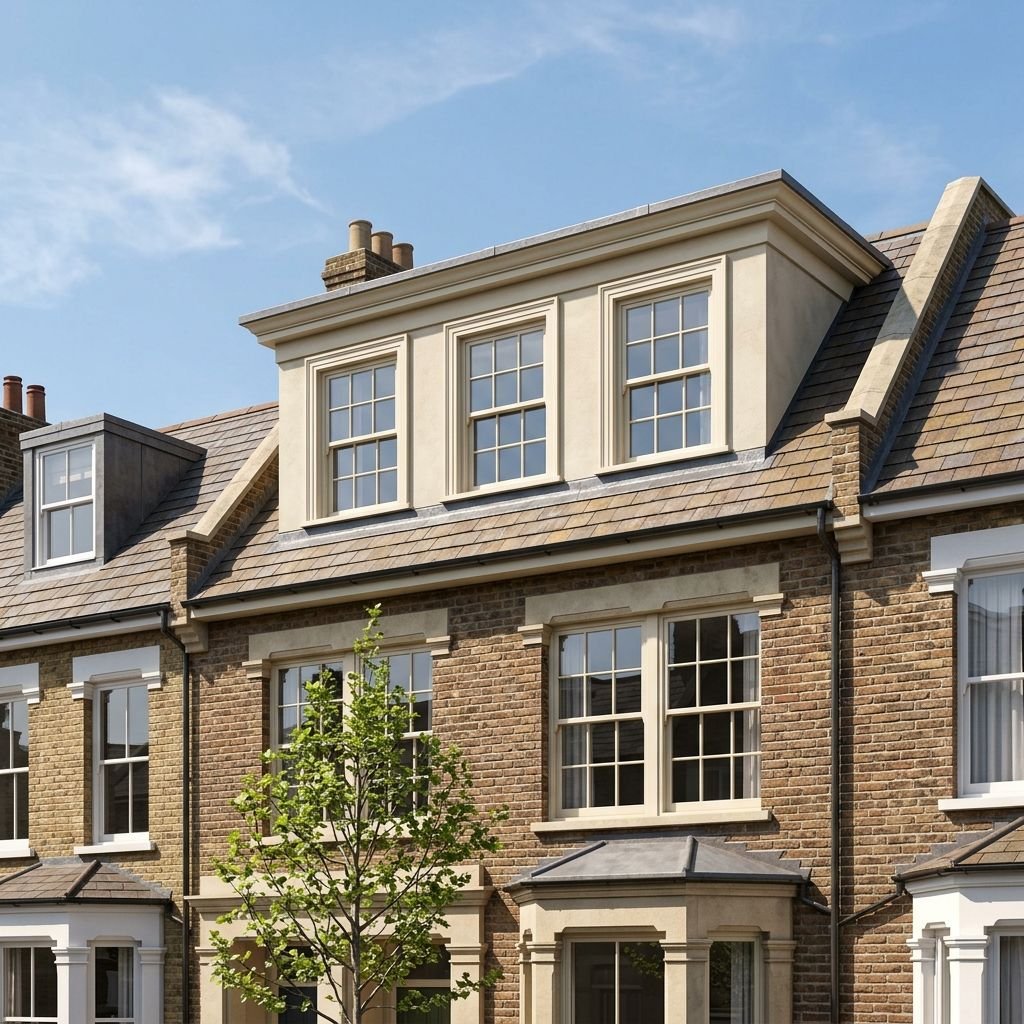
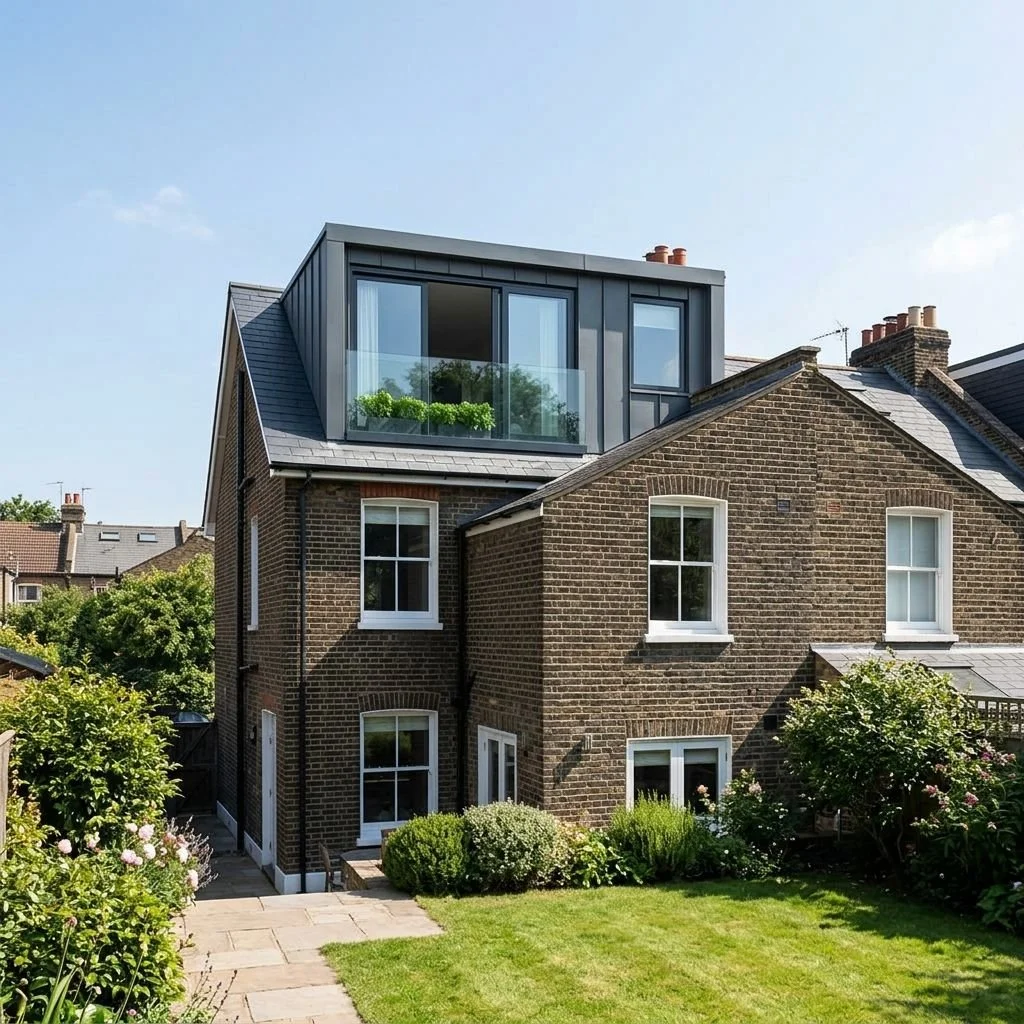
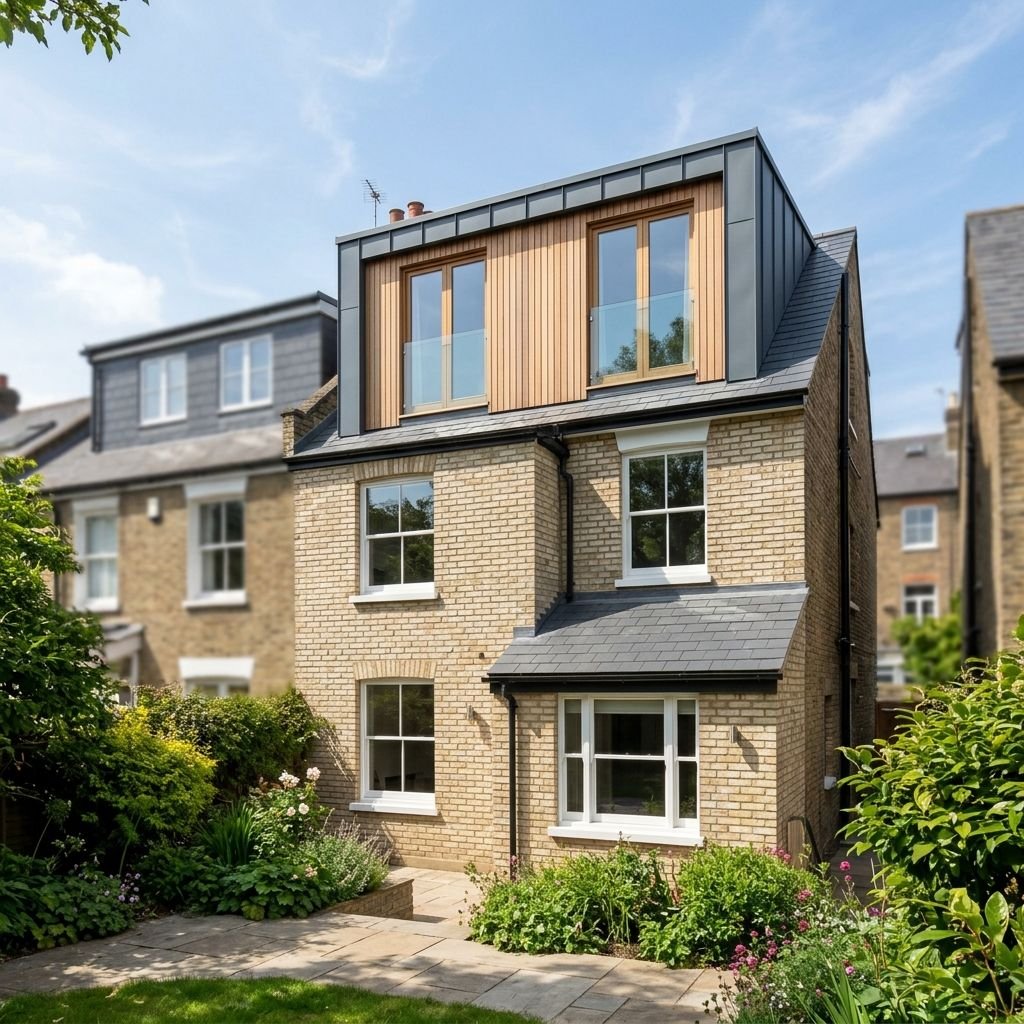
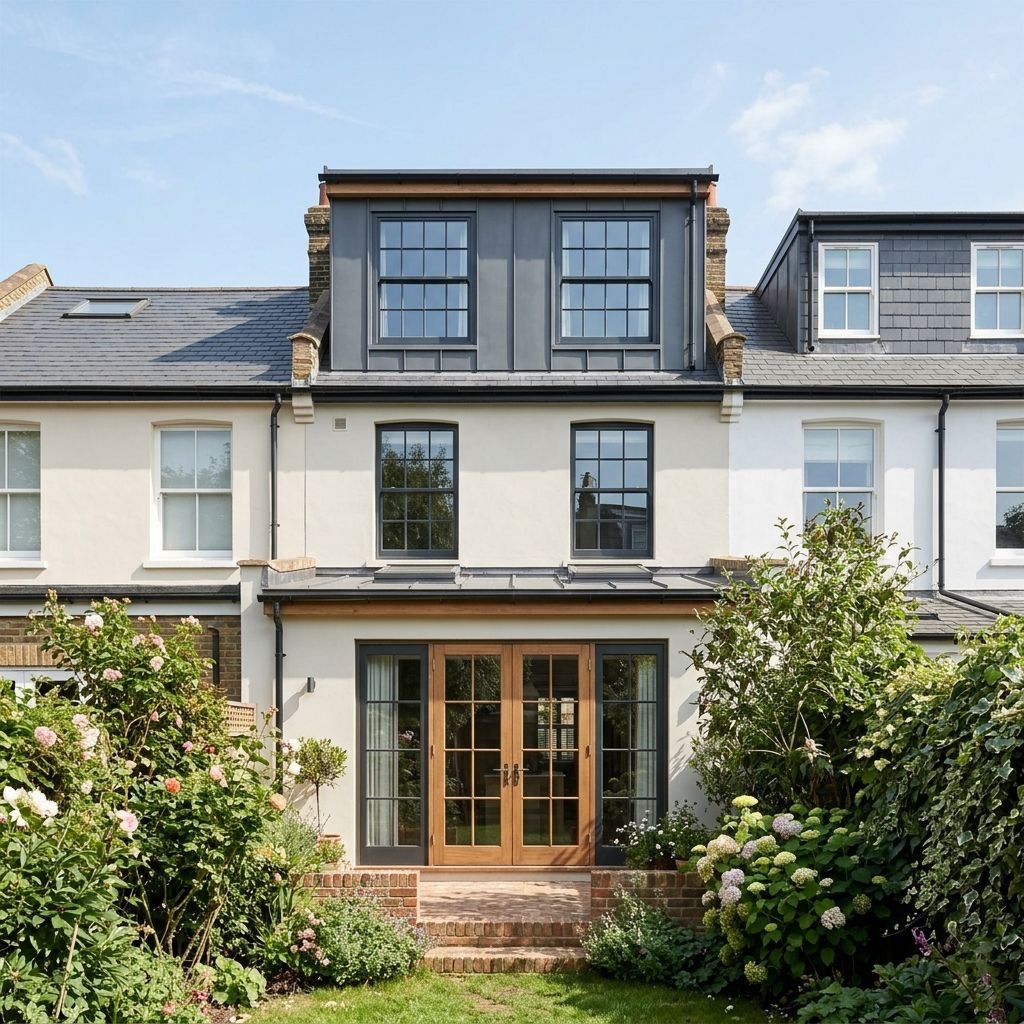
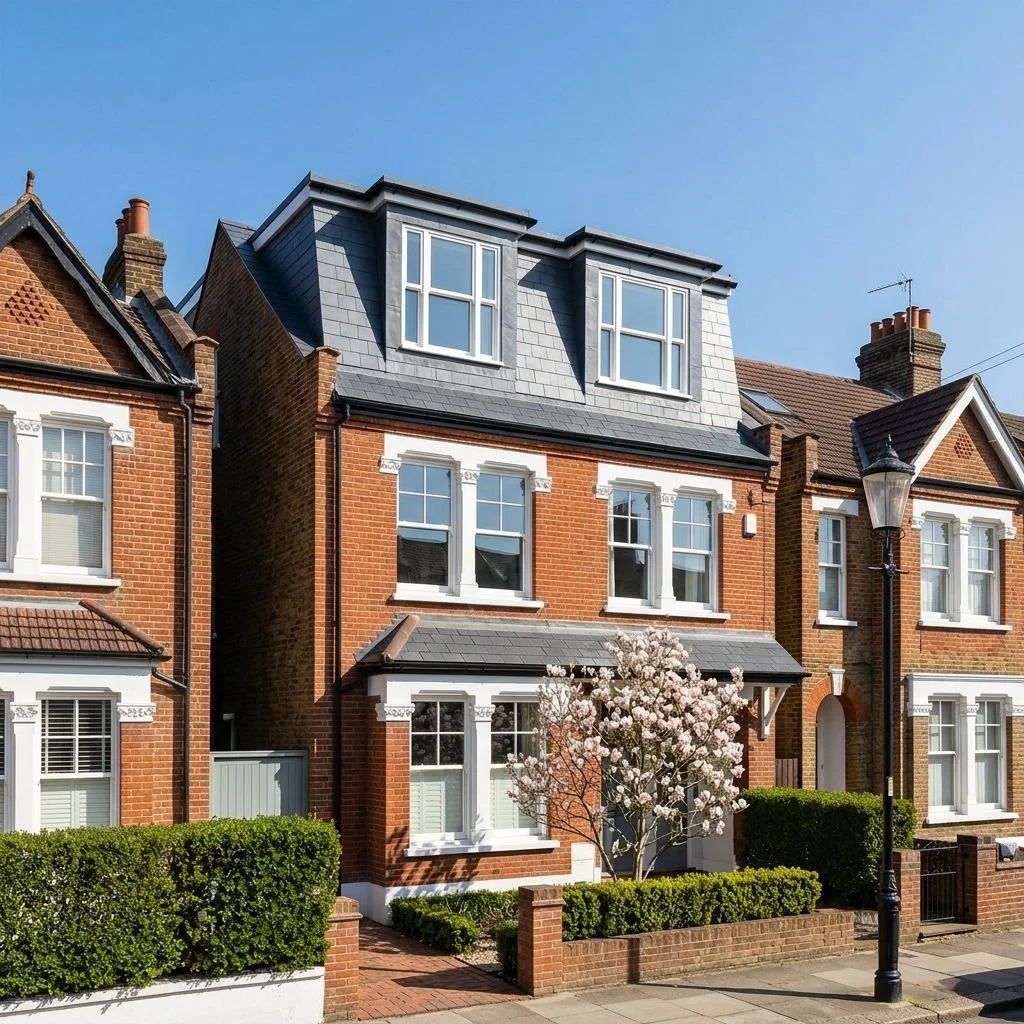
Dormer loft conversions are one of the most popular ways to create additional roof space across the London Borough of Richmond upon Thames. Suitable for many Victorian, Edwardian and 1930s homes, they provide increased headroom and a more flexible internal layout while often qualifying under Permitted Development Rights. Our Dormer Loft Conversion Design Service → explains the design process, planning considerations and technical approach we use for residential projects.
See how these principles were applied in our Loft Conversion Adding a Principal Suite in Twickenham →
A dormer projects vertically from the existing roof slope, creating additional headroom and allowing more efficient room layouts.
Dormer conversions are particularly suited to:
Victorian terraces
Edwardian houses
Mid-terrace properties
Semi-detached homes
End-of-terrace houses
Typical advantages include:
Increased head height
Larger usable floor area
Greater flexibility for furniture layouts
Improved opportunities for en-suite bathrooms
Excellent natural daylight
Often suitable under Permitted Development Rights
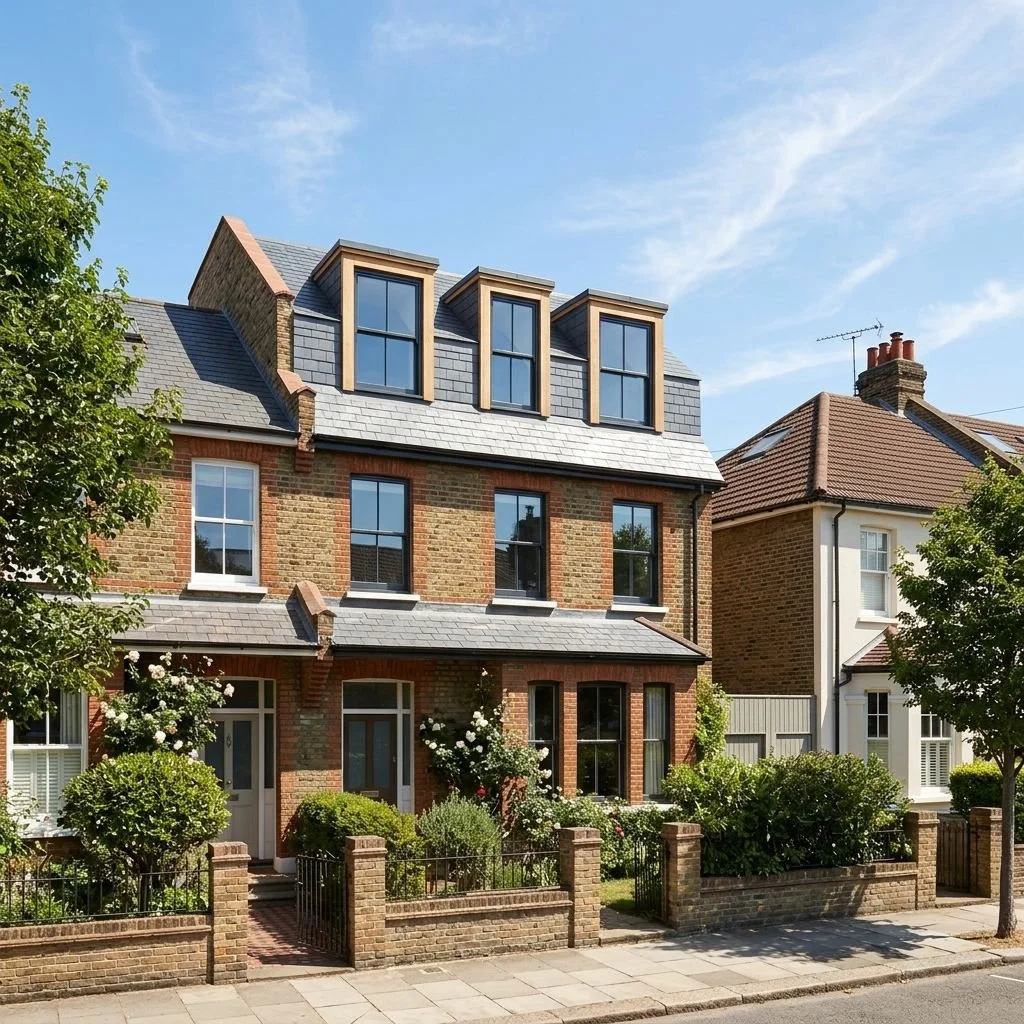
Rear dormers are generally more common than front-facing dormers, particularly within conservation areas where preserving the street scene is an important planning consideration.

Hip-to-Gable Loft Conversion
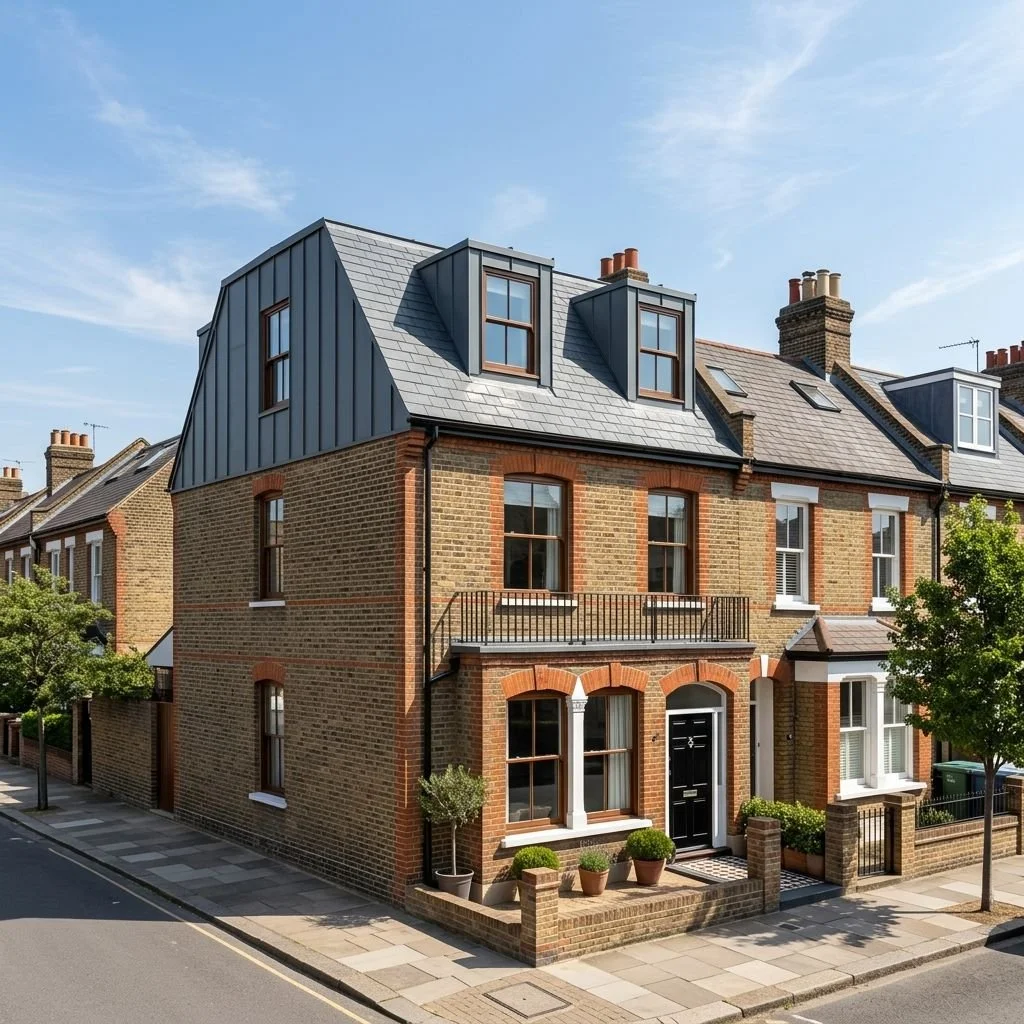
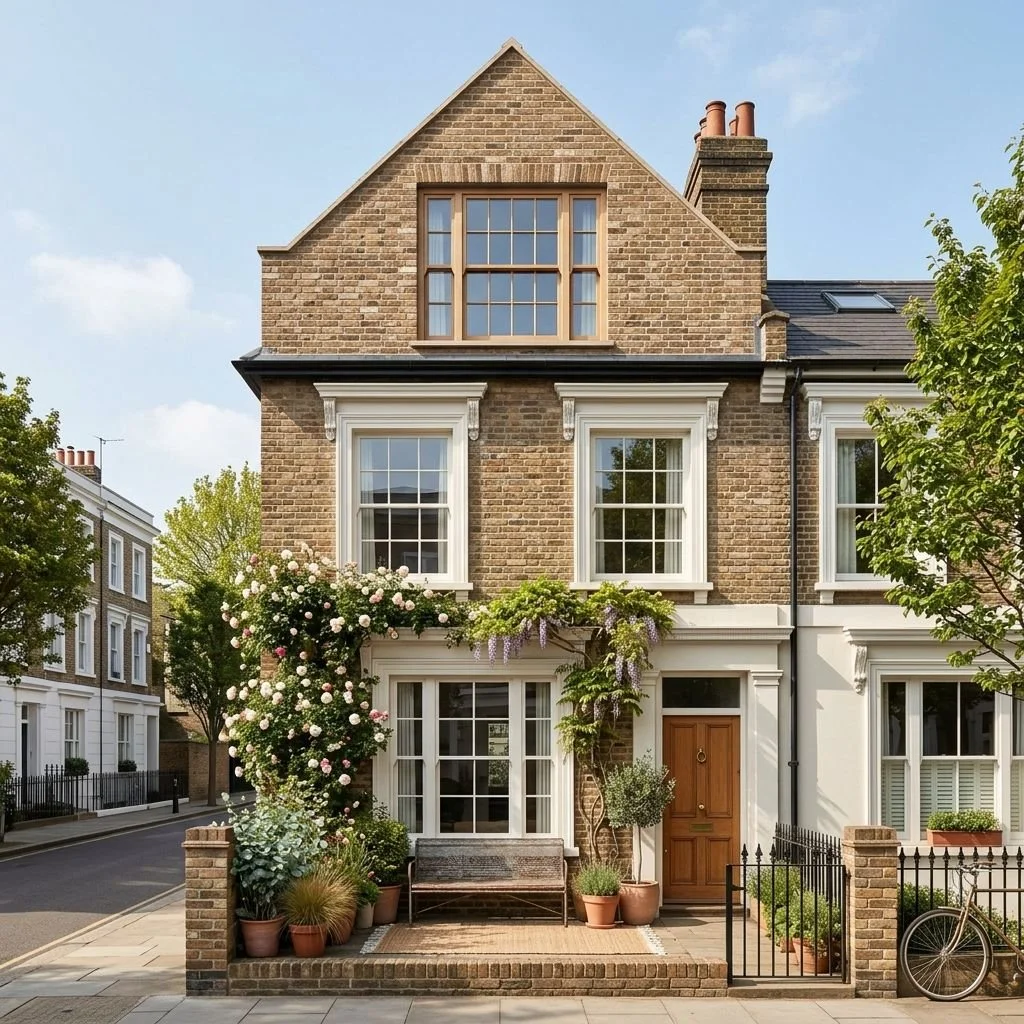
Hip-to-gable loft conversions are a popular choice for semi-detached, end-of-terrace and detached homes across the London Borough of Richmond upon Thames, creating substantially more usable roof space while maintaining a balanced external appearance. Our Hip-to-Gable Loft Conversion Design Service → explains the design process, planning considerations and technical approach we use for residential projects.
See how these principles were applied in our Loft Conversion in Barnes →
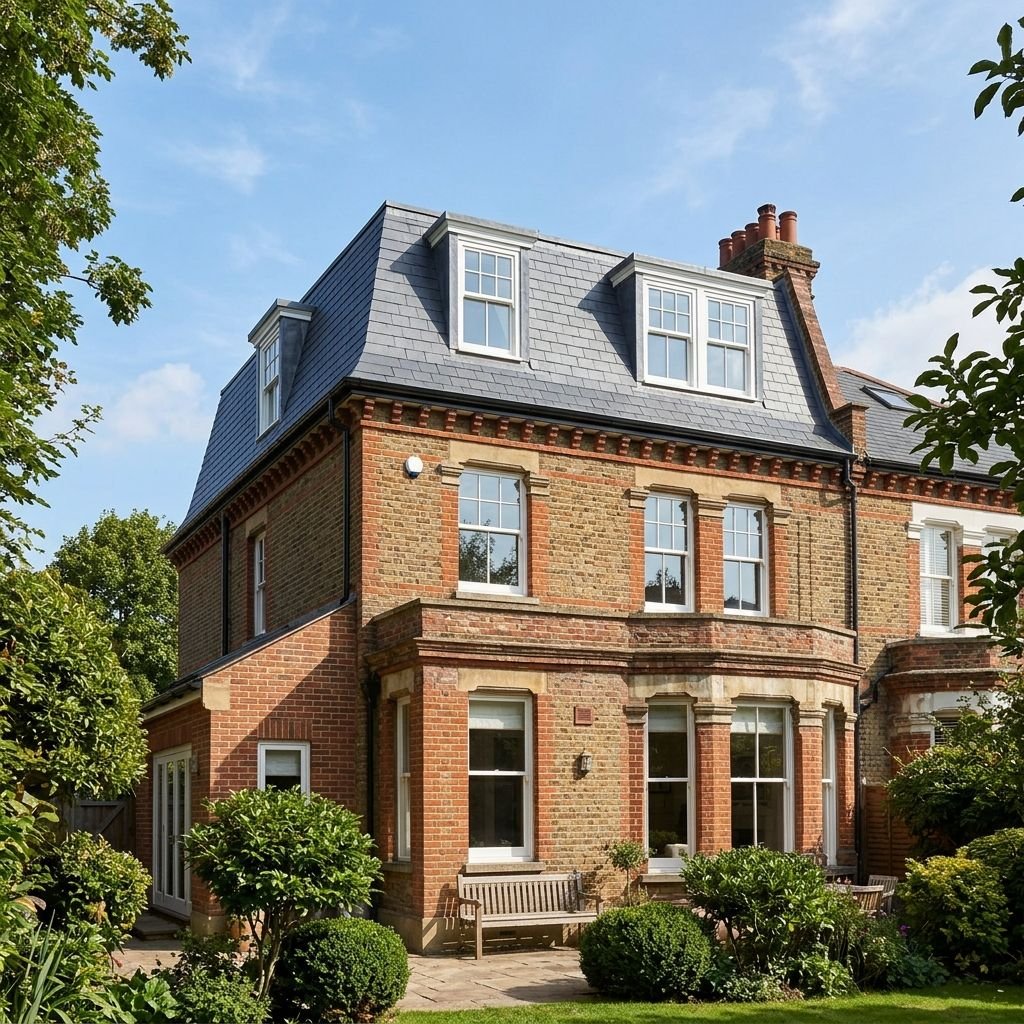
Hip-to-gable loft conversions are particularly effective on properties with hipped roofs, where one side of the roof slopes down towards the external wall.
The conversion extends this sloping roof into a full-height gable wall, creating substantially more internal volume.
This option is frequently suitable for:
Semi-detached houses
End-of-terrace homes
Detached properties
1930s family houses
Benefits include:
Significant increase in usable space
Improved room proportions
Better staircase positioning
Greater flexibility for additional bedrooms
Can often be combined with a rear dormer for maximum space
Many homes in Hampton, Teddington and Whitton are particularly well suited to this type of conversion.
Mansard Loft Conversion
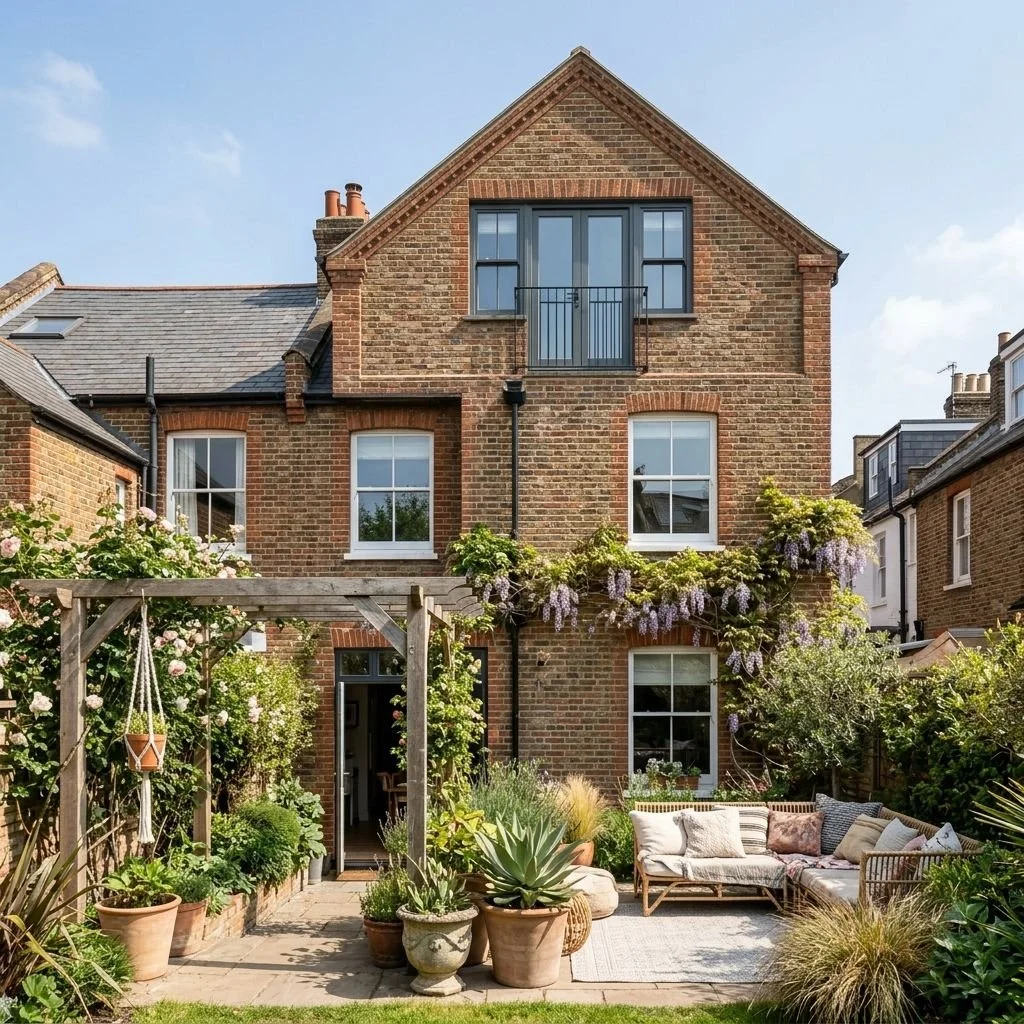
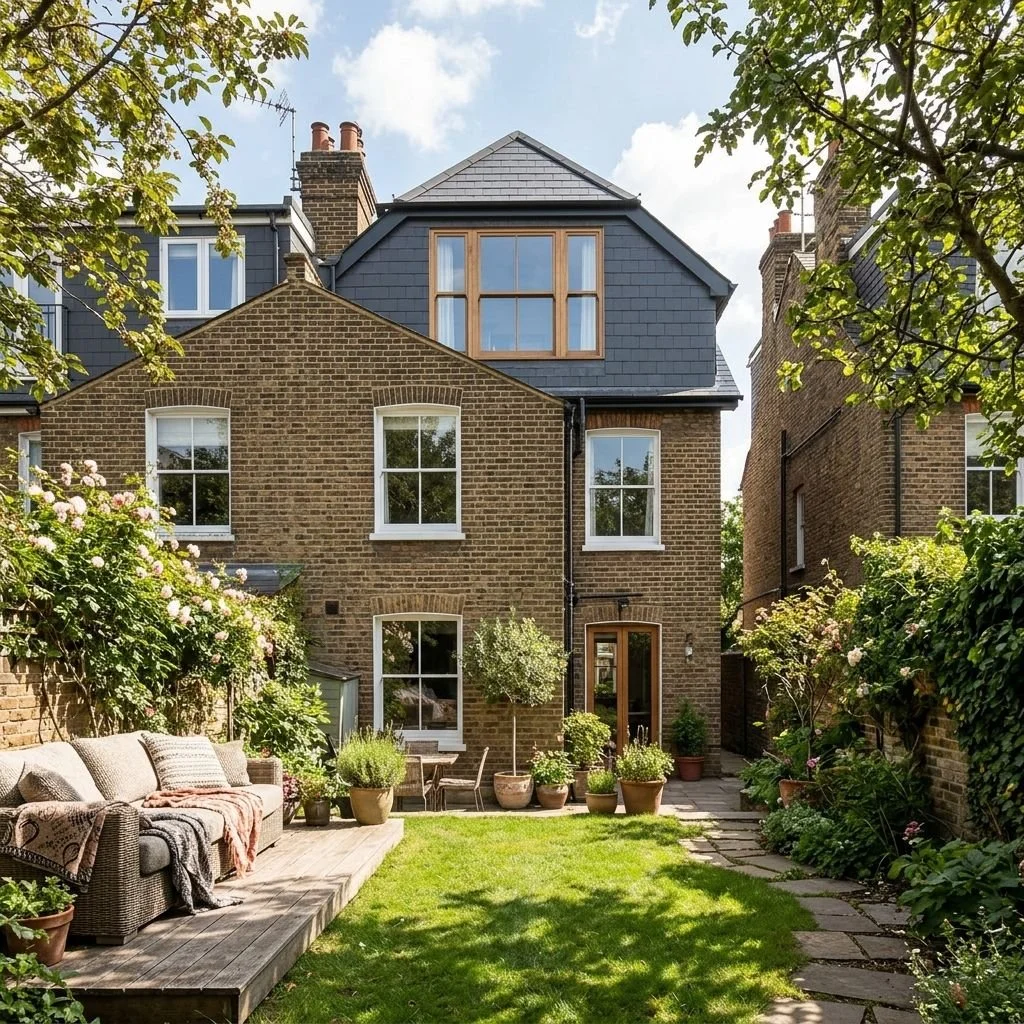
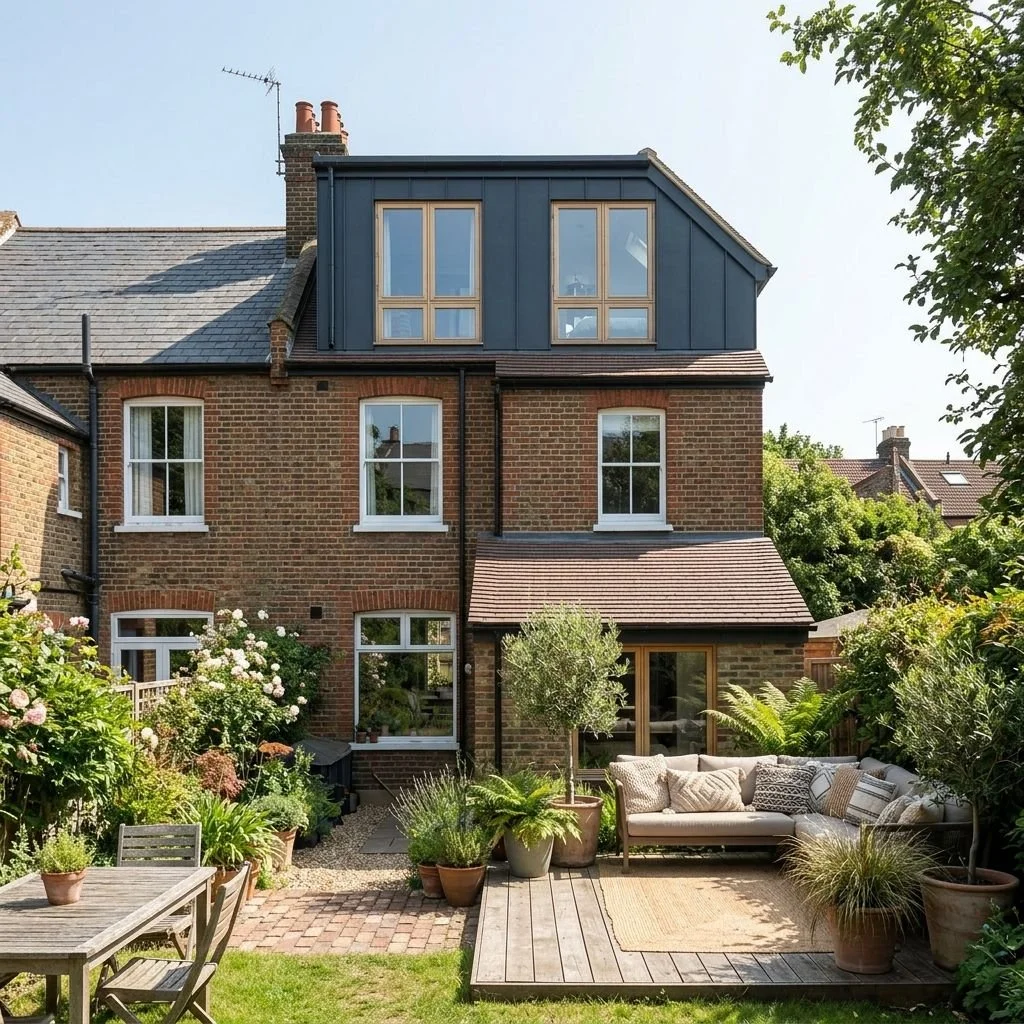
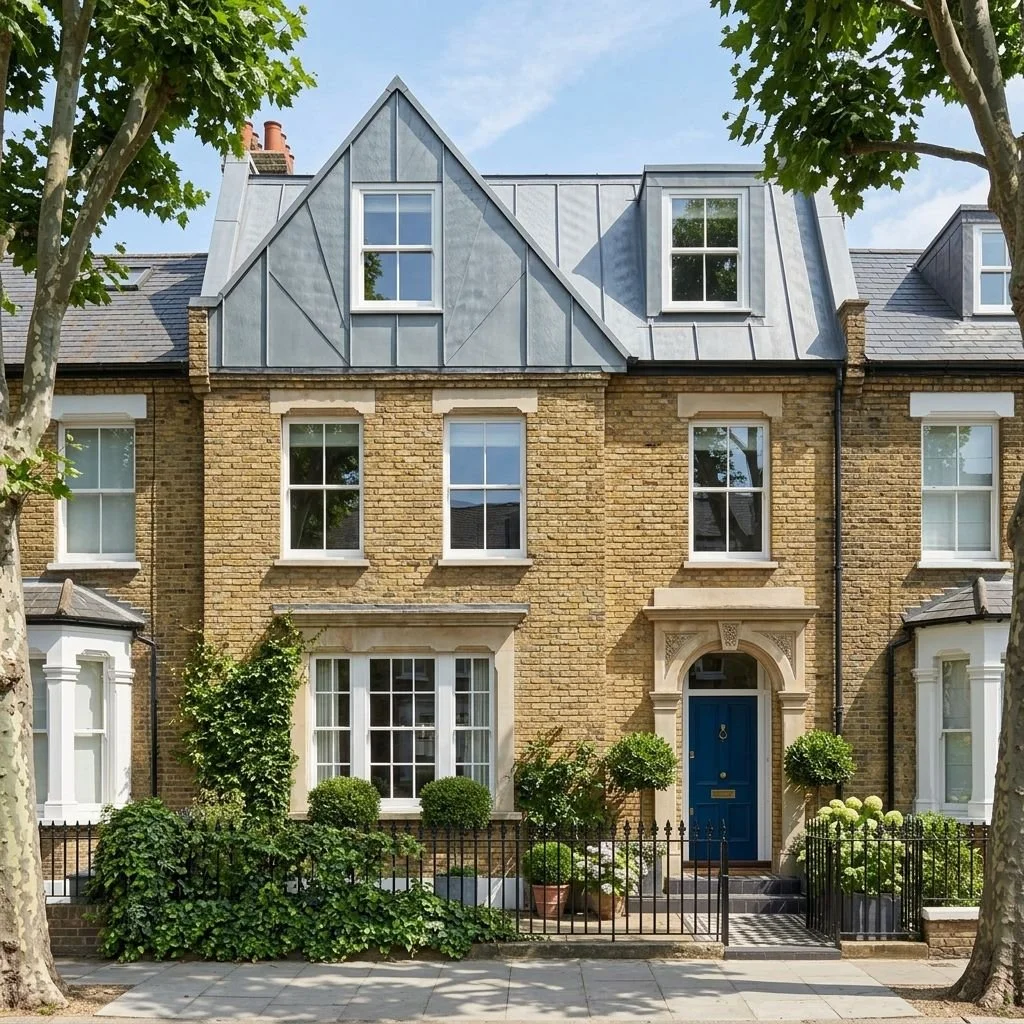
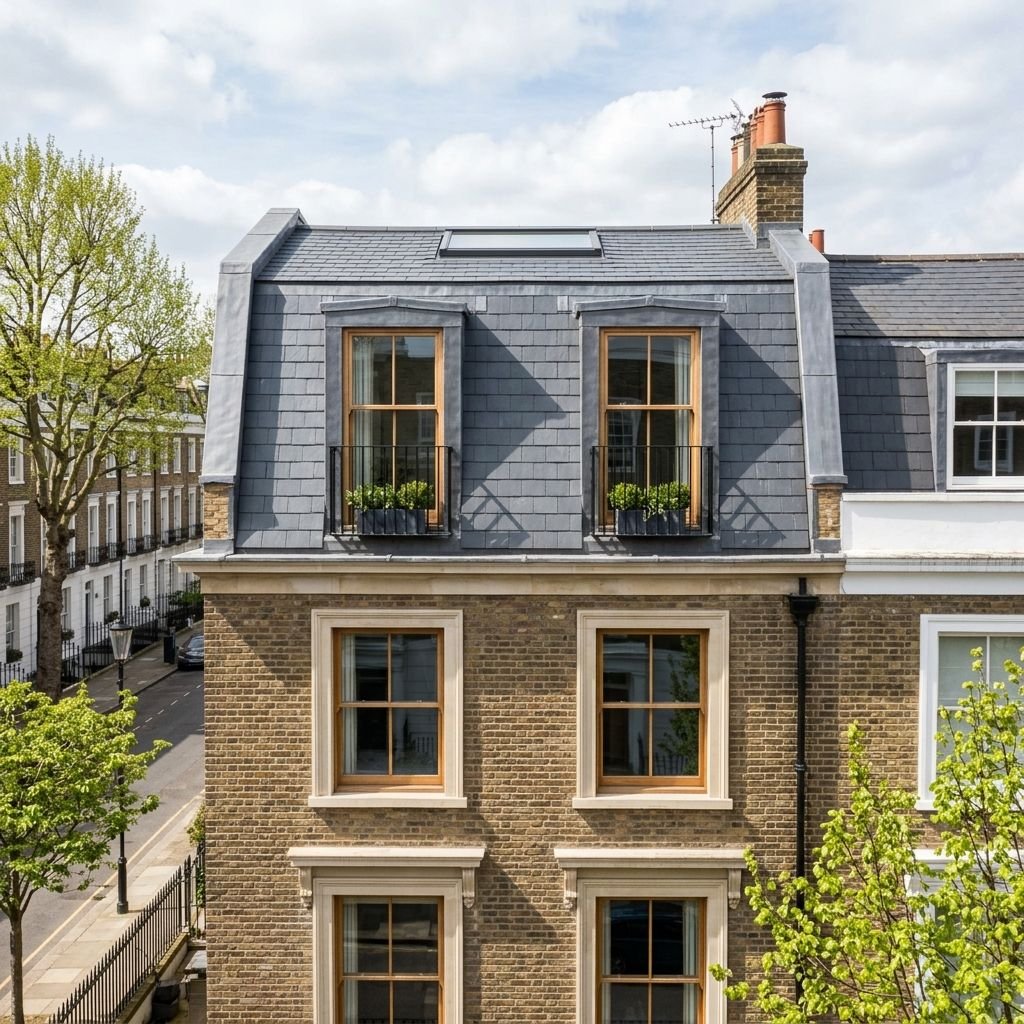
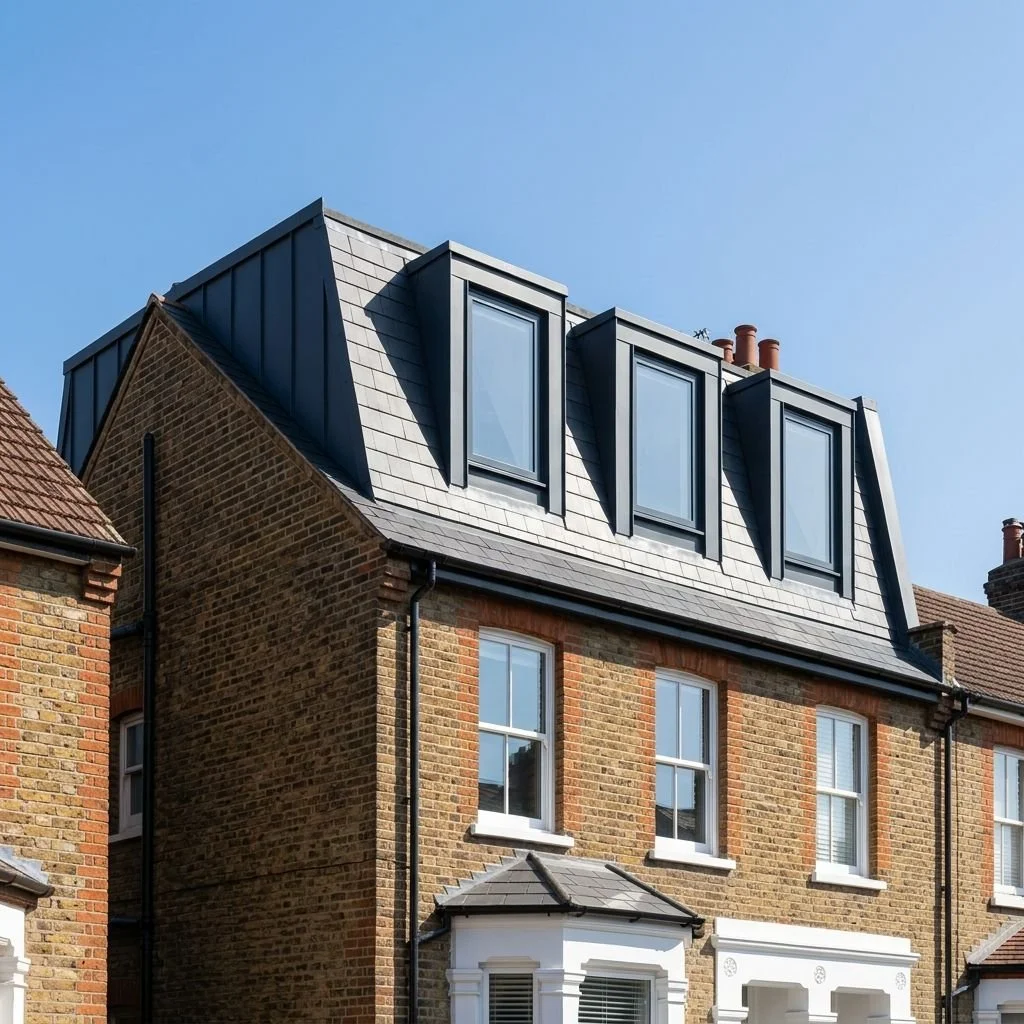
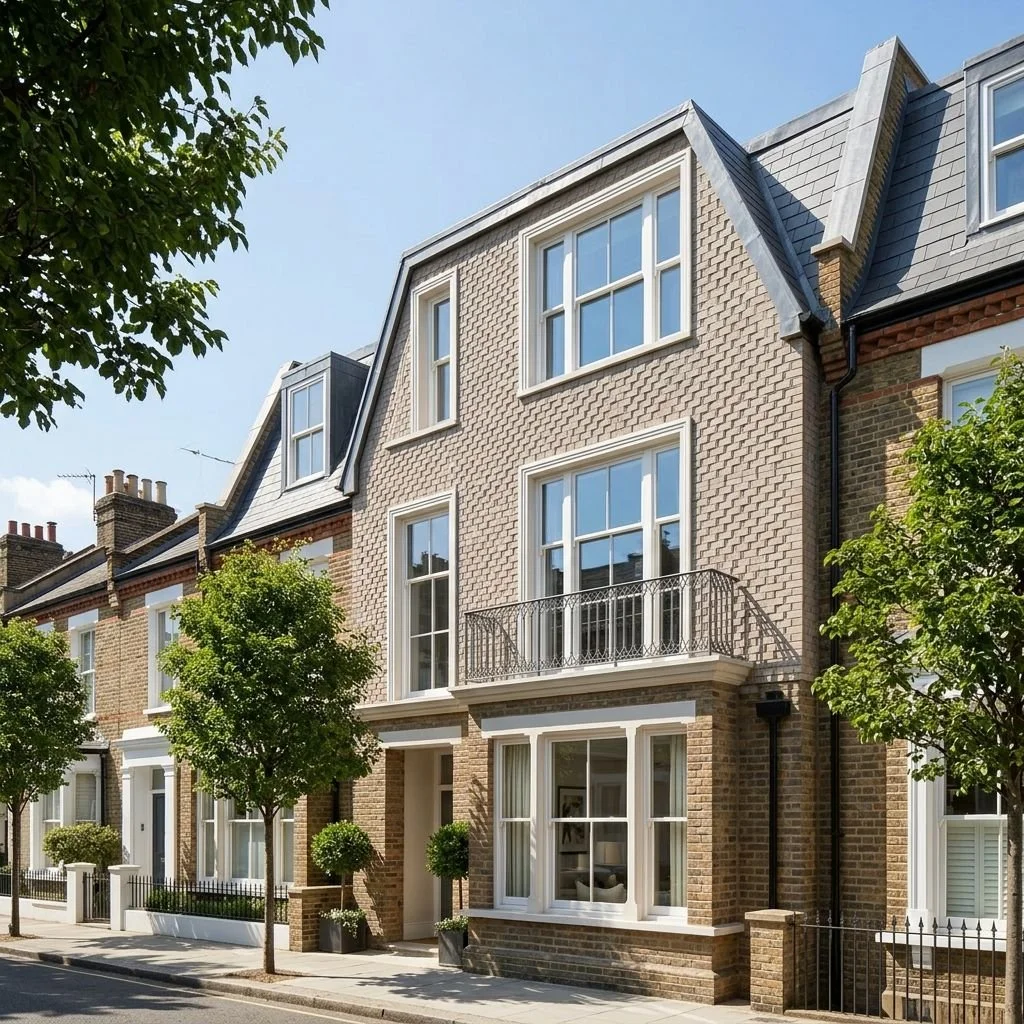
Mansard loft conversions are an excellent option for homeowners seeking to maximise additional roof space, particularly in Victorian and Georgian properties across the London Borough of Richmond upon Thames. By substantially increasing the usable floor area, they provide greater flexibility for creating additional bedrooms, en-suite bathrooms or multi-purpose accommodation. Our Mansard Loft Conversion Design Service → explains the design process, planning considerations and technical approach we use for residential projects.
See how these principles were applied in our Loft Conversion and Roof Extension for a Growing Family in Richmond →
Although this is generally the most extensive form of loft conversion, it also creates the greatest amount of additional internal space.
Mansard conversions are often considered for:
Georgian townhouses
Victorian terraces
Larger period properties
Homes undergoing significant refurbishment
Advantages include:
Maximum internal floor area
Excellent ceiling heights
Greater flexibility for room layouts
Strong integration with many period properties when carefully designed
Because a mansard significantly alters the existing roof profile, planning permission is usually required.
Rooflight Loft Conversion
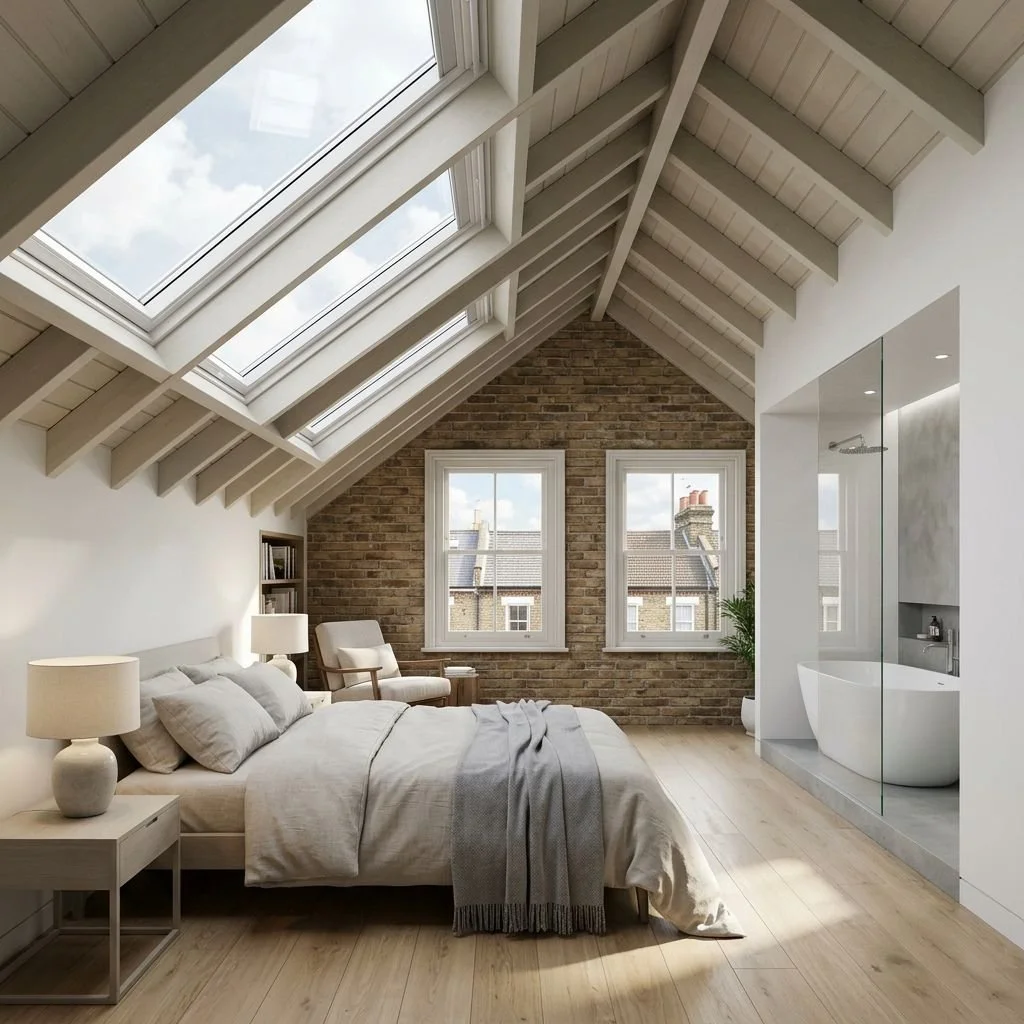
Rooflight loft conversions are a practical option for homes with sufficient existing roof height, allowing homeowners to create additional accommodation while retaining the original roof profile. Often requiring fewer structural alterations than other conversion types, they can provide a cost-effective way to make better use of unused roof space. Our Rooflight Loft Conversion Design Service → explains the design process, planning considerations and technical approach we use for residential projects.
See how these principles were applied in our Loft Conversion in Twickenham →
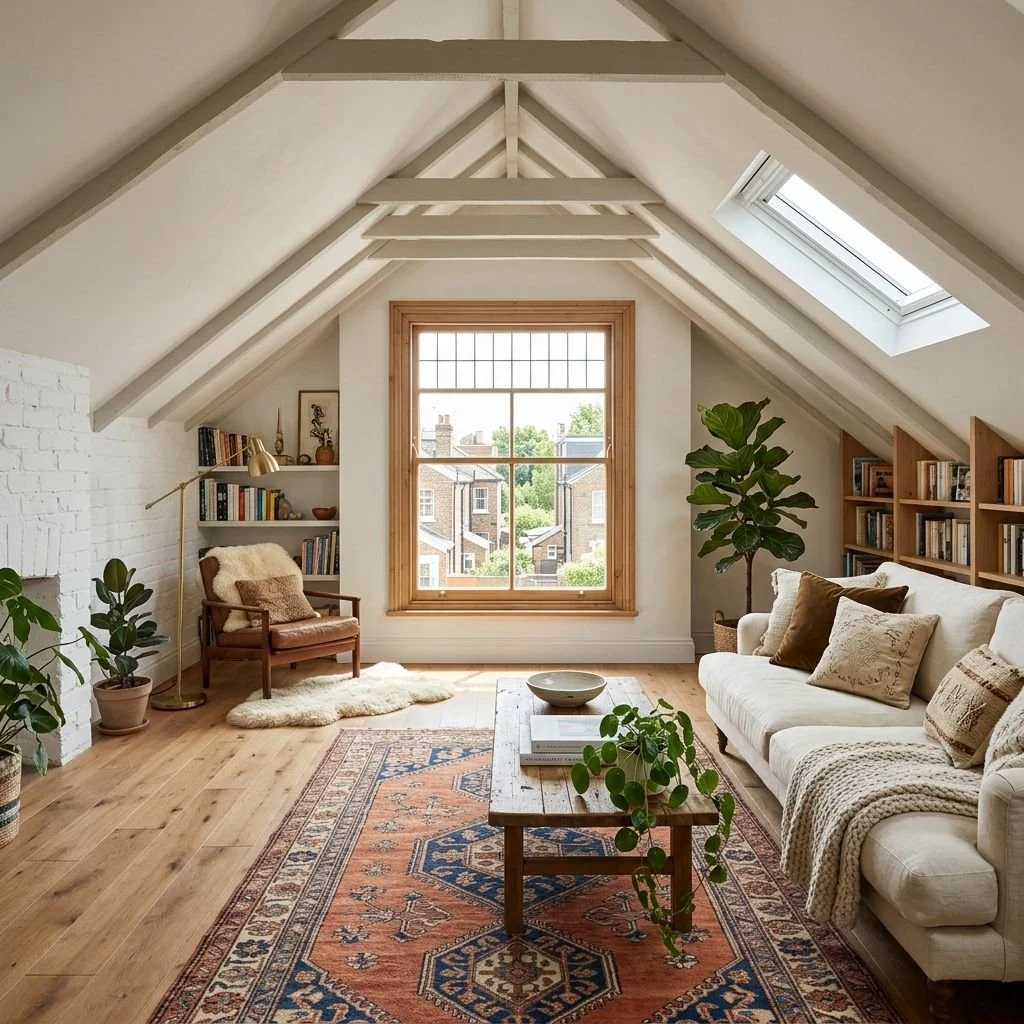
Rooflight conversions represent the least intrusive approach because they retain the existing roof structure while introducing roof windows to improve daylight and ventilation.
Rather than extending the roof, this approach works within the existing roof envelope.
Rooflight conversions are generally suitable where adequate head height already exists.
Benefits include:
Lower construction costs
Shorter construction programme
Minimal external alterations
Reduced structural intervention
Suitable for many properties where preserving the existing roof appearance is important
While rooflight conversions create less additional floor area than dormer or mansard designs, they can still provide highly functional accommodation when carefully planned.
Loft Conversion Costs in Richmond upon Thames (2026)
One of the first questions homeowners ask is, "How much does a loft conversion cost in Richmond upon Thames?"
While online price guides can provide a useful starting point, no two loft conversions are identical. The final cost depends on the existing property, the type of conversion, structural requirements, planning constraints and the level of specification.
Homes across Richmond upon Thames vary considerably, from Victorian terraces in Twickenham and East Sheen to Georgian townhouses in Richmond, Edwardian family homes in Kew, detached properties in Teddington and semi-detached houses in Hampton. Each presents different design and construction considerations that influence the overall budget.
As an architecture firm working across Richmond upon Thames and South West London, Artist of Architecture helps homeowners establish realistic budgets based on the specific opportunities and constraints of their property rather than relying solely on average price guides.
Typical Loft Conversion Costs in Richmond upon Thames
Construction costs have continued to evolve throughout 2026 due to labour availability, material prices and increasingly demanding Building Regulations.
Typical construction costs include:
Rooflight Loft Conversion
£45,000–£70,000+
Suitable where sufficient roof height already exists and only limited structural alterations are required.
Dormer Loft Conversion
£60,000–£110,000+
One of the most common choices throughout Richmond upon Thames, offering a substantial increase in usable floor area.
Hip-to-Gable Loft Conversion
£80,000–£130,000+
Often selected for semi-detached and end-of-terrace homes where extending the roof profile creates significantly more accommodation.
Mansard Loft Conversion
£100,000–£180,000+
Usually the most extensive option, providing the largest increase in floor area while requiring more substantial structural work.
These figures should be treated as indicative only. Every project is unique, and a detailed appraisal is essential before establishing an accurate budget.
What Has the Biggest Impact on Loft Conversion Costs?
Many homeowners assume that size is the main factor influencing cost. In reality, a number of other considerations can have a greater effect on the overall budget.
Existing Roof Structure
Traditional cut roofs often provide greater flexibility than modern trussed roofs.
Where substantial structural alterations are required, additional steelwork and strengthening may increase costs.
Roof Height
If the existing loft has limited headroom, more extensive structural work may be necessary.
This can involve:
Raising the roof
Lowering existing ceilings
Additional structural reinforcement
Projects requiring these alterations generally involve higher construction costs.
Staircase Design
Creating a compliant staircase is one of the most important aspects of any loft conversion.
Its position affects:
Existing room layouts
Circulation
Structural alterations
Fire safety
Overall usability
An efficiently positioned staircase often reduces unnecessary alterations elsewhere within the property.
Structural Alterations
Many loft conversions require structural steelwork to support new floor structures and altered roof elements.
Typical structural works include:
Steel beams
Floor strengthening
Chimney modifications
Roof reinforcement
Load-bearing wall alterations
The complexity of these elements can significantly influence project costs.
Glazing
Natural daylight plays a major role in the success of a loft conversion.
Common glazing options include:
Rooflights
Dormer windows
Juliet balconies
Fixed picture windows
Corner glazing
Larger glazing systems generally increase both material and installation costs.
Bathrooms
Many homeowners choose to include an en-suite bathroom within a loft conversion.
Additional costs may include:
Plumbing alterations
Drainage connections
Mechanical ventilation
Tiling
Sanitaryware
Underfloor heating
Although this increases the project budget, an additional bathroom can significantly improve the functionality of the home.
Site Access
Access arrangements vary considerably across Richmond upon Thames.
Some properties benefit from generous side access, while others—particularly terraced houses—may require materials to pass through the home.
Restricted access can influence:
Construction programme
Labour costs
Scaffolding requirements
Material handling
Why Loft Conversion Costs Vary Across Richmond upon Thames
Although national average prices are widely published, construction costs across Richmond upon Thames are often higher than the UK average.
Several factors contribute to this.
Period Housing Stock
Many homes throughout Richmond, Twickenham, Barnes, Kew and East Sheen are historic properties requiring careful structural integration and sympathetic detailing.
Conservation Areas
The borough contains numerous conservation areas where planning considerations may influence the design approach.
Examples include: Richmond Hill, Richmond Green, Kew, Petersham, Ham, St Margarets, East Sheen, Barnes Green
These locations often require greater attention to the appearance of roof alterations and external materials.
Higher Construction Standards
Many homeowners choose:
High-performance insulation
Larger glazing systems
Bespoke joinery
Improved energy efficiency
Carefully considered interior finishes
These decisions naturally influence project budgets.
Demand for Skilled Construction
Richmond upon Thames remains one of London's most desirable boroughs, creating sustained demand for experienced construction professionals and specialist trades.
Planning Permission for Loft Conversions in Richmond upon Thames
Many loft conversions can be completed without submitting a full planning application.
Our Planning Permission Design Service → explains the design process, planning considerations and technical approach we use for residential projects. For more detailed guidance, see our Complete Guide to Planning Permission →
In England, many loft conversions are classed as Permitted Development, provided they meet specific volume limits and design conditions. Homes in conservation areas, listed buildings or properties where Permitted Development Rights have been removed may require planning permission.
Planning Portal – Planning Permission for Loft Conversions →
However, every property should be assessed individually.
The planning route depends on:
Property type
Existing roof form
Previous extensions
Conservation area designation
Whether the property is listed
The proposed design
Obtaining professional advice early in the process helps avoid unnecessary delays later.
Permitted Development Rights
Many loft conversions fall within Permitted Development Rights provided certain criteria are met.
These generally include:
The extension remains within permitted volume allowances.
The roof is not raised beyond prescribed limits.
Materials are similar in appearance to the existing property.
Side-facing windows are obscure glazed where required.
Roof extensions do not project beyond the existing roof plane on the principal elevation.
Even where planning permission is not required, many homeowners choose to obtain a Lawful Development Certificate, providing formal confirmation that the work complies with planning legislation.
When Planning Permission Is Required
Planning permission is often required where:
A mansard roof is proposed.
The property is listed.
The home has already exhausted Permitted Development Rights.
The proposal exceeds permitted volume limits.
Significant alterations are made to the principal roof elevation.
Local planning restrictions apply.
Each application is assessed against the borough's planning policies and the individual characteristics of the property.
Loft Conversions in Conservation Areas
Richmond upon Thames contains one of the highest concentrations of conservation areas in London.
These areas help preserve the distinctive character of historic streets and neighbourhoods.
Examples include:
Richmond Hill
Richmond Green
Kew Green
Barnes
Petersham
Ham
St Margarets
East Sheen
Twickenham Riverside
Properties within conservation areas can often still accommodate loft conversions, although greater care is usually required when considering external alterations.
Design proposals should respect:
Existing roof forms
Traditional materials
Historic character
Neighbouring properties
Views from the public realm
A carefully considered design can often achieve both additional accommodation and a positive relationship with the surrounding streetscape.
Building Regulations for Loft Conversions
Regardless of whether planning permission is required, every loft conversion must comply with current Building Regulations.
Building Regulations apply to virtually all loft conversions that create habitable accommodation. Requirements cover structural strength, fire protection, stair design, sound insulation and thermal performance.
Planning Portal – Building Regulations →
These regulations ensure that the completed accommodation is safe, structurally sound and energy efficient.
Key requirements include:
Structural calculations
Floor loading
Roof stability
Fire protection
Escape routes
Smoke detection
Thermal insulation
Ventilation
Sound insulation
Staircase geometry
Electrical safety
Compliance is verified through Building Control inspections during construction.
Party Wall Considerations
Many homes across Twickenham, Richmond, Barnes, East Sheen and St Margarets share walls with neighbouring properties.
Where structural work affects a shared wall, the Party Wall etc. Act 1996 may apply.
The Planning Portal advises homeowners to establish whether the Party Wall etc. Act 1996 applies before construction begins, particularly for terraced and semi-detached properties. Planning Portal – Loft Conversion Overview (Party Wall & Building Regulations) →
This can include:
Inserting steel beams into a party wall
Raising shared walls
Excavating close to neighbouring foundations
Structural alterations affecting adjoining properties
Addressing Party Wall matters early helps minimise delays once construction is ready to begin.
How Long Does a Loft Conversion Take?
Every project follows its own programme, but homeowners should allow time for both design and construction.
A typical project may include:
Initial feasibility and measured survey
Approximately 2–4 weeks
Design development
Approximately 4–8 weeks
Planning application or Lawful Development Certificate (where required)
Approximately 8–12 weeks
Technical design and Building Regulations
Approximately 4–8 weeks
Construction
Approximately 8–18 weeks, depending on complexity and the type of loft conversion.
Early planning gives homeowners greater flexibility when coordinating design, approvals and construction.
Loft Conversion Design Ideas for Homes Across Richmond upon Thames
Every loft conversion should respond to the character of the existing property while creating accommodation that feels bright, practical and connected to the rest of the home. The most successful projects are shaped around the available roof space, natural light and how the additional floor will be used over the coming years.
Whether the property is a Victorian terrace in Twickenham, an Edwardian home in Kew, a detached house in Teddington or a semi-detached property in Hampton, thoughtful design helps maximise the potential of the roof space.
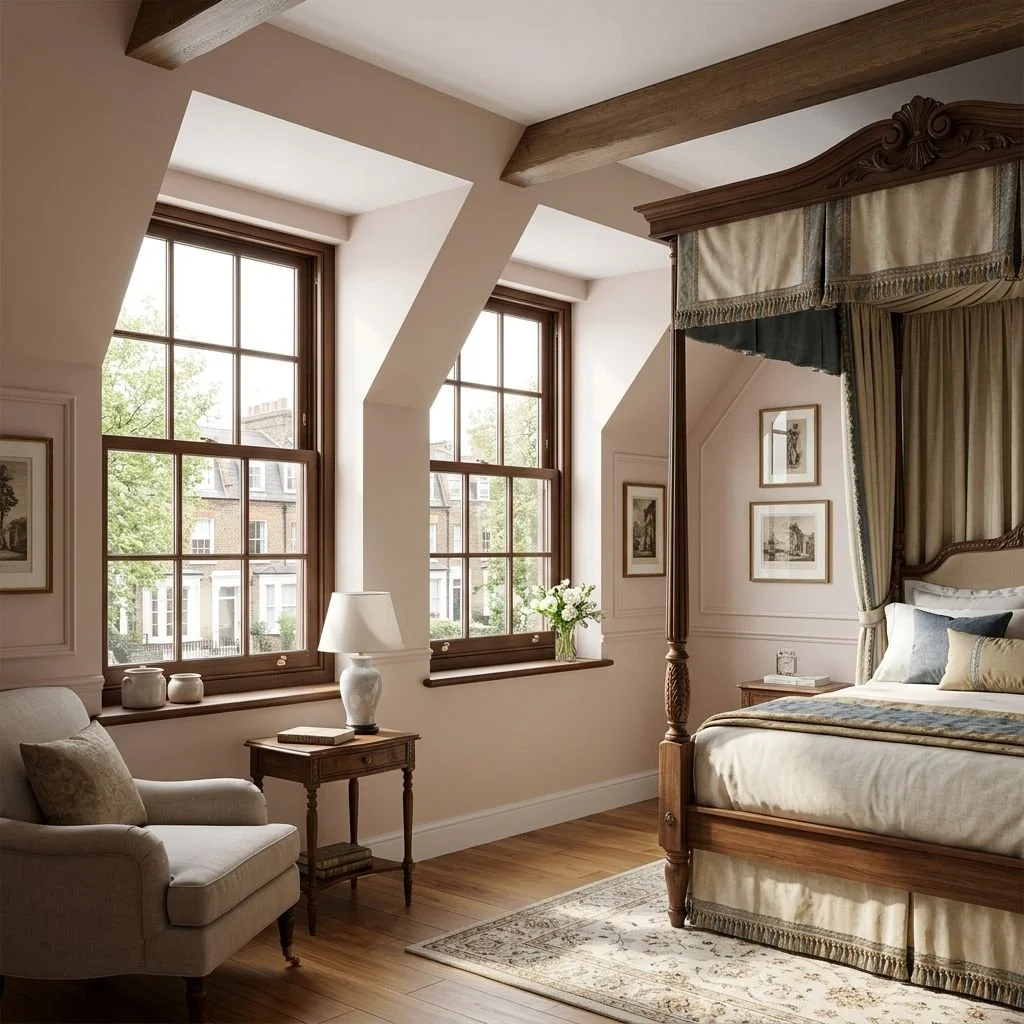
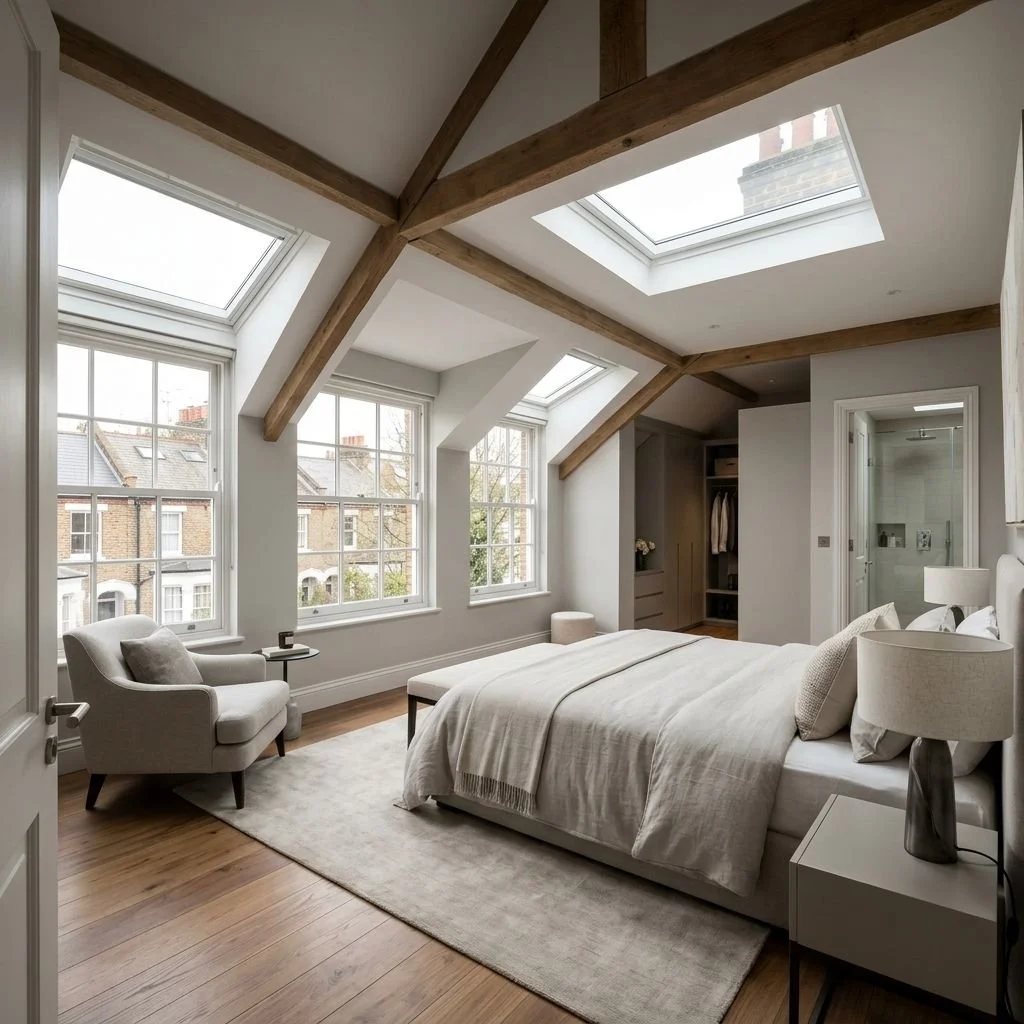
Principal Bedroom Suite
One of the most popular choices is creating a spacious principal bedroom with an en-suite bathroom.
If you're considering a loft conversion to create a principal suite, our Loft Conversion Design Service explains our design process, planning considerations and technical approach for residential projects across Richmond upon Thames.
Typical features include:
Built-in wardrobes within the eaves
Bespoke storage
Rooflights positioned to maximise daylight
En-suite shower room
Carefully planned lighting
Durable, high-quality finishes
A principal suite on the upper floor can also improve privacy while freeing up bedrooms elsewhere in the home.
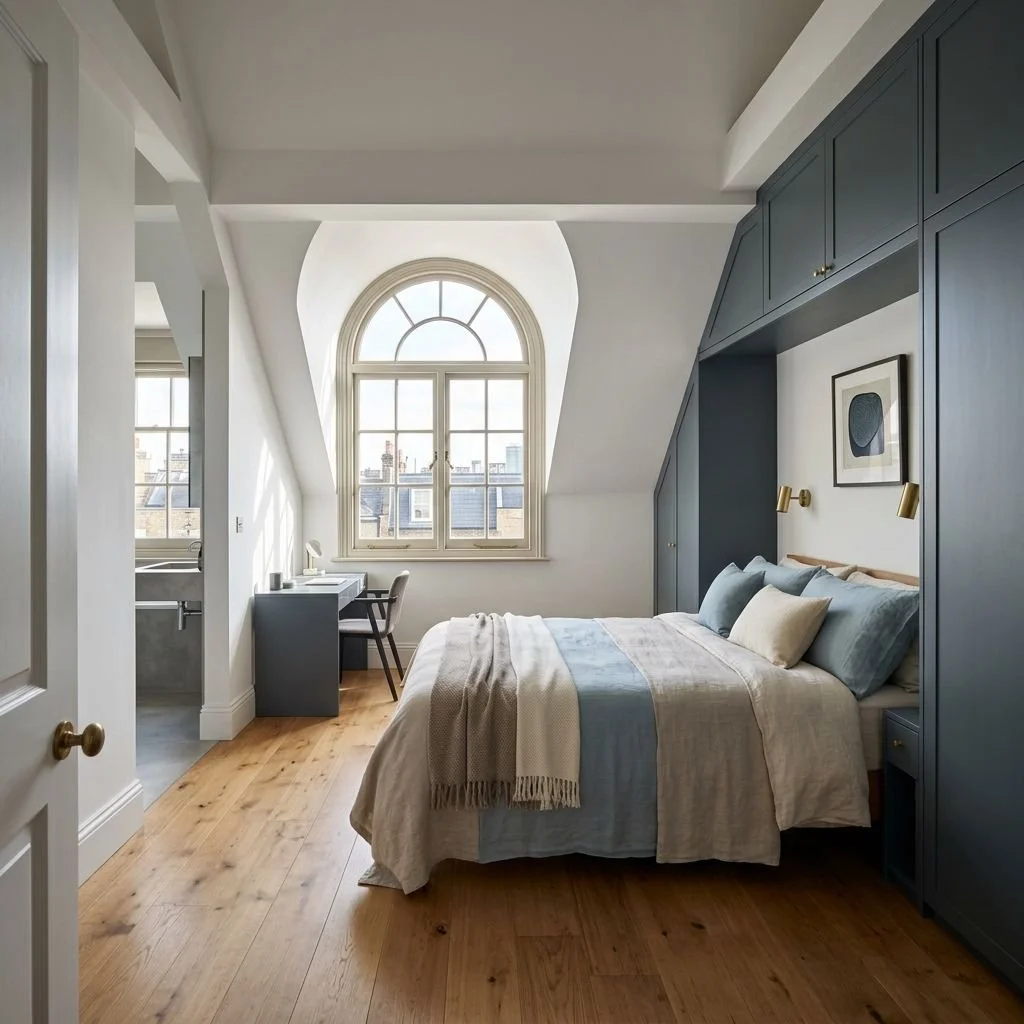
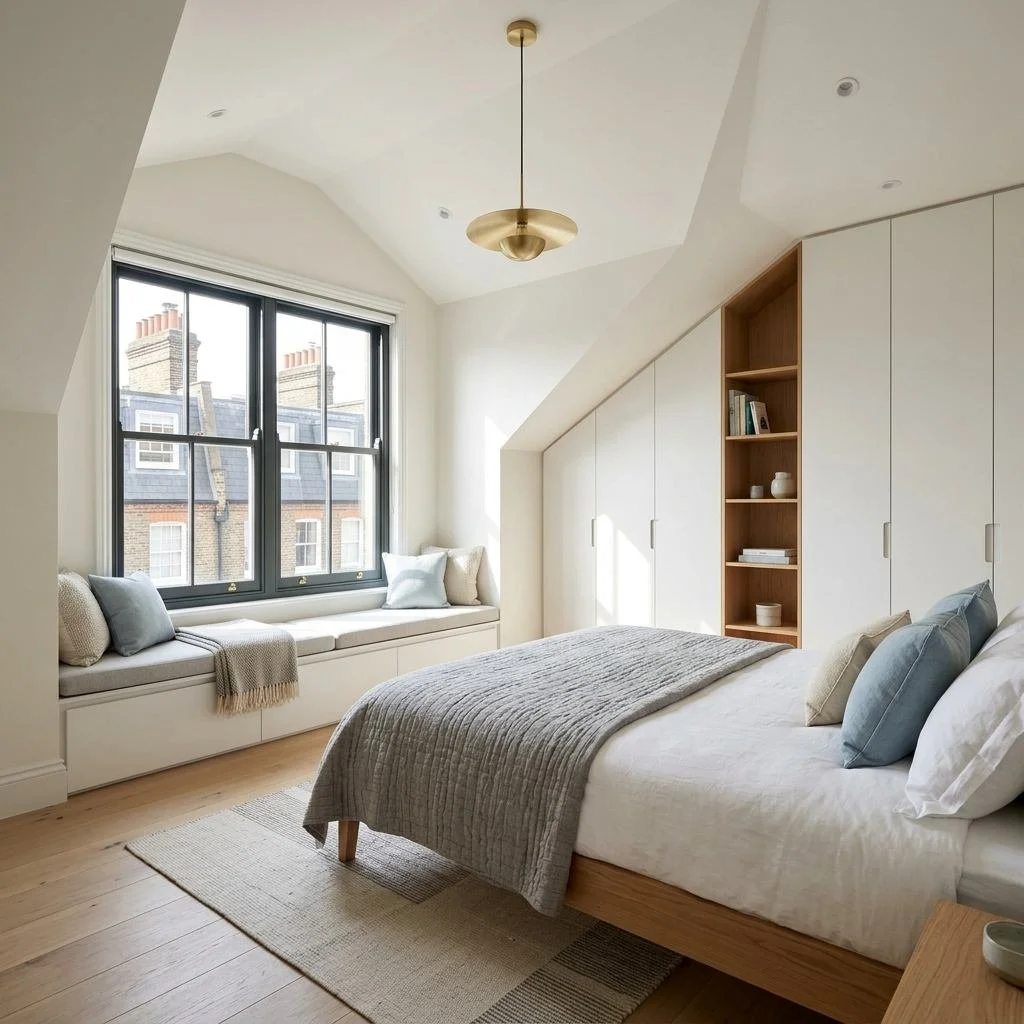
Additional Family Bedroom
Growing families often require an extra bedroom without the cost and disruption of moving home.
A loft conversion can provide:
Children's bedroom
Teenager's bedroom
Guest bedroom
Nursery
Flexible family accommodation
Designing storage into the eaves helps maximise usable floor area while maintaining a clean and uncluttered appearance.
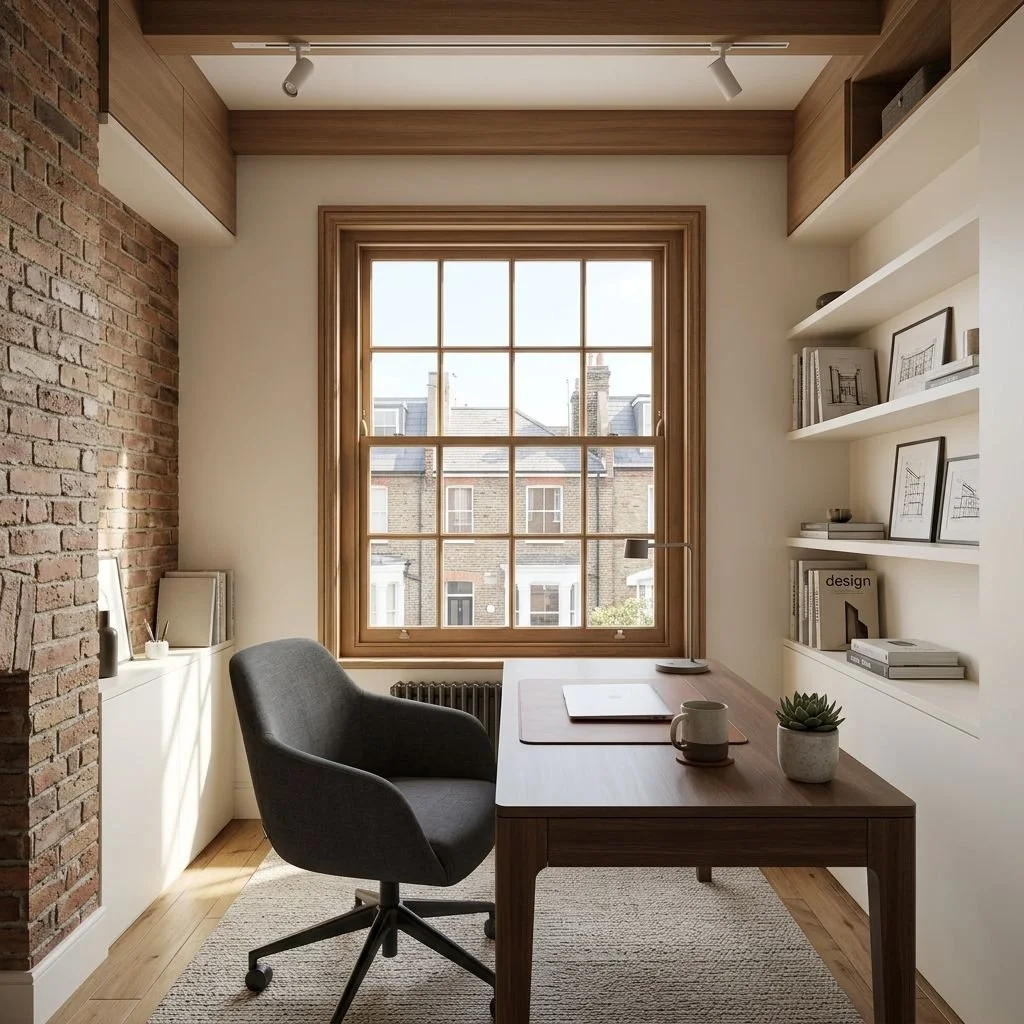
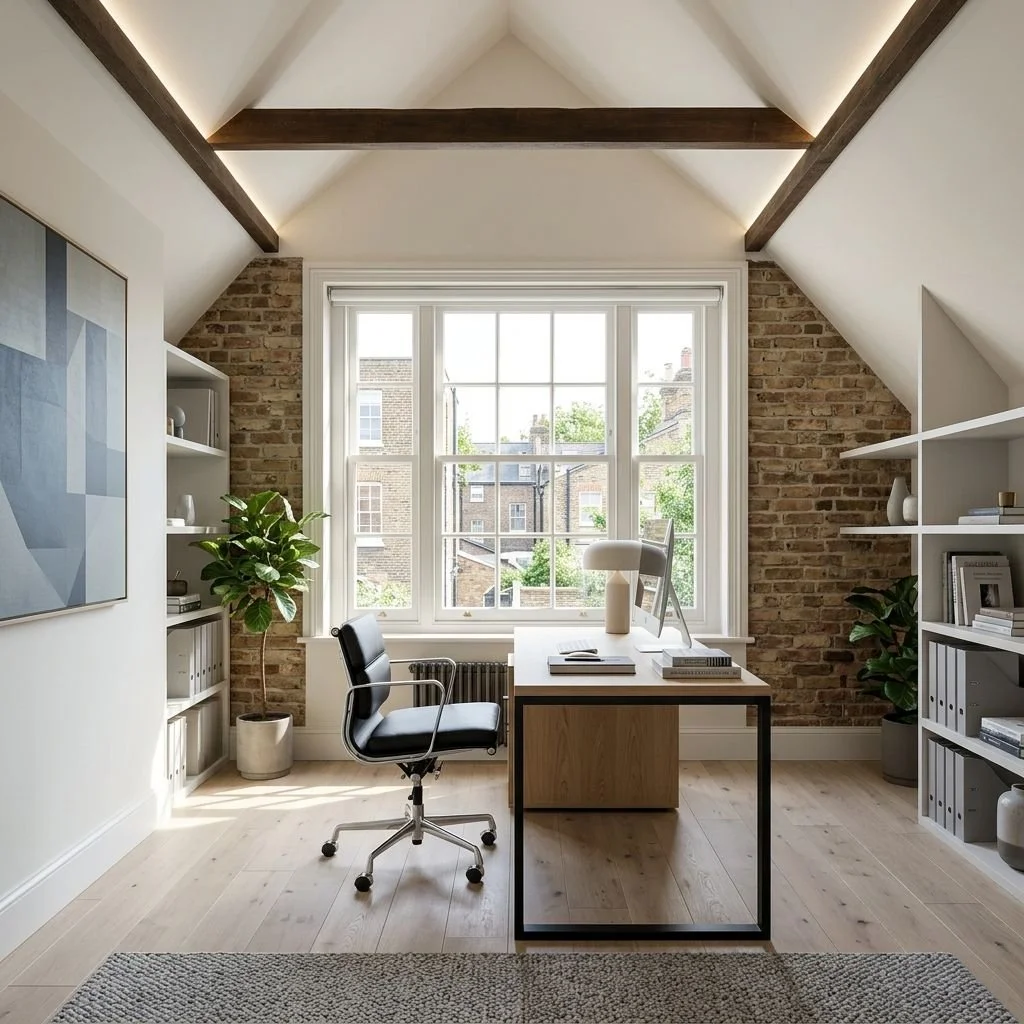
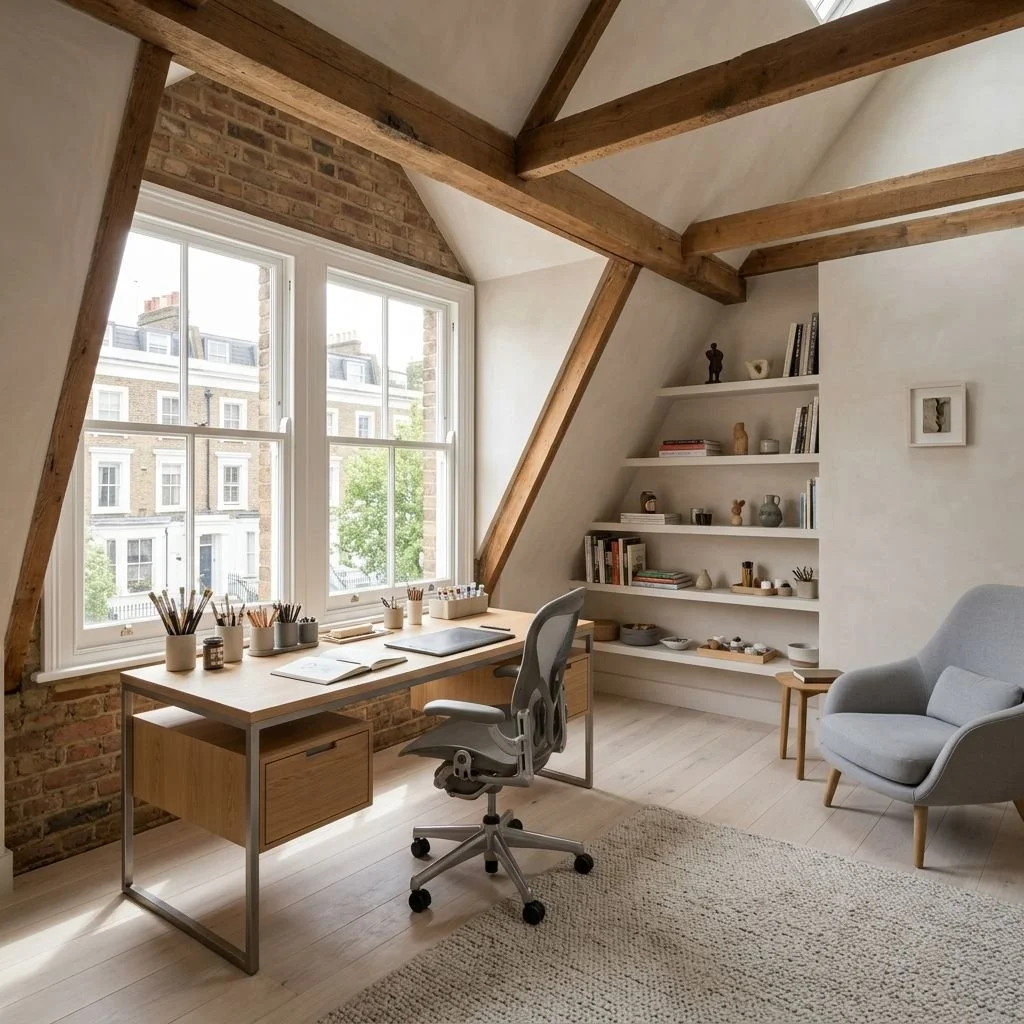
Home Office
Hybrid working has become increasingly common across Richmond upon Thames.
Many homeowners now choose to convert their loft into a dedicated workspace separate from the rest of the home.
Important design considerations include:
Strong natural daylight
Acoustic separation
Integrated storage
Reliable data connections
Carefully positioned power outlets
Flexible furniture layouts
A dedicated office can improve productivity while keeping work distinct from family areas.
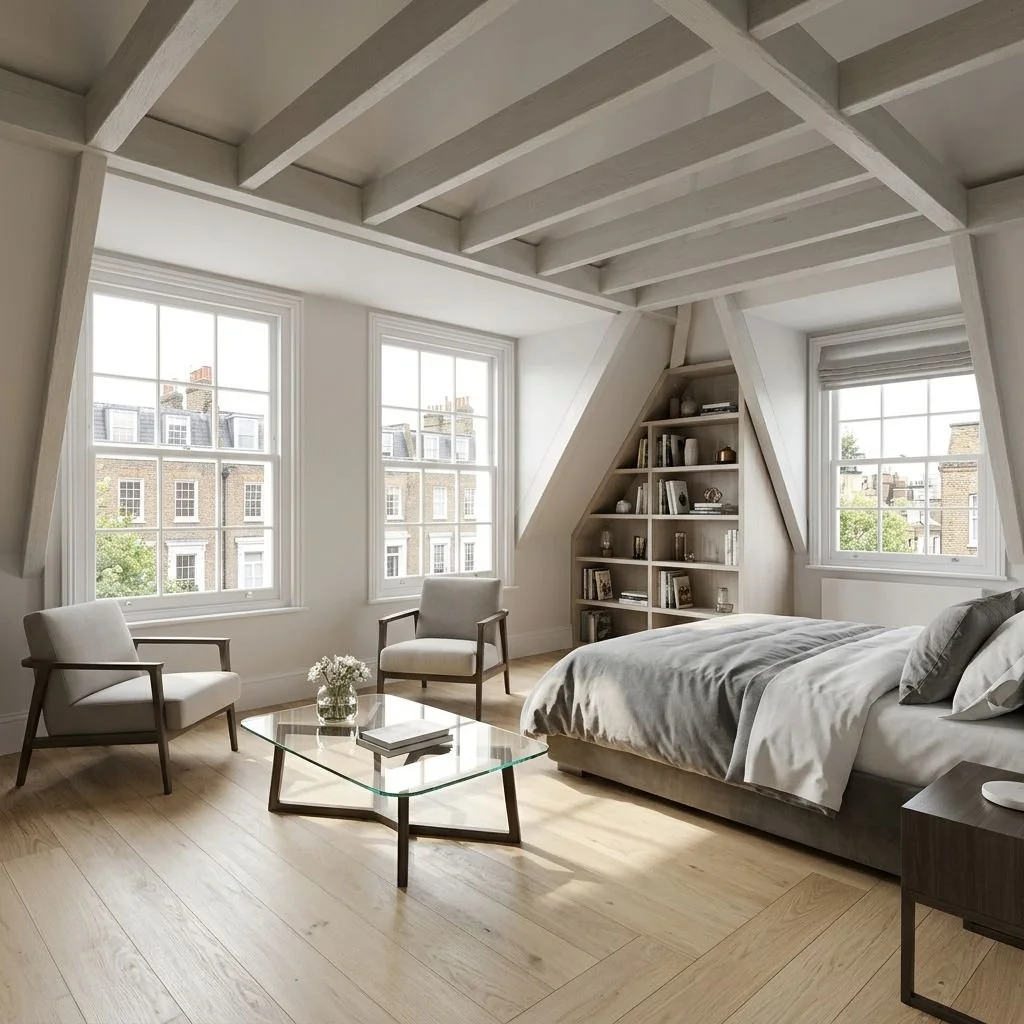
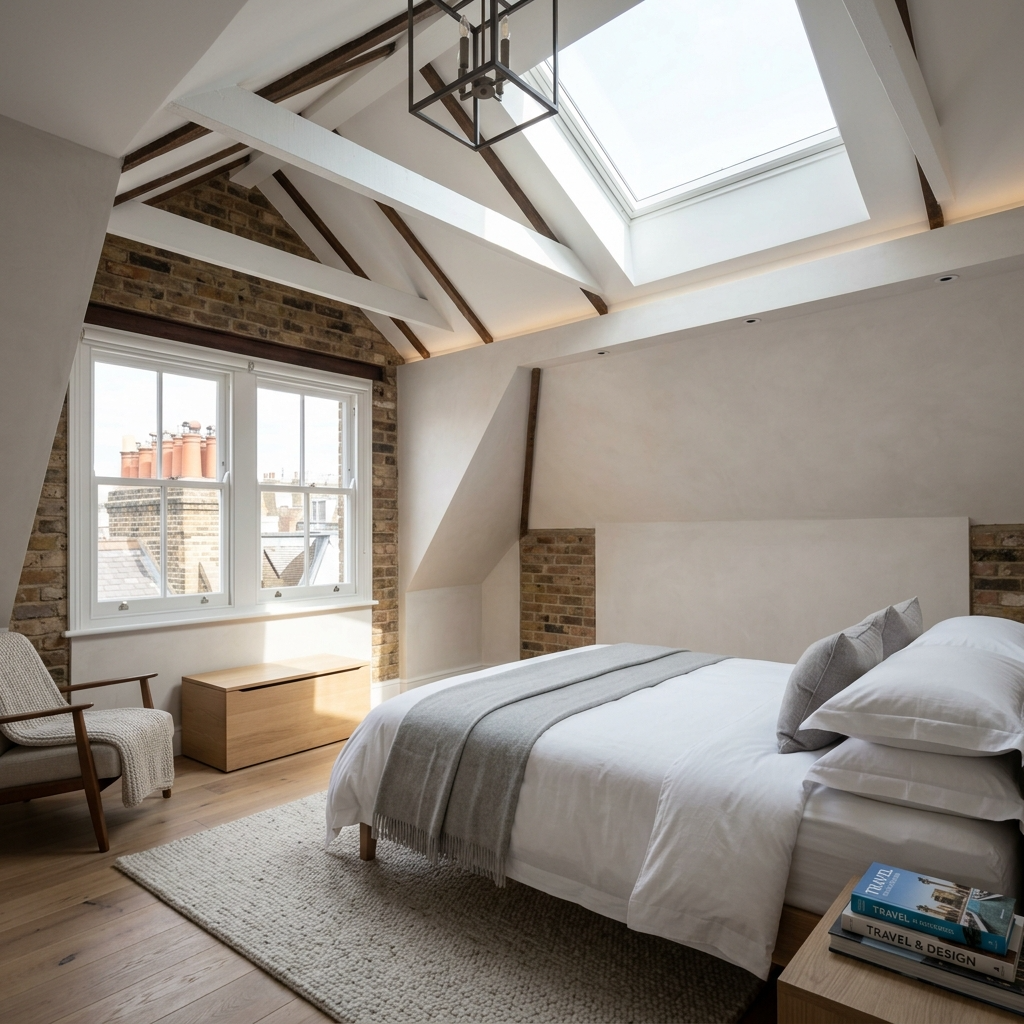
Guest Accommodation
For homeowners who regularly welcome visitors, a loft conversion provides comfortable accommodation with greater privacy.
Many projects include:
Double bedroom
En-suite shower room
Built-in wardrobes
Rooflights for natural ventilation
Integrated storage
This approach works particularly well where the existing first floor is already fully utilised.
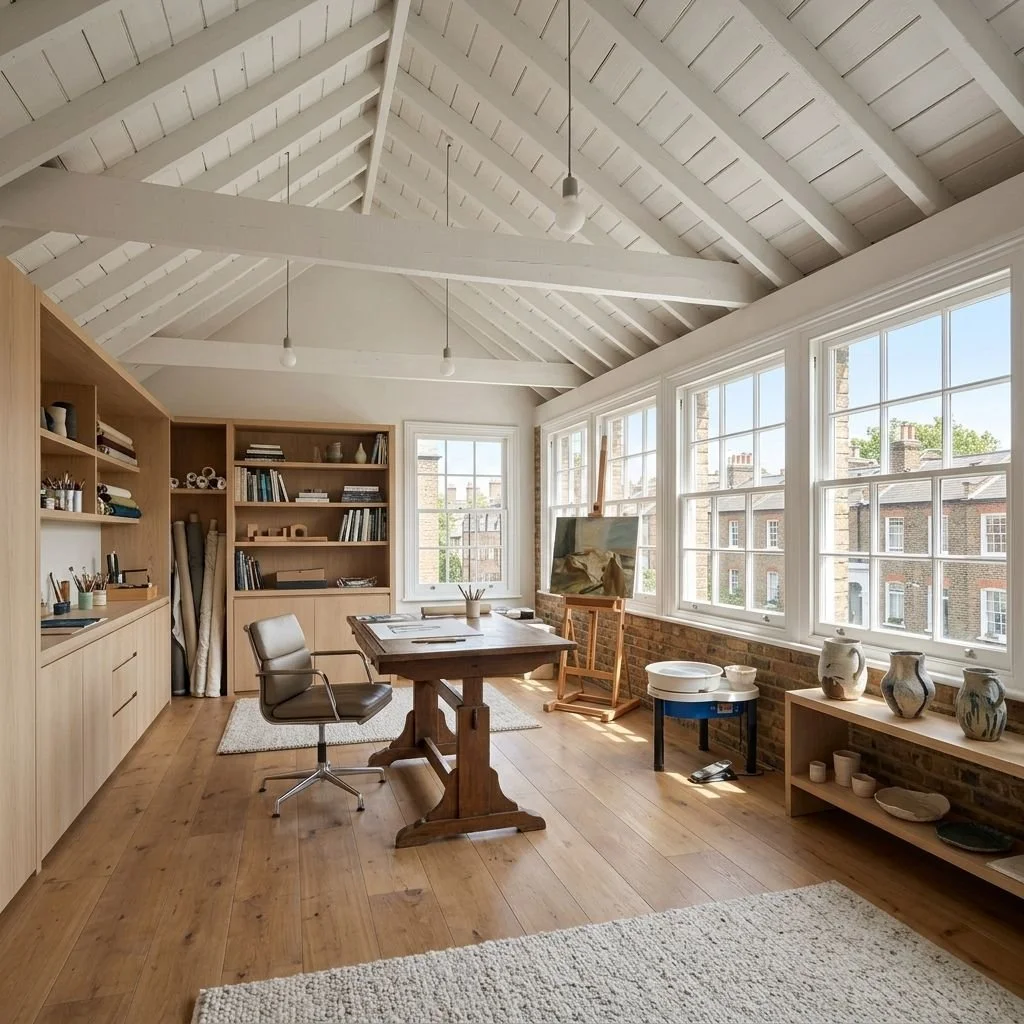
Creative Studio or Hobby Room
Lofts can also become flexible spaces for creative pursuits or hobbies.
Suitable uses include:
Art studio
Music room
Craft room
Photography workspace
Reading room
Fitness studio
Rooflights positioned throughout the day can provide consistent natural light, making the space comfortable for a wide range of activities.
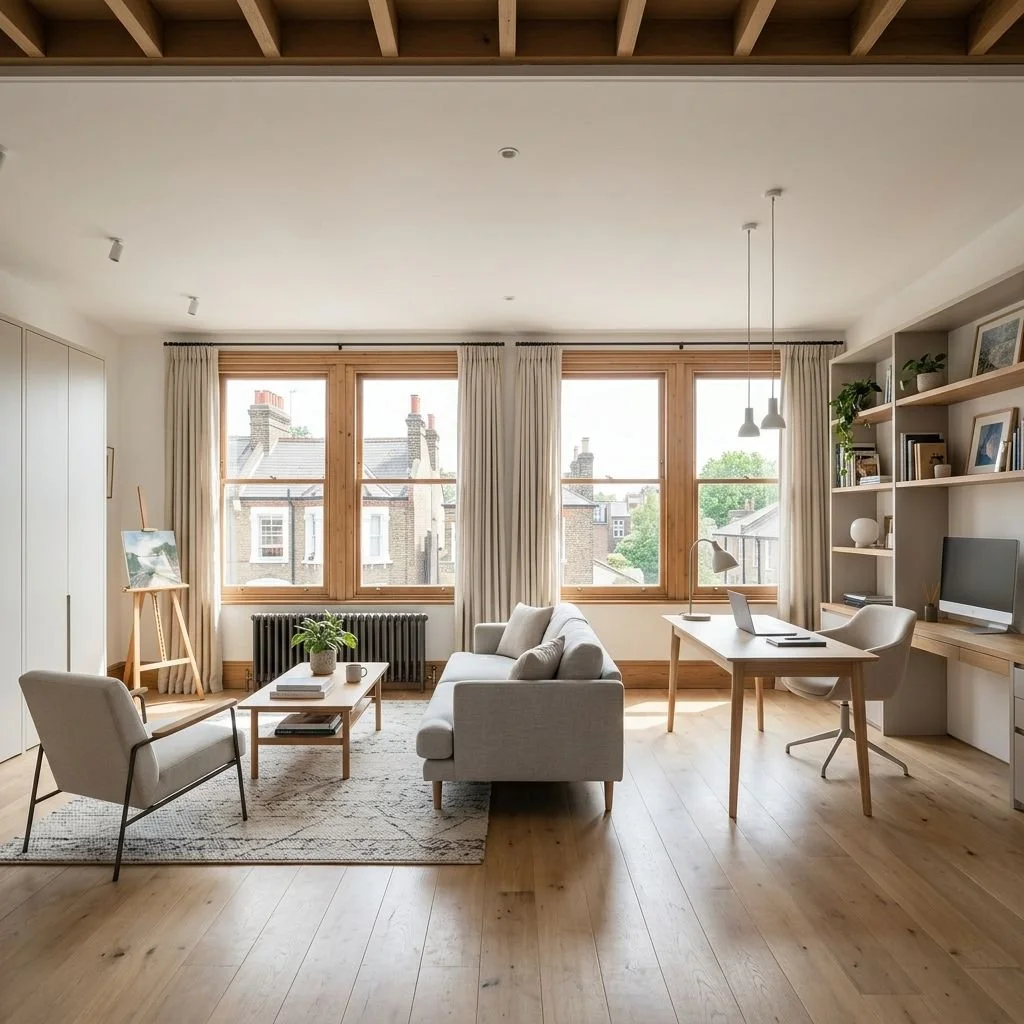
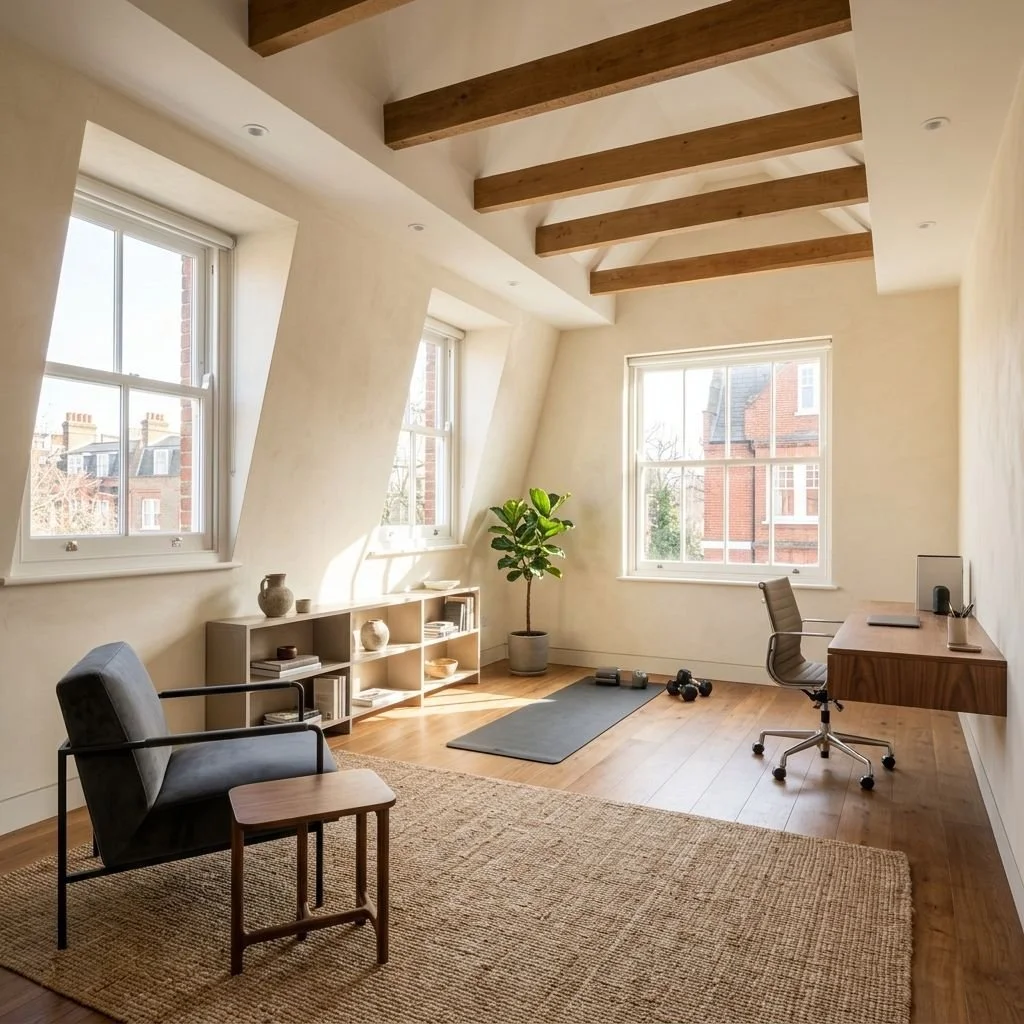
Flexible Multi-Purpose Space
Many homeowners prefer accommodation that can evolve as family needs change.
Rather than designing a room for one purpose only, the space can accommodate several uses over time.
Examples include:
Home office and guest bedroom
Children's playroom and study
Gym and hobby room
Family room with integrated storage
Designing with flexibility in mind helps future-proof the investment.
Design Approach
Maximising Natural Light
Natural light has a significant influence on the quality of any loft conversion.
Carefully positioned glazing can transform what was previously a dark roof void into one of the brightest areas within the home.
Popular options include:
Rooflights
Dormer windows
Juliet balconies
Full-height glazing within dormers
Picture windows
Gable-end glazing
The size, orientation and position of each opening should respond to sunlight, privacy and views rather than being selected solely for appearance.
Good daylight design also helps reduce reliance on artificial lighting during the day.
Ventilation and Comfort
Natural ventilation is equally important.
Effective ventilation helps regulate internal temperatures, improve air quality and reduce condensation.
Design solutions often include:
Opening rooflights
Cross ventilation
Mechanical extract systems for bathrooms
High-performance insulation
Solar control glazing where appropriate
Balancing daylight with ventilation contributes to a comfortable environment throughout the year.
Storage Solutions
Roof spaces naturally include sloping ceilings, making integrated storage an important part of the overall design.
Well-planned storage helps maximise functionality without reducing usable floor space.
Popular solutions include:
Eaves cupboards
Bespoke wardrobes
Shelving within alcoves
Under-stair storage
Integrated cabinetry
Window seating with concealed storage
Designing storage from the outset generally produces a better result than adding freestanding furniture after construction.
Staircase Design
The staircase is one of the most important elements of a loft conversion.
Its location affects circulation, headroom, structural alterations and the overall relationship between the new accommodation and the existing floors.
Key considerations include:
Building Regulations compliance
Comfortable head height
Efficient use of space
Fire safety
Natural light
Connection with the existing floor plan
A carefully positioned staircase can improve the usability of both the loft and the floors below.
Improving Energy Performance
A loft conversion provides an excellent opportunity to improve the overall energy performance of a property.
Modern Building Regulations require significantly higher levels of thermal performance than older homes were originally designed to achieve.
Typical improvements include:
High-performance roof insulation
Improved airtightness
Energy-efficient roof windows
Mechanical ventilation where appropriate
Low-energy lighting
Upgraded heating controls
These improvements help maintain comfortable internal temperatures while reducing energy consumption.
Does a Loft Conversion Add Value?
For many homeowners, a loft conversion is not only about creating additional accommodation but also about improving the long-term appeal of the property.
While every home and local market is different, well-designed loft conversions are often viewed positively by prospective buyers.
Features that typically enhance appeal include:
Additional bedroom
En-suite bathroom
Dedicated home office
Improved storage
Better natural light
Flexible accommodation
High-quality detailing
The greatest value often comes from creating accommodation that feels fully integrated with the rest of the home rather than appearing as a later addition.
Common Mistakes to Avoid
Successful loft conversions begin with careful planning.
Some of the most common issues include:
Assuming Every Loft Can Be Converted
Not every roof space is suitable without structural alterations.
An early feasibility assessment helps identify opportunities and constraints before detailed design begins.
Underestimating Head Height
Insufficient headroom can significantly affect usability.
Understanding the available roof height early helps determine the most appropriate conversion type.
Poor Staircase Positioning
An inefficient staircase can reduce usable floor area on both the loft level and the floor below.
Early coordination helps avoid unnecessary compromises.
Ignoring Storage
Roof spaces often contain awkward corners and sloping ceilings.
Incorporating bespoke storage from the outset makes better use of every available area.
Overlooking Planning Constraints
Properties within conservation areas or those with previous roof alterations may require a different planning approach.
Understanding local planning policies early helps reduce delays later in the project.
Focusing Only on Construction Costs
The lowest quotation does not always provide the best long-term outcome.
Careful design, coordination and technical detailing can reduce unexpected costs during construction while producing a more successful result.
Before beginning a loft conversion, homeowners can also review the official guidance on planning permission and Building Regulations through the Planning Portal.
Conclusion: Loft Conversions in Richmond upon Thames
Loft conversions continue to be one of the most effective ways to create additional accommodation without extending the footprint of a property or moving to a larger home.
Across Richmond, Twickenham, Teddington, Kew, Barnes, Hampton, East Sheen, Mortlake, Petersham, Ham and the wider London Borough of Richmond upon Thames, many homes already possess the roof space needed to accommodate a carefully planned conversion.
While costs, planning requirements and structural considerations vary from one property to another, early planning and thoughtful design help homeowners make informed decisions and establish realistic expectations from the outset.
Whether you're considering a rooflight, dormer, hip-to-gable or mansard loft conversion, working with an experienced architecture firm helps ensure every stage of the project is carefully coordinated.
By working with Artist of Architecture, homeowners can move beyond generic online advice and develop a tailored solution that maximises the potential of their property while responding to its character, planning context and long-term needs.
Planning a project of your own?
Explore how we approach residential architecture, what our services involve and how we help clients make informed decisions from the outset.
Artist of Architecture
Our approach, services and fees.
Why Homeowners Choose Artist of Architecture
Choosing the right loft conversion involves far more than creating additional floor area. Every property presents its own opportunities, planning considerations and structural requirements which need to be addressed.
Artist of Architecture is an experienced architecture firm working on residential projects throughout Richmond upon Thames and South West London.
Our approach helps homeowners establish realistic budgets, explore practical design options and develop solutions tailored to their property.
We can assist with:
Feasibility studies
Measured surveys
Budget planning
Concept design
Planning applications
Lawful Development Certificates
Building Regulations drawings
Technical design
Structural coordination
Contractor coordination and more
If you're considering converting your roof space, our Loft Conversion Design Service explains how we guide homeowners from the initial feasibility stage through planning, technical design and construction.
Frequently Asked Questions About Loft Conversions in Richmond upon Thames
How much does a loft conversion cost in Richmond upon Thames in 2026?
Loft conversion costs typically range from £45,000 to £180,000+, depending on the type of conversion, structural complexity, specification and the existing property. Rooflight conversions are generally the most economical, while mansard conversions usually involve the highest level of investment due to the extent of structural work required.
Which type of loft conversion is the most affordable?
Rooflight loft conversions are typically the most cost-effective because they retain the existing roof structure and require fewer structural alterations than dormer, hip-to-gable or mansard conversions.
Do I need planning permission for a loft conversion?
Many loft conversions can be completed under Permitted Development Rights. However, planning permission may be required for listed buildings, properties within conservation areas, mansard conversions or proposals that exceed permitted development limits. Every property should be assessed individually.
What is the most popular loft conversion in Richmond upon Thames?
Dormer loft conversions remain the most common choice across Richmond upon Thames because they provide a significant increase in usable floor area while often qualifying under Permitted Development Rights.
Can I convert the loft in a Victorian terrace?
Yes. Victorian terraces throughout Richmond, Twickenham, Barnes and East Sheen are often well suited to loft conversions due to their traditional roof construction and generous roof spaces. The most appropriate design will depend on the individual property and any planning constraints.
Can I convert the loft in a semi-detached house?
Yes. Semi-detached homes in areas such as Hampton, Whitton and Teddington are frequently suitable for loft conversions, including hip-to-gable designs where the existing roof form allows.
How much head height is needed for a loft conversion?
As a general guide, approximately 2.2 metres between the top of the ceiling joists and the underside of the ridge is considered suitable. Homes with lower roof heights may still be converted but often require more extensive structural alterations.
How long does a loft conversion take?
Construction typically takes between 8 and 18 weeks, depending on the size and complexity of the project. The overall programme, including design, planning approvals and technical design, is usually several months.
Can I include a bathroom in a loft conversion?
Yes. Many loft conversions include an en-suite bathroom. This requires careful consideration of plumbing, drainage, ventilation and the layout of the new floor.
Will a loft conversion improve energy efficiency?
A loft conversion often improves the thermal performance of a property through upgraded insulation, modern roof windows and compliance with current Building Regulations, helping to reduce heat loss and improve year-round comfort.
Will I need a Party Wall Agreement?
If structural work affects a shared wall with a neighbouring property, the Party Wall etc. Act 1996 may apply. This is common for terraced and semi-detached homes across Richmond upon Thames.
Is a loft conversion a good investment?
A well-designed loft conversion can improve both the functionality and appeal of a property by creating additional accommodation that integrates naturally with the existing home. While the increase in value varies, many homeowners consider it one of the most effective ways to make better use of existing space.
Loft Conversion Design in Richmond upon Thames & Greater London
Artist of Architecture specialises in bespoke residential design, loft conversions, home extensions and interior design across Richmond, Twickenham, Teddington, Kew, Barnes, Hampton, East Sheen, Mortlake and the wider London Borough of Richmond upon Thames.
As a boutique architecture firm, every project benefits from direct collaboration, personal attention and a design approach tailored to each property, brief and budget.
If you're considering a loft conversion anywhere across Richmond upon Thames or South West London, book a free consultation to discuss your project and explore the potential of your home.
Are you considering a Loft Conversion in Richmond or surrounding areas?
Book a free consultation to discuss your project.
About this page
Prepared by Vladis, Director at Artist of Architecture. Responsible for residential design, planning strategy and project delivery across extension, loft conversion and new-build schemes. Over 10 years’ experience preparing planning applications, permitted development submissions and building regulations packages with local planning authorities.
Last updated: 2026
Disclaimer: The information on this website is provided for general informational purposes only and does not constitute legal, planning, architectural, or professional advice. Planning requirements, costs, and timescales can vary depending on the property, project, and site-specific circumstances. While every effort has been made to ensure accuracy, no guarantee is given that the information is complete, current, or applicable to your situation. For advice specific to your property and project, please contact Artist of Architecture directly.
Related resources
Continue exploring:
Richmond
Twickenham
Teddington
Hampton
Barnes
Kew