Architecture Firm Hampton
Artist of Architecture is a residential architecture firm and building design company based in Richmond upon Thames, providing bespoke architectural design services for homes in Hampton and the surrounding area. We specialise in house extensions, loft conversions, home renovations, heritage-sensitive projects, planning applications and new-build homes, helping homeowners unlock the potential of their properties through thoughtful and carefully considered design.
From Victorian cottages and Edwardian family homes in Hampton Village and Hampton Hill to riverside properties along the Thames and larger detached houses near Bushy Park, Hampton offers a diverse range of residential architecture and planning considerations.

Home > Locations > London > Richmond upon Thames > Hampton
Residential Architecture Firm Hampton
Bespoke Residential Design for Homes Across Hampton
Hampton is one of the most distinctive residential areas within the London Borough of Richmond upon Thames, combining historic village character, riverside settings, green spaces and a varied collection of residential properties.
The area contains a wide range of housing types, from Victorian and Edwardian homes to interwar properties, detached houses and contemporary residences. Many properties are located within established neighbourhoods where proposals for extensions, alterations and renovations require careful consideration of scale, materials, architectural character and local planning requirements.
Hampton’s relationship with the River Thames, Bushy Park, Hampton Court and surrounding historic landscapes creates a unique setting where residential projects often require a sensitive design approach. Properties may be affected by conservation area guidance, heritage considerations, flood-risk requirements or other planning constraints depending on their location.
As a result, successful residential architecture in Hampton is not simply about creating additional space. It requires an understanding of the existing building, its surroundings and the planning context in which the property sits.
Artist of Architecture works with homeowners, landlords, developers and property investors in Hampton, providing architectural design, planning advice and technical support for:
House extensions
Loft conversions
Home renovations
Internal reconfigurations
Heritage-sensitive alterations
New-build homes
Residential development projects
Each project begins with an assessment of the property, the opportunities available and the constraints that may influence the design process.
For projects elsewhere in the London Borough of Richmond upon Thames, including neighbouring districts, dedicated location pages provide guidance specific to those areas. We also undertake residential architecture projects throughout London, with each location bringing its own planning context, architectural character and design opportunities.
Residential Design in Hampton
Hampton’s residential architecture reflects centuries of development, from historic village buildings and riverside homes to Victorian terraces, Edwardian houses and twentieth-century suburban properties.
Hampton Village and Hampton Hill contain many period homes where extensions and alterations need to respect existing architectural character while improving how the property works for modern needs.
Victorian and Edwardian properties often provide opportunities to improve natural daylight, connections between internal spaces and gardens, kitchen and dining areas, storage and circulation, overall functionality.
Well-designed rear extensions, side-return extensions, loft conversions and internal reconfiguration can help transform older properties while retaining the qualities that make them distinctive.
Detached and semi-detached homes within Hampton can offer different opportunities, including larger extensions, improved layouts, additional accommodation and comprehensive refurbishment. These projects often require careful consideration of building proportions, neighbouring properties and the relationship between the existing house and its surroundings.
Riverside properties and homes close to important landscapes may require additional consideration of:
Flood-risk requirements
Heritage significance
Views and landscape setting
Neighbouring relationships
Local planning policies
Every project is approached individually, with design solutions developed around the specific characteristics of the property and its location.
Our Approach to Residential Architecture in Hampton
Before developing a design proposal, we often consider:
Existing building condition and layout
Planning constraints and local policies
Conservation area and heritage considerations
Opportunities to improve space and functionality
Natural light and garden relationships
Architectural character of the surrounding area
Construction considerations and long-term performance
This early assessment helps establish a clear design strategy and reduces uncertainty before progressing to detailed drawings and planning applications.
Whether working on a Victorian home in Hampton Village, an Edwardian property in Hampton Hill, a detached house near Bushy Park or a riverside residence, the aim is to create residential architecture that is practical, distinctive and carefully integrated with its surroundings.
Residential Architecture Firm Serving Hampton
Artist of Architecture provides residential architecture services for homeowners in Hampton and nearby areas within Richmond upon Thames.
Whether you are planning a house extension, loft conversion, refurbishment, heritage project, planning application or new-build home, we provide support from the earliest feasibility stage through concept design, planning, technical design and construction information.
Our approach combines thoughtful design with a detailed understanding of residential properties, local planning considerations and the opportunities available within Hampton’s varied housing stock.
Architecture Services in Hampton
Planning Permission and Conservation Areas in Hampton
Hampton contains a number of historic neighbourhoods, conservation areas, and period properties that require careful consideration when planning alterations, extensions, or renovations. Hampton Village and Hampton Hill contain conservation areas where design proposals are often assessed against stricter planning and heritage criteria.
Many properties throughout Hampton are Victorian, Edwardian, and early twentieth-century homes situated within established residential streetscapes. In some locations, planning applications must demonstrate sensitivity to the architectural character of the area, neighbouring properties, building proportions, materials, and visual impact. Certain properties may also be affected by Article 4 Directions, which can remove permitted development rights and require formal planning permission for works that would otherwise be permitted.
Properties located close to the River Thames, Bushy Park, Hampton Court, and designated heritage assets may also be subject to additional planning considerations relating to heritage significance, landscape setting, flood risk, and visual impact.
When preparing planning applications in Hampton, it is often necessary to consider:
• Local planning policies
• Conservation area guidance
• Heritage significance
• Neighbouring amenity
• Scale and massing
• Building materials and detailing
• Streetscape impact
• Daylight and sunlight considerations
• Flood-risk requirements where applicable
Successful projects require more than simply meeting planning requirements. They require a design approach that responds thoughtfully to the existing property, the surrounding area, and the practical needs of modern family life. Early assessment of planning constraints can help reduce risk, improve design quality, and increase the likelihood of a successful application while helping to avoid costly redesigns later in the process.
House Extensions and Loft Conversions for Hampton Homes
Many of Hampton's most desirable residential areas are characterised by Victorian, Edwardian, and interwar housing stock. Across Hampton Village and Hampton Hill, homeowners frequently seek additional space through house extensions, loft conversions, and internal reconfiguration projects.
Victorian and Edwardian homes often contain underutilised rear spaces, side returns, and lofts that can be transformed into larger kitchen, dining, and family areas. These properties frequently lend themselves well to rear extensions, side-return extensions, wraparound extensions, and loft conversions that improve natural light, circulation, and connections to the garden.
Detached and semi-detached houses built during the 1920s and 1930s often benefit from wider plots and more flexible layouts, creating opportunities for substantial extensions, garage conversions, and whole-house refurbishments while retaining the original architectural character of the property.
Riverside properties along the Thames may require additional consideration of flood-risk policies, neighbouring relationships, protected views, and site-specific planning constraints. However, they can also offer exciting opportunities to enhance habitable spaces and strengthen connections with the surrounding landscape.
Whether creating an open-plan family home, adding an extra bedroom through a loft conversion, extending a period property, or undertaking a comprehensive refurbishment, our focus is on delivering thoughtful design solutions that maximise space, improve functionality, and enhance long-term property value.
House Extensions in Hampton →
Rear Extensions
Side Extensions
Wrap Around Extensions
Single Storey Extensions
Double Storey Extensions
Kitchen Extensions
Conservatory Extensions
Side Return Extensions
Loft Conversions and Roof Extensions in Hampton →
Dormer Loft Conversions
Mansard Loft Conversions
Hip to Gable Loft Conversions
House Renovations in Hampton →
House Renovations
House Refurbishments
House Conversions
Our renovation and refurbishment services include whole-house renovations, internal reconfiguration, open-plan layouts, kitchen redesign, structural alterations, energy-efficiency improvements and heritage-sensitive refurbishments.
New Build Houses in Hampton →
New Build Houses
Replacement dwellings
Self-Build Houses
Infill development
Hampton continues to see demand for high-quality residential development, including bespoke new-build homes, replacement dwellings, and infill developments. Opportunities can often be found on underutilised plots, large residential gardens, corner sites, and redevelopment sites within Hampton and the London Borough of Richmond upon Thames.
We work with private clients, developers, and landowners on bespoke new-build residential projects, helping maximise site potential while responding to planning requirements, local character, and the area's rich architectural context.
Our new-build architecture services include site appraisals, feasibility studies, concept design, planning applications, detailed design, building regulations, construction information, and contract administration.
Heritage & Conservation in Hampton →
Listed Buildings
Listed Building Consent
Conservation Area Extensions
Heritage Conservation
Many parts of Hampton contain buildings of architectural and historic significance, particularly within Hampton Village, Hampton Hill, and areas close to the River Thames, Bushy Park, and Hampton Court. Alterations to heritage properties require a careful and considered design approach that respects the building's historic character while accommodating contemporary lifestyle requirements.
We assist homeowners with Listed Building Consent applications, conservation area extensions, heritage impact assessments, period property renovations, sensitive architectural alterations, and planning applications for protected and historically significant properties.
Our experience working with historic buildings and heritage settings helps proposals to be developed with a clear understanding of both Richmond upon Thames planning policy and the architectural significance of the property, enabling thoughtful improvements that preserve character while enhancing functionality.
Interior Design Services →
Garden Rooms and Home Office Services →
Planning & Technical Services in Hampton →
Permitted Development
Measured Surveys
Sustainable design
Technical Drawings
Construction Information
Architecture Projects in Hampton
Our residential architecture portfolio includes house extensions, loft conversions, renovations, heritage projects and new-build homes across Hampton, Richmond upon Thames and South West London.
Explore our residential architecture projects →
House Extensions Projects
Examples of extension projects demonstrating how we improve space, light and functionality while responding to existing buildings and planning constraints.
Explore House Extensions Projects →
Loft Conversions and Roof Extensions Projects
Examples of loft conversions and roof alterations designed to maximise existing residential space.
Explore Loft Conversion Projects →
Home Renovation and Reconfiguration Projects
Examples of whole-house renovations, internal reconfiguration and heritage-sensitive improvements.
Explore Home Renovation Projects →
Conservation Areas and Listed Properties Projects
Examples of projects involving sensitive alterations, heritage considerations and planning constraints.
New Build Homes Projects
Examples of bespoke new-build houses and replacement dwellings designed around their site and planning context.
Interior Design Projects
Examples of integrated architectural and interior design solutions.
Explore Interior Design Projects →
Garden Room Projects
Examples of garden room and home office outbuildings to extend your usable space.
Projects
-
![Modern backyard patio with glass-covered extension, outdoor dining table, chairs, lounge area, grill, and lush garden with greenery.]()
Home Extension – Sustainable design with green roof
-
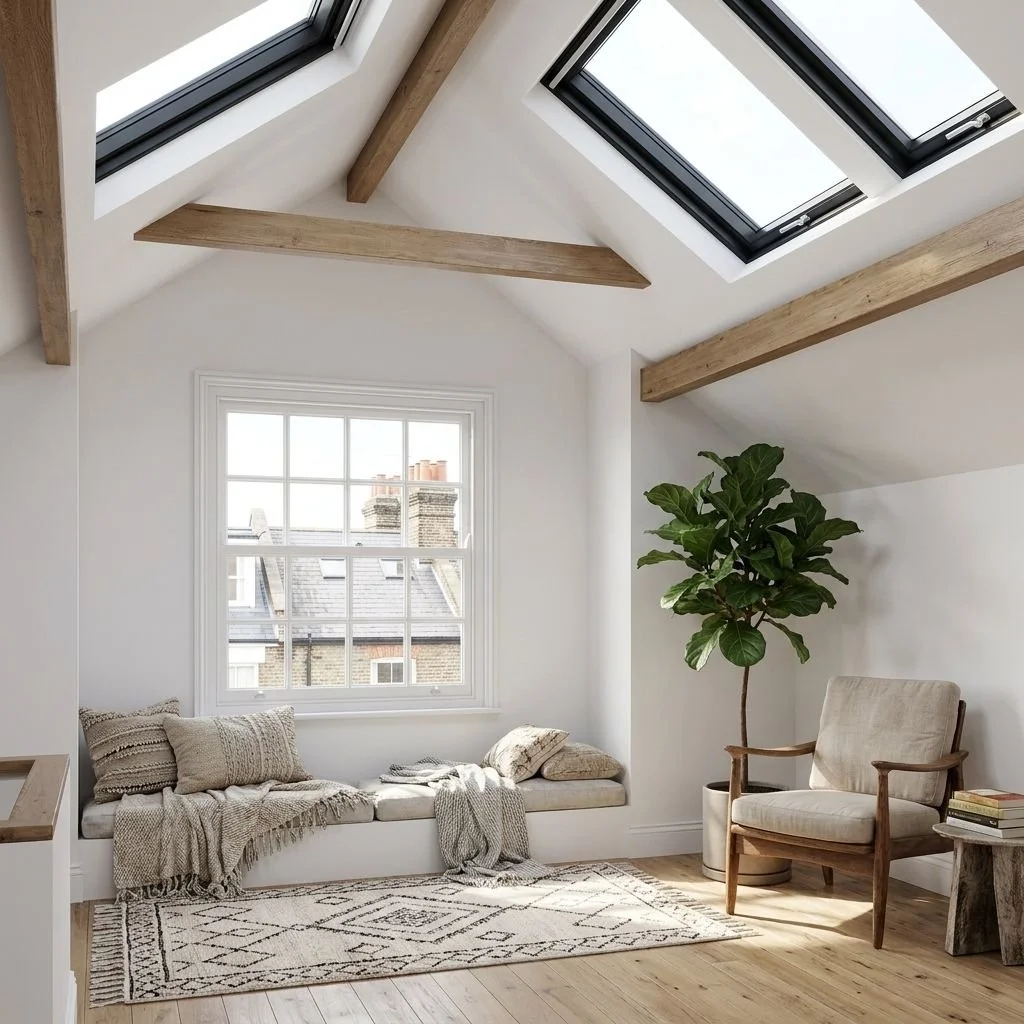
![Bright attic room with large window and skylights, featuring a built-in window seat with cushions and throws, a plush armchair, a potted plant, and a patterned rug on wooden floors.]()
Loft Conversion - Making the most of attic space
-
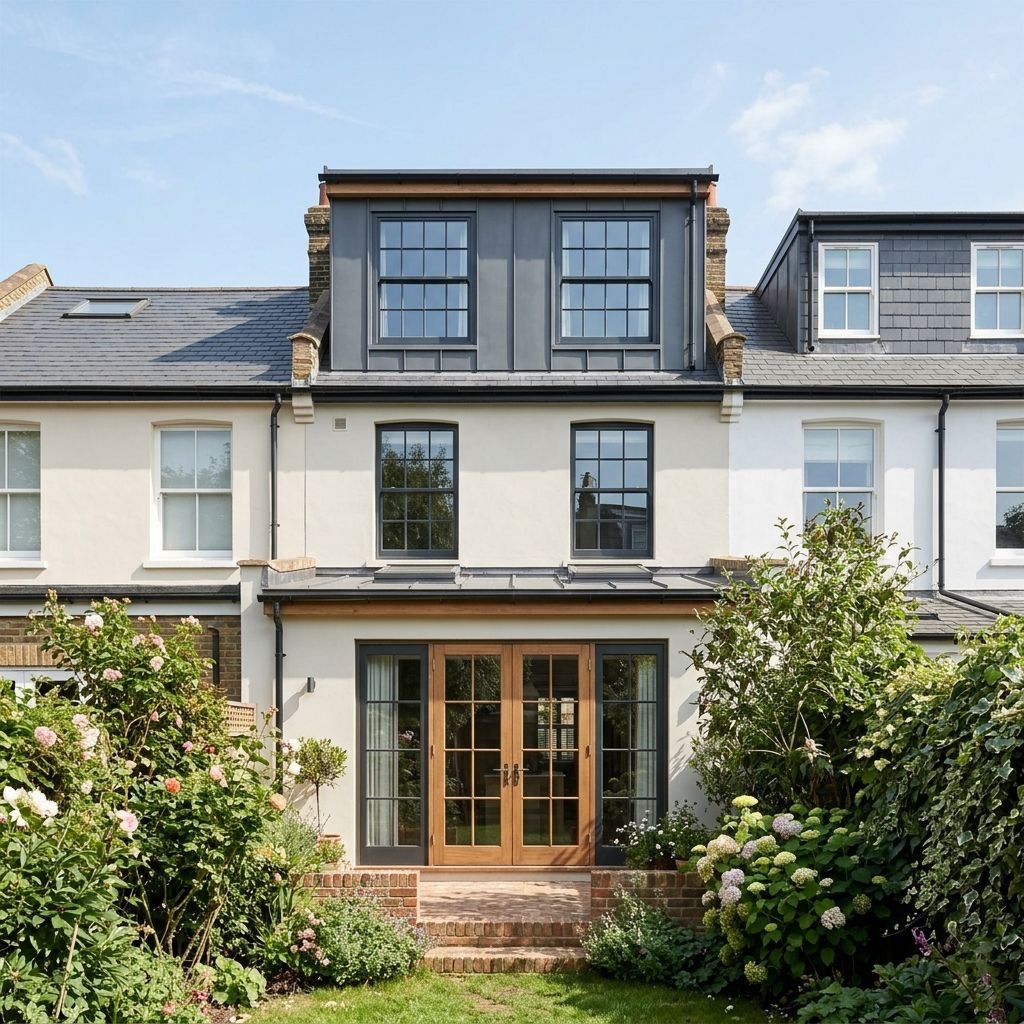
![Front view of a townhouse with garden, wooden door, multiple windows, and a dormer window on top, under a clear blue sky.]()
Rear & Loft Extension – Making more of available space
-
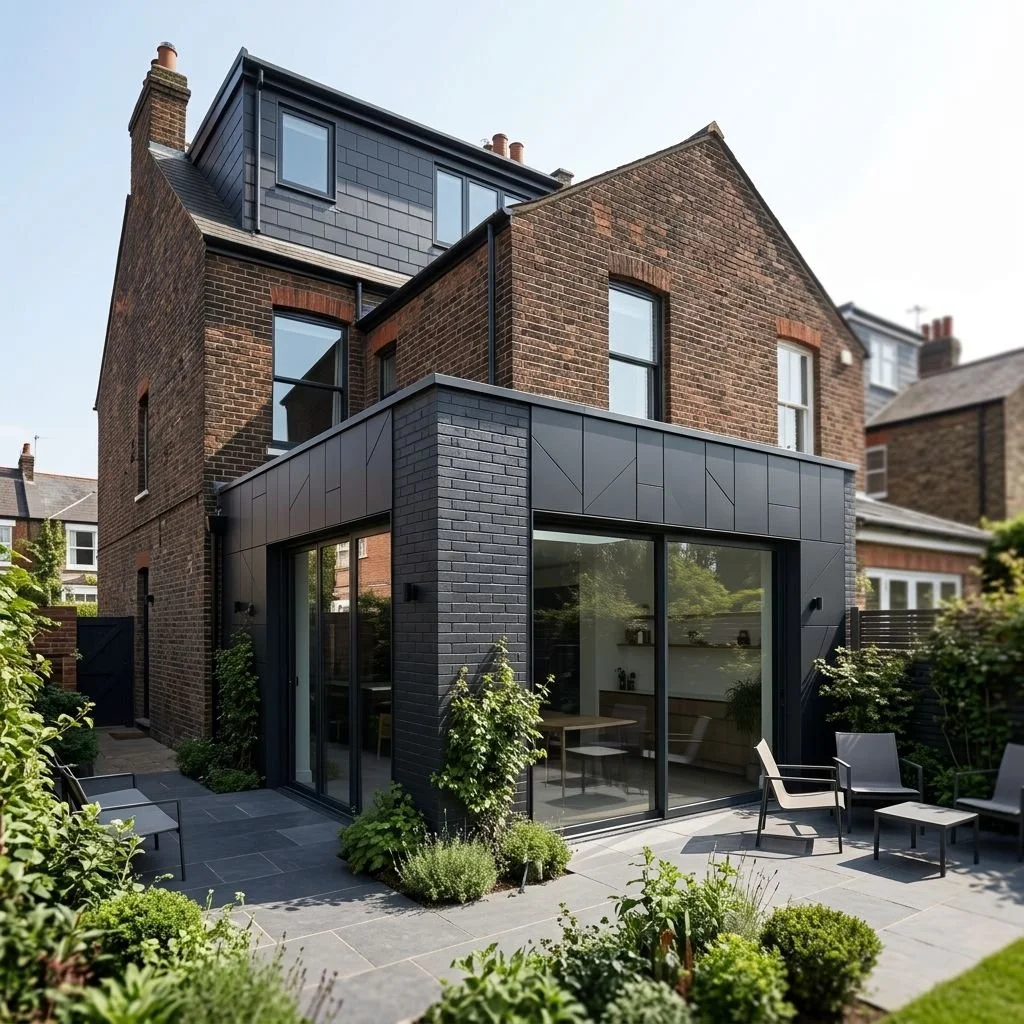
![Modern extension with black facade and large glass sliding doors on a brick house, outdoor patio with chairs and greenery]()
Rear & Loft Extension – Making the most of every space
-
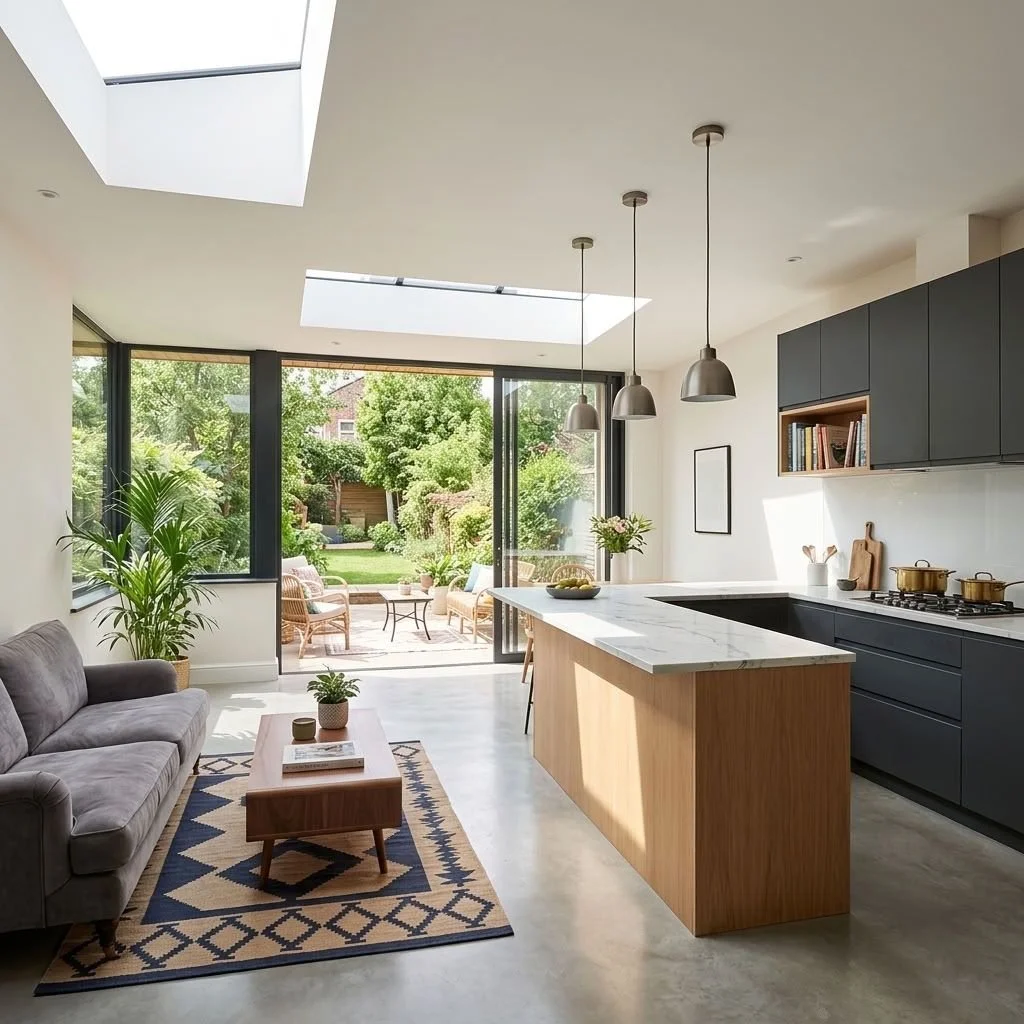
![Modern open-concept kitchen and living room with large windows and sliding glass door leading to a garden patio, with plants, a gray sofa, a wooden coffee table, and a kitchen island with a marble top.]()
House Renovation – Creating brighter, more open spaces
-
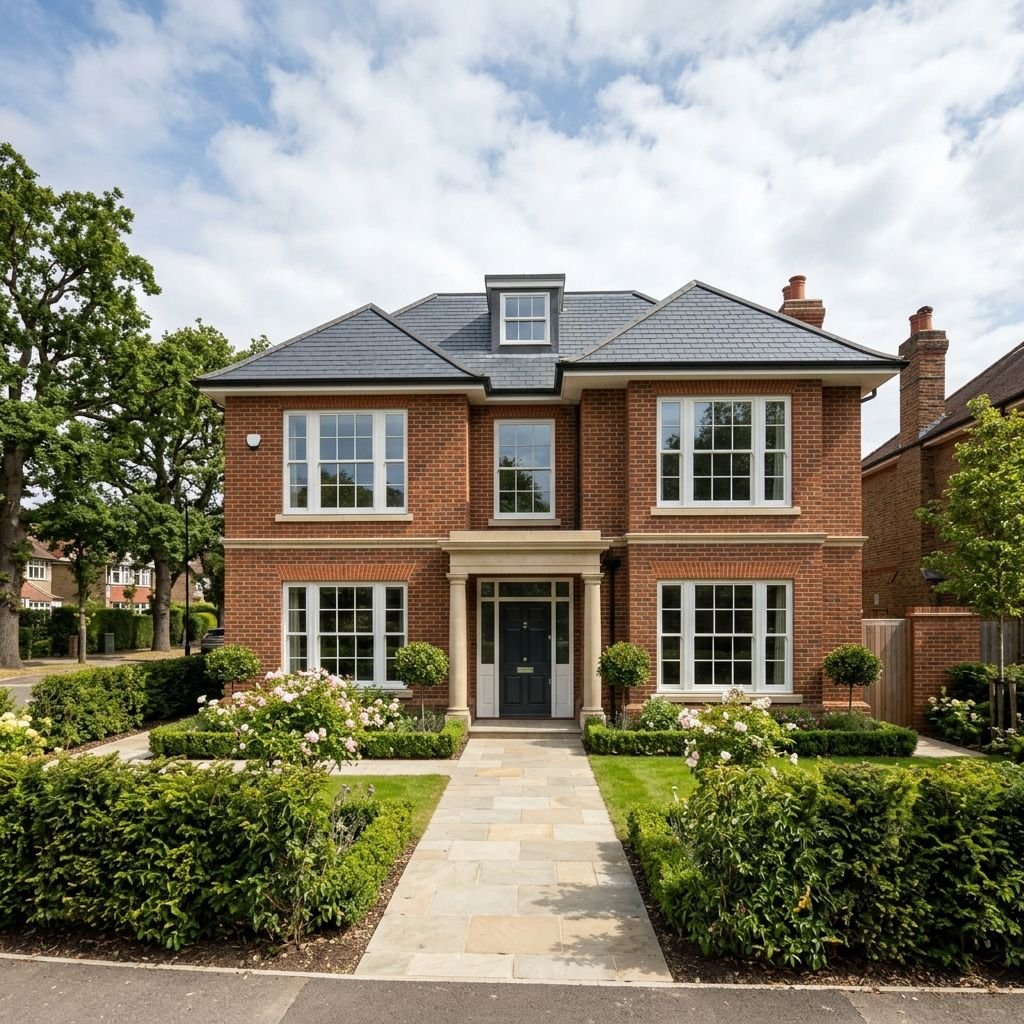
![A two-story brick house with a dark roof, white window frames, and a centered front door flanked by symmetrical bushes. The house is surrounded by a neatly landscaped garden with a stone pathway leading to the entrance.]()
New Build House - Designed to feel like home
-
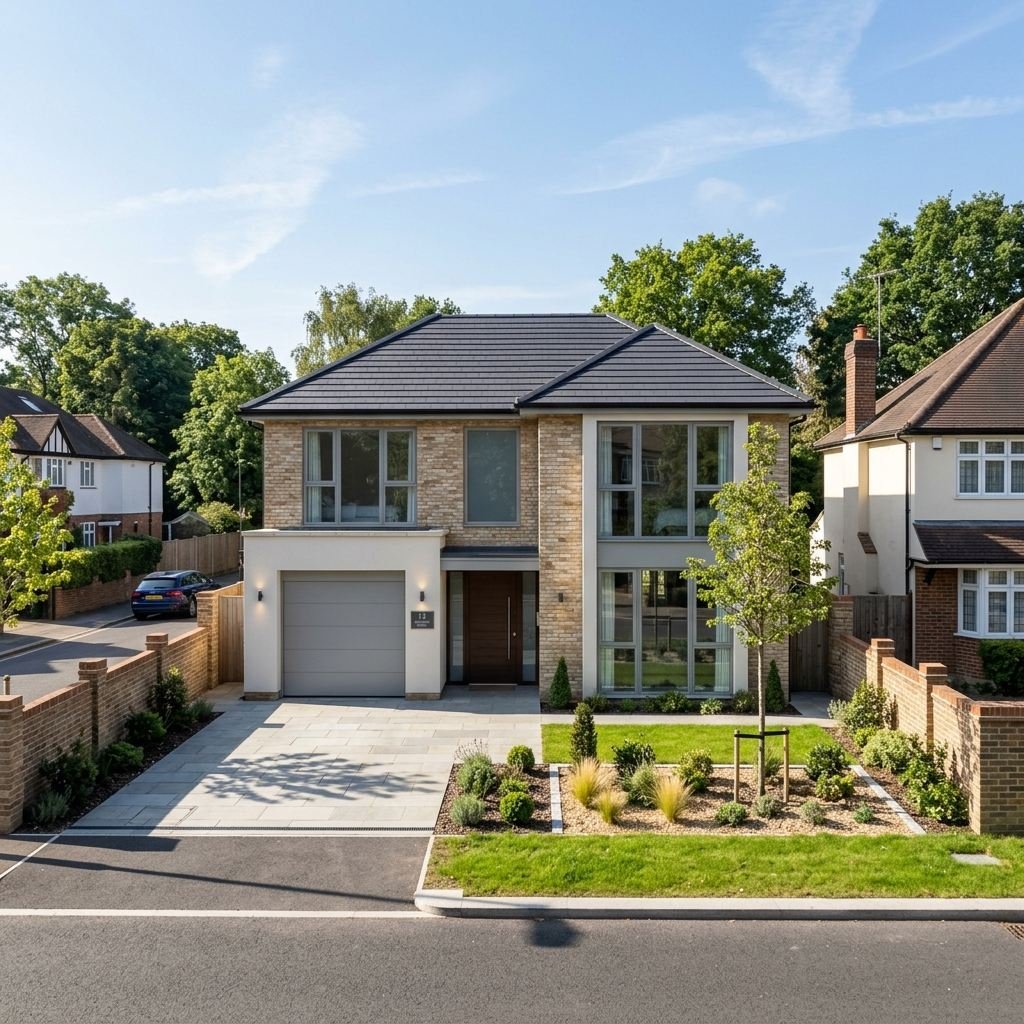
![Modern two-story house with a driveway, front yard, and large windows, surrounded by other houses and trees, under a blue sky.]()
New Build Home – Designed for Modern needs
-
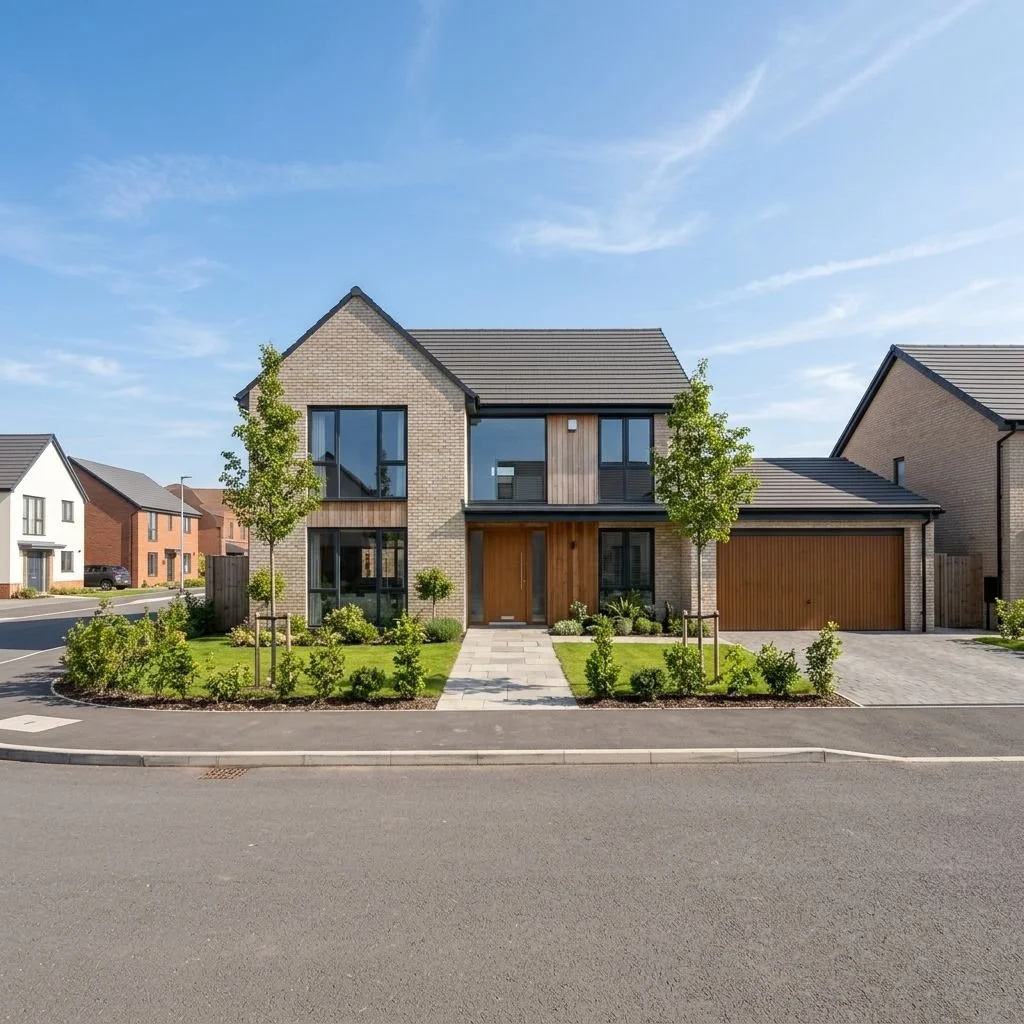
![Modern two-story house with brick and wood exterior, large windows, with a small front lawn, trees, and a driveway on the right.]()
New Build Home – Modern comfort, good design
-
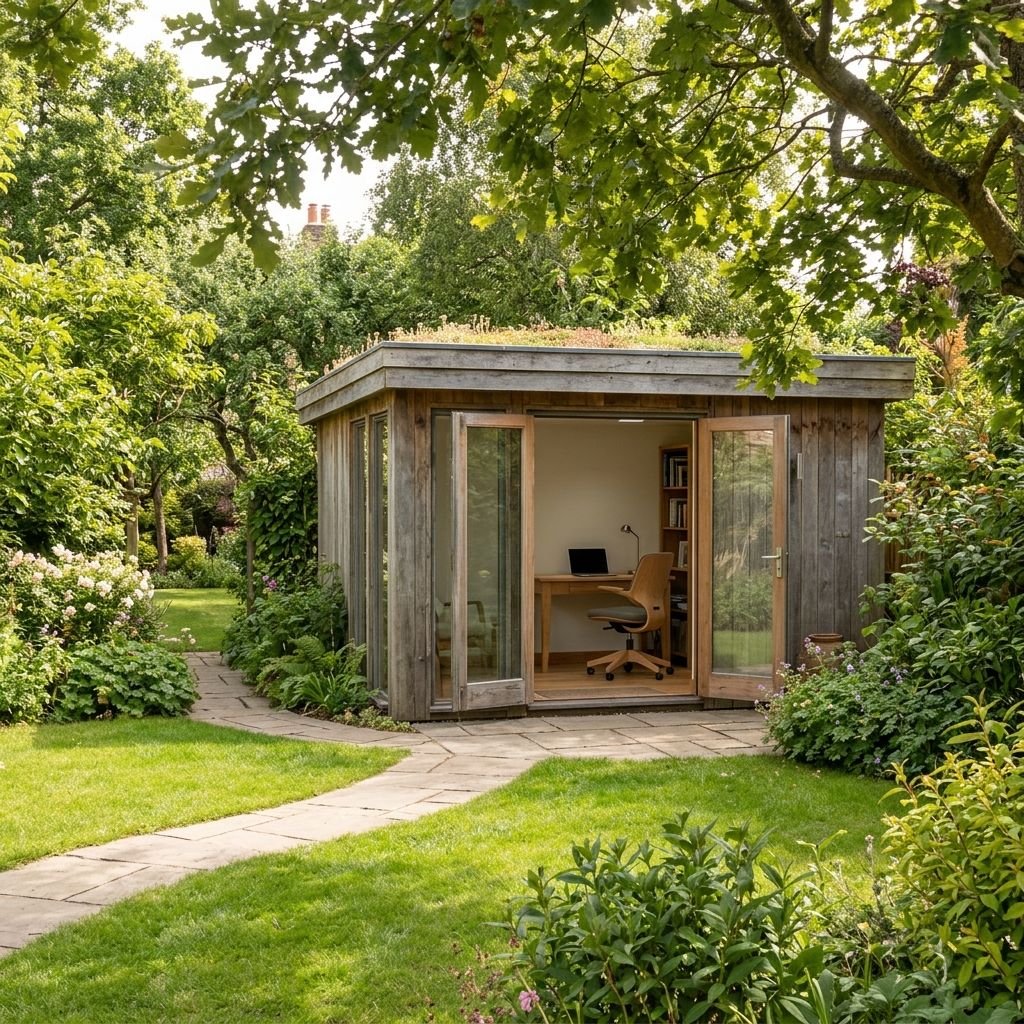
![A small wooden garden shed with glass doors, surrounded by lush green plants and a well-maintained lawn, with a stone pathway leading up to it.]()
Garden Room – A dedicated space to work and unwind
-
![A cottage-style backyard garden with a small pond, lush green plants, and flowers, leading to a modern glass-walled room with a view into a cozy interior with armchairs and paintings.]()
Garden Room – Work, relax and recharge
-
![Modern small house with glass walls and a metal exterior, surrounded by greenery and trees.]()
Garden Room – Making space for new ideas
-
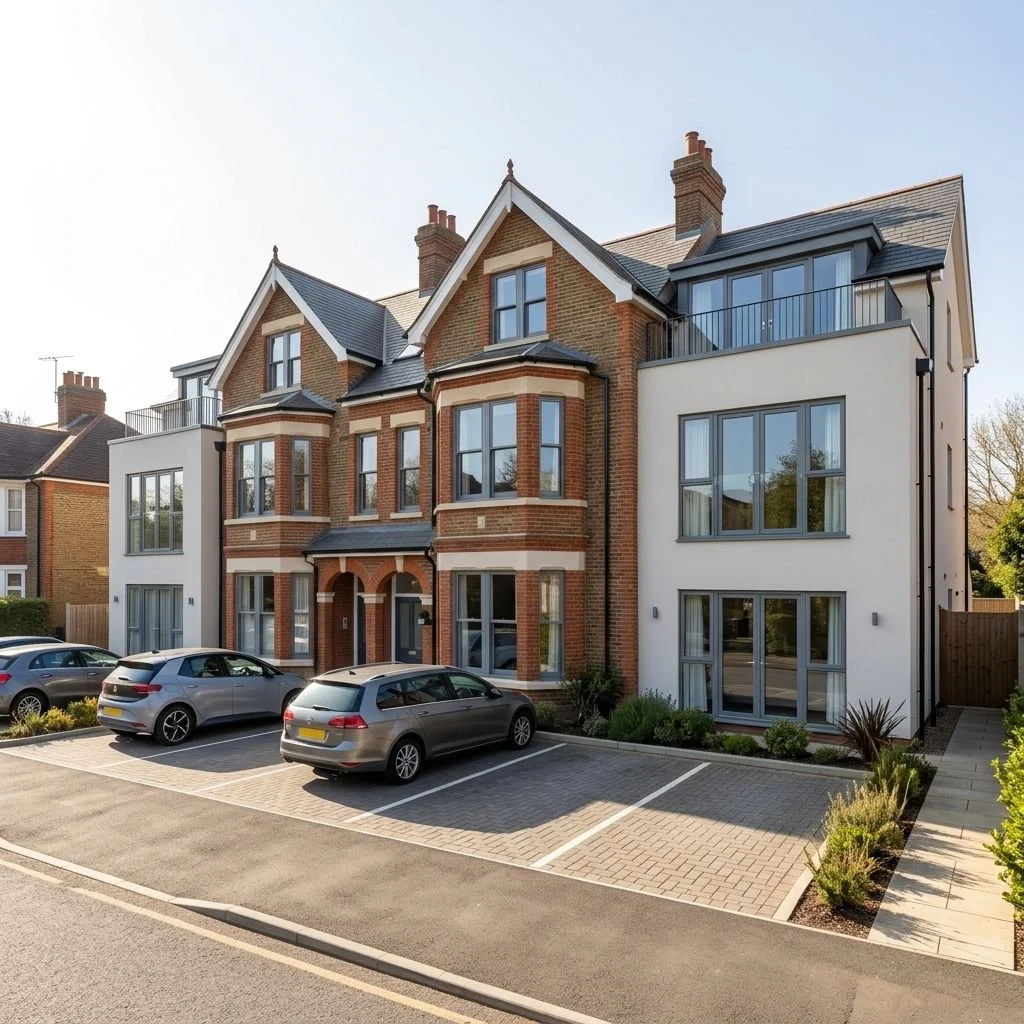
![Modern residential building with brick and white exterior, multiple large windows, and a driveway with parked cars.]()
Property Development – Turning potential into value
-
![Modern residential building with solar panels on the roof, plants in window boxes, parked car, and bicycles outside, with greenery and trees in the surroundings.]()
Property Development – Creating value through good design
-
![Modern multi-story residential buildings with brick and wood siding, large windows, and balconies, with parked cars, bicycles, and landscaped gardens in front.]()
Property Development – Smarter design, greater potential
-
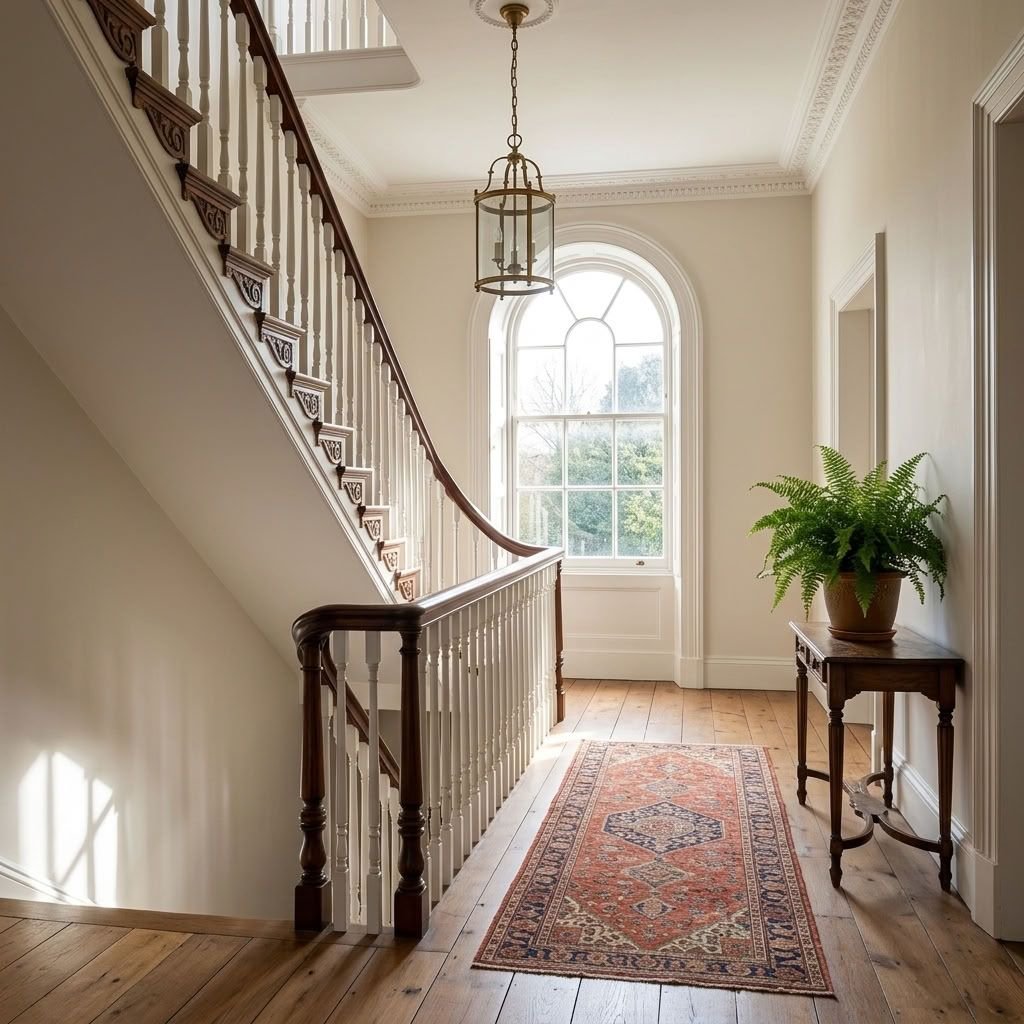
![Interior view of a well-lit hallway with a staircase on the left, a large arched window at the end, a hanging lantern light fixture, a wooden table with a potted fern, and a colorful rug on the hardwood floor.]()
Heritage Property - Refurbishment
-
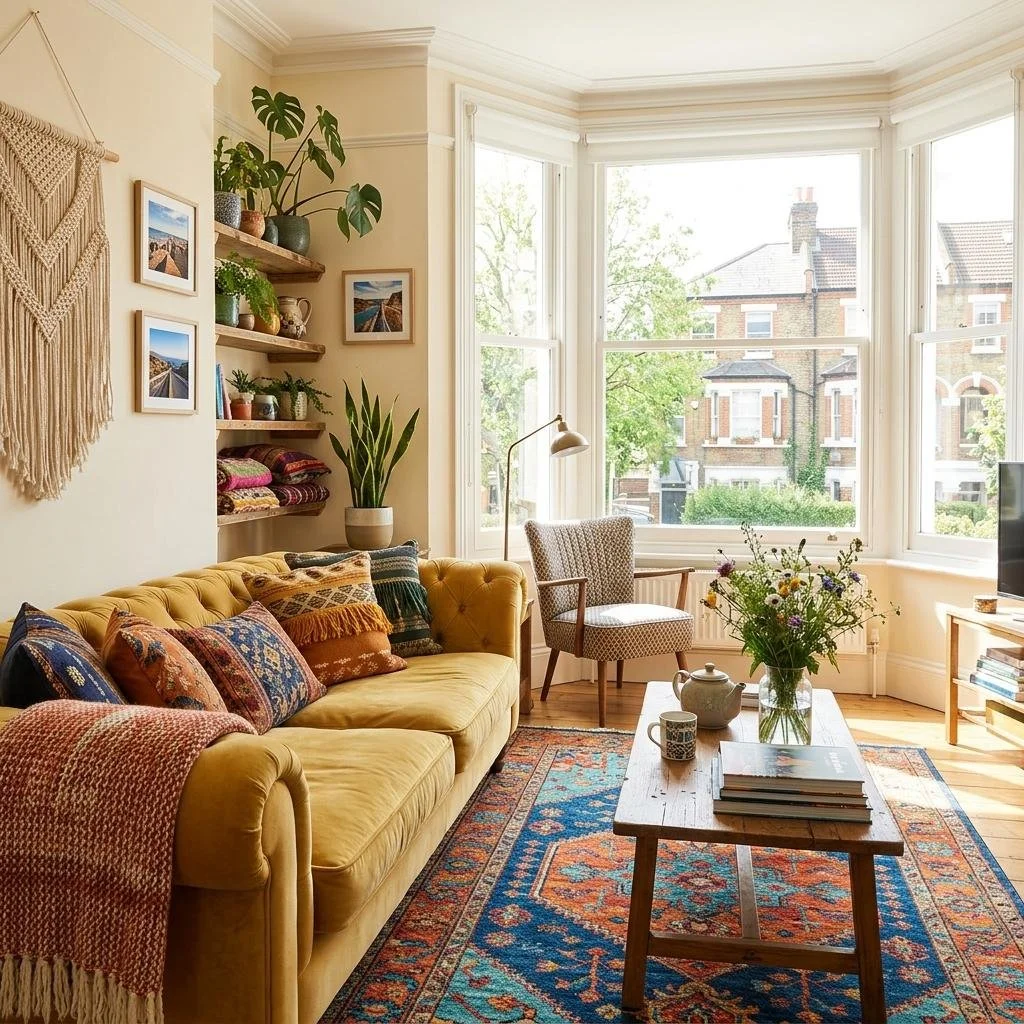
![Bright living room with large bay window, yellow sofa with patterned cushions, wooden coffee table with books and a flower vase, patterned rug, armchair near window, wall shelves with plants and pictures, and a TV on a small stand.]()
Interior Design - Boho style, bringing colour and character to home
-
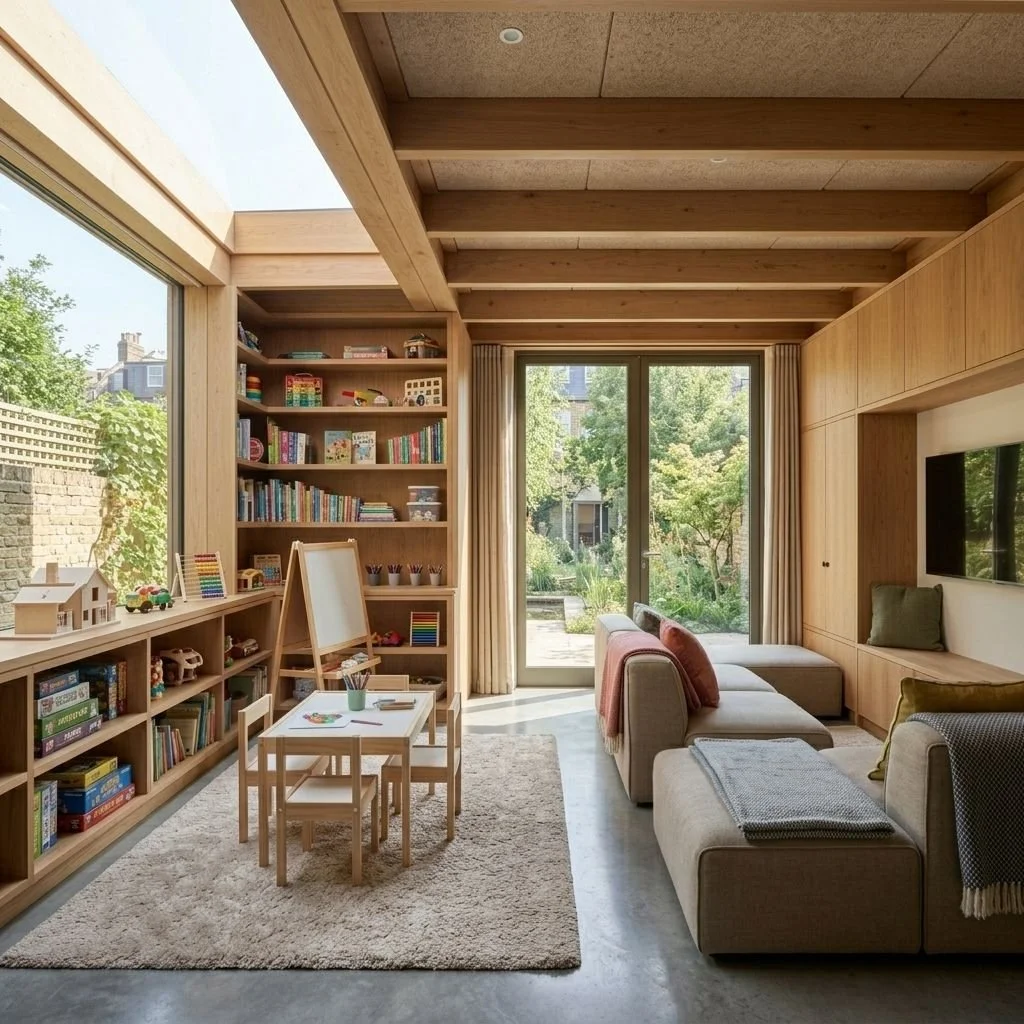
![A cozy living room with large windows and a sliding glass door opening to a garden, wooden ceiling beams, wooden wall panels, a beige sectional sofa with decorative pillows, a bookshelf filled with books and toys, a small table with chairs, and a play area with toys on the shelves.]()
Garage Conversion – Making Room for Play
-
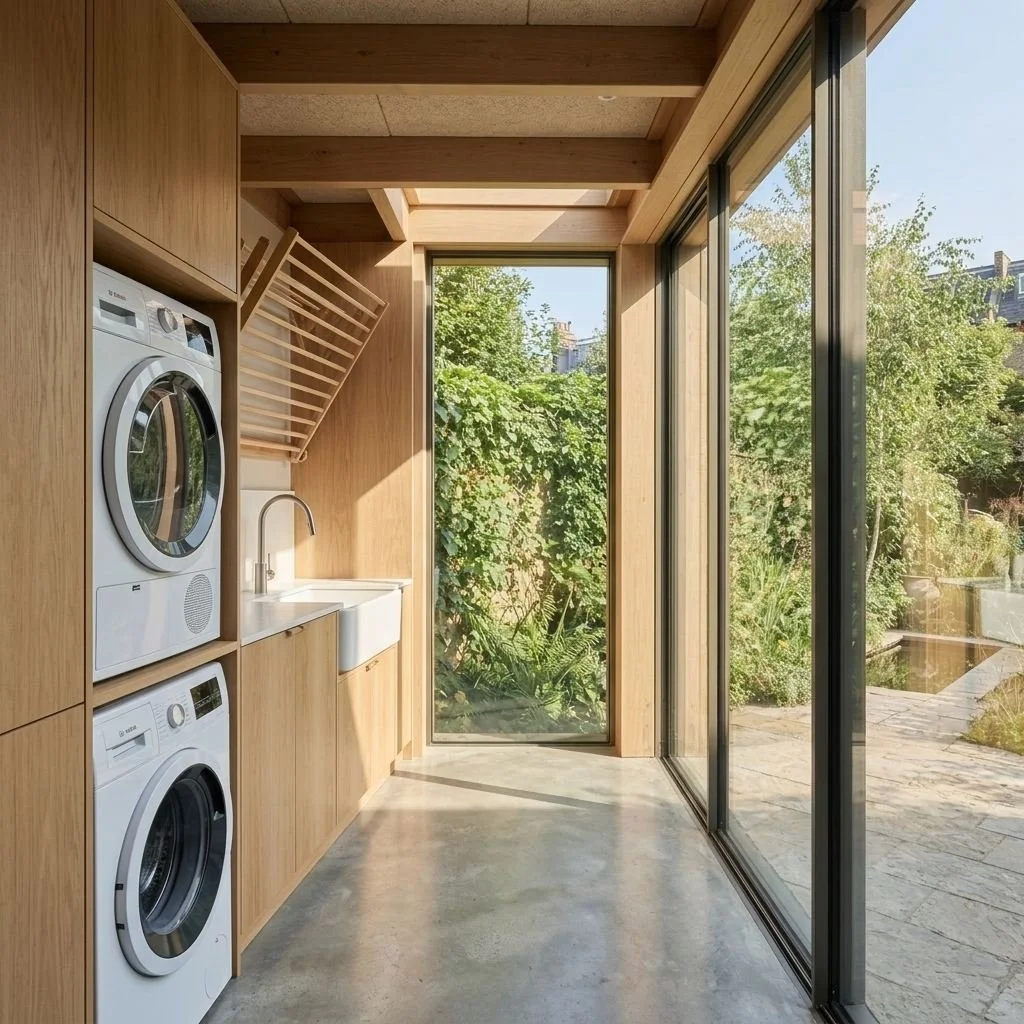
![Laundry room with wooden cabinetry, stacked washer and dryer, small sink, large sliding glass doors, and greenery outside.]()
Garage Conversions – Transforming unused space
-
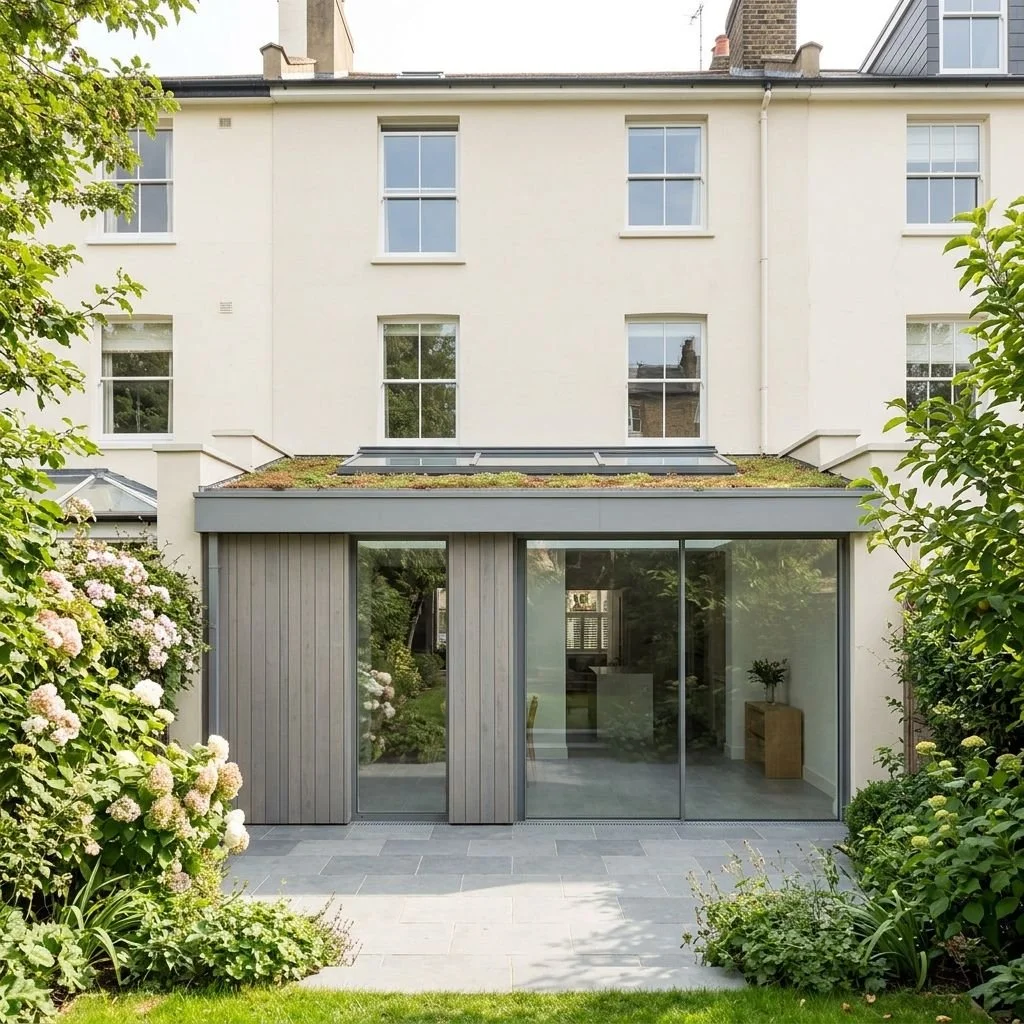
![Front view of a modern white residential building with large glass sliding doors on the ground level, surrounded by lush green bushes and flowering plants, with a small paved patio area in the foreground.]()
Rear Extension – More space, more light, better layout
-
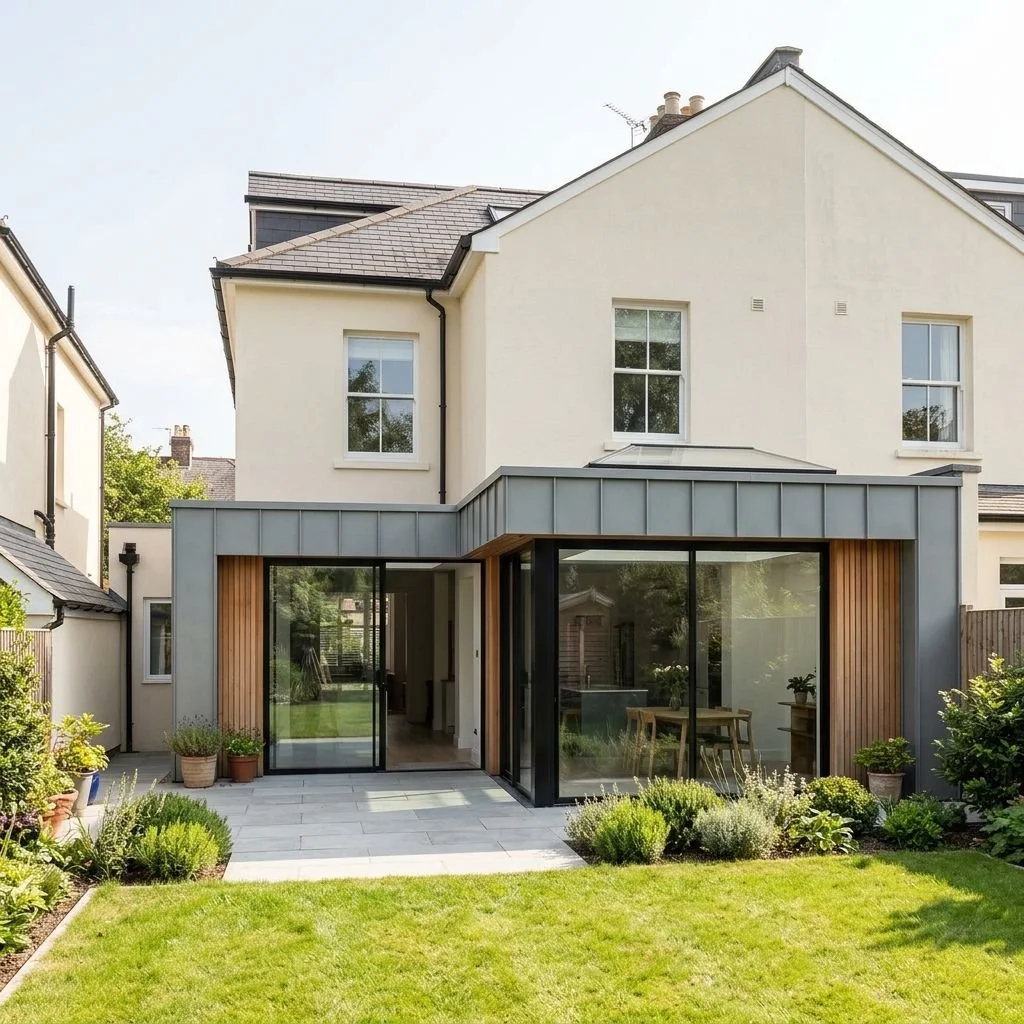
![Modern two-story house with a glass sunroom, gray and wooden exterior accents, surrounded by a green lawn and garden plants.]()
Rear Extension – Connecting home and garden
-
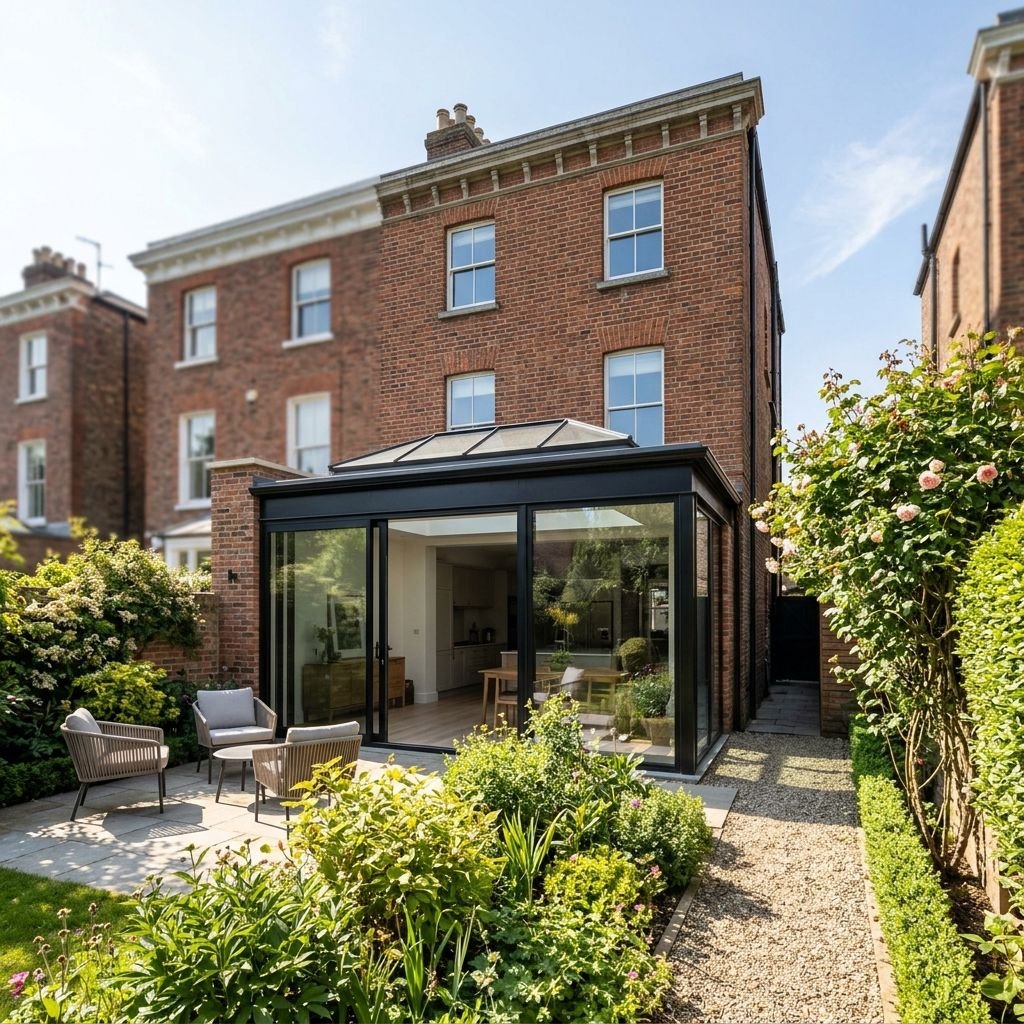
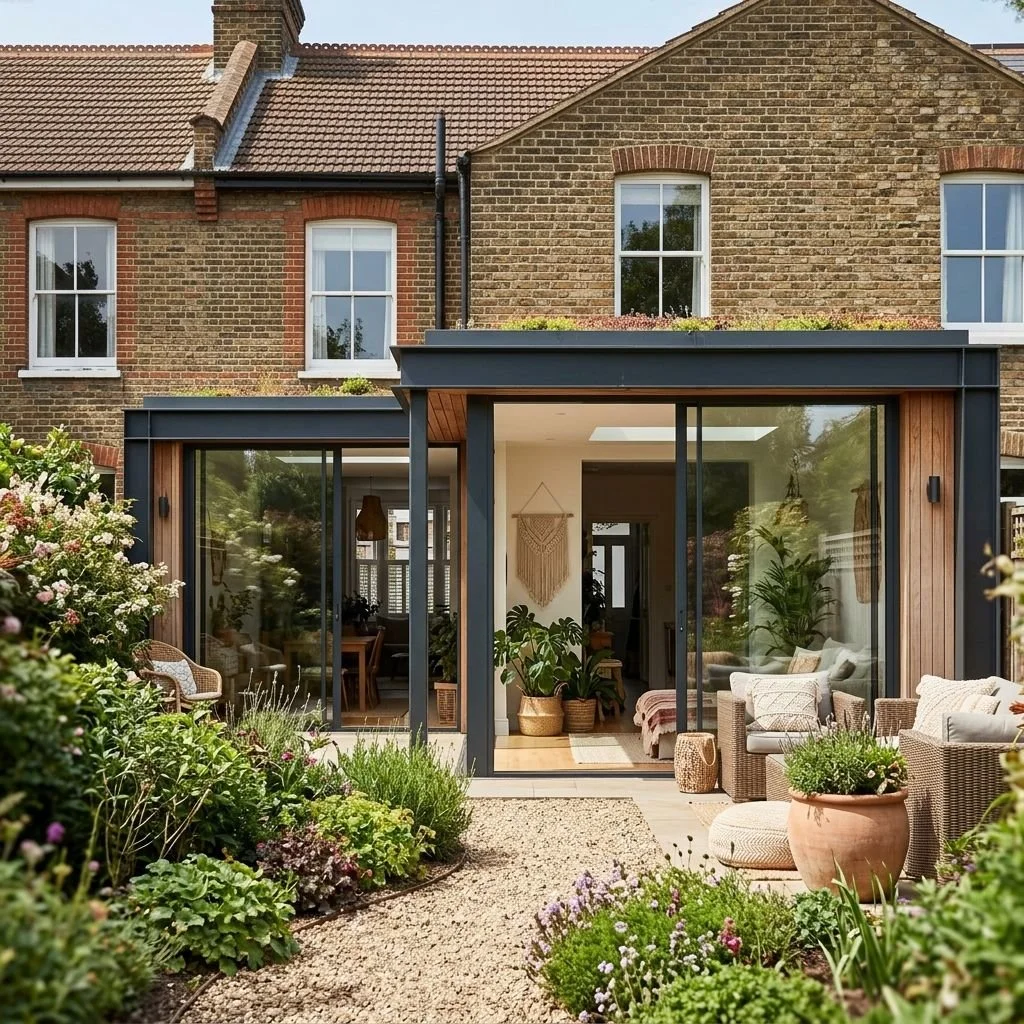
![Backyard view of a brick townhouse with a glass conservatory, outdoor seating on a patio, greenery, and a gravel pathway between hedges.]()
Rear Extension – Maximising space and natural light
-
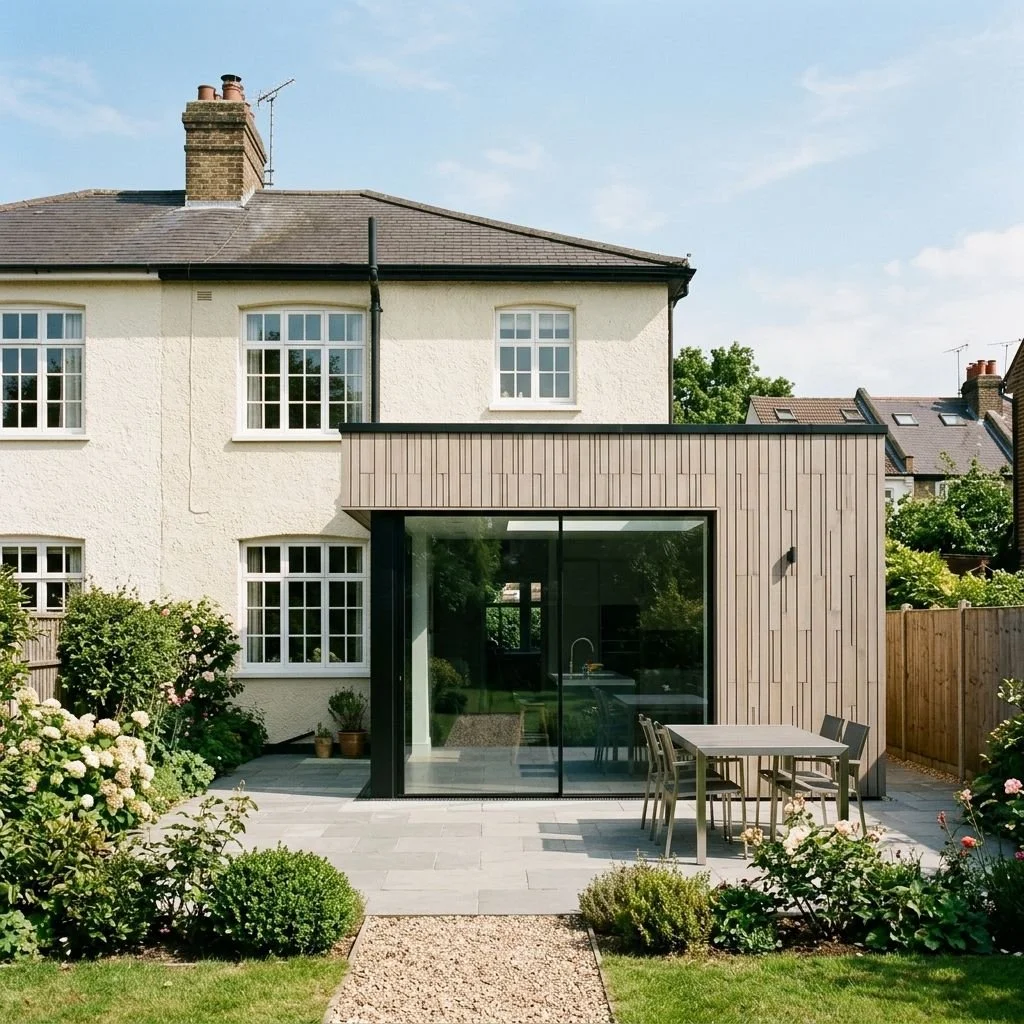
![Rear view of a modern house with a garden, outdoor dining table with six chairs, and a wooden extension with large glass sliding doors.]()
Rear Extension – Creating brighter, more open spaces
-
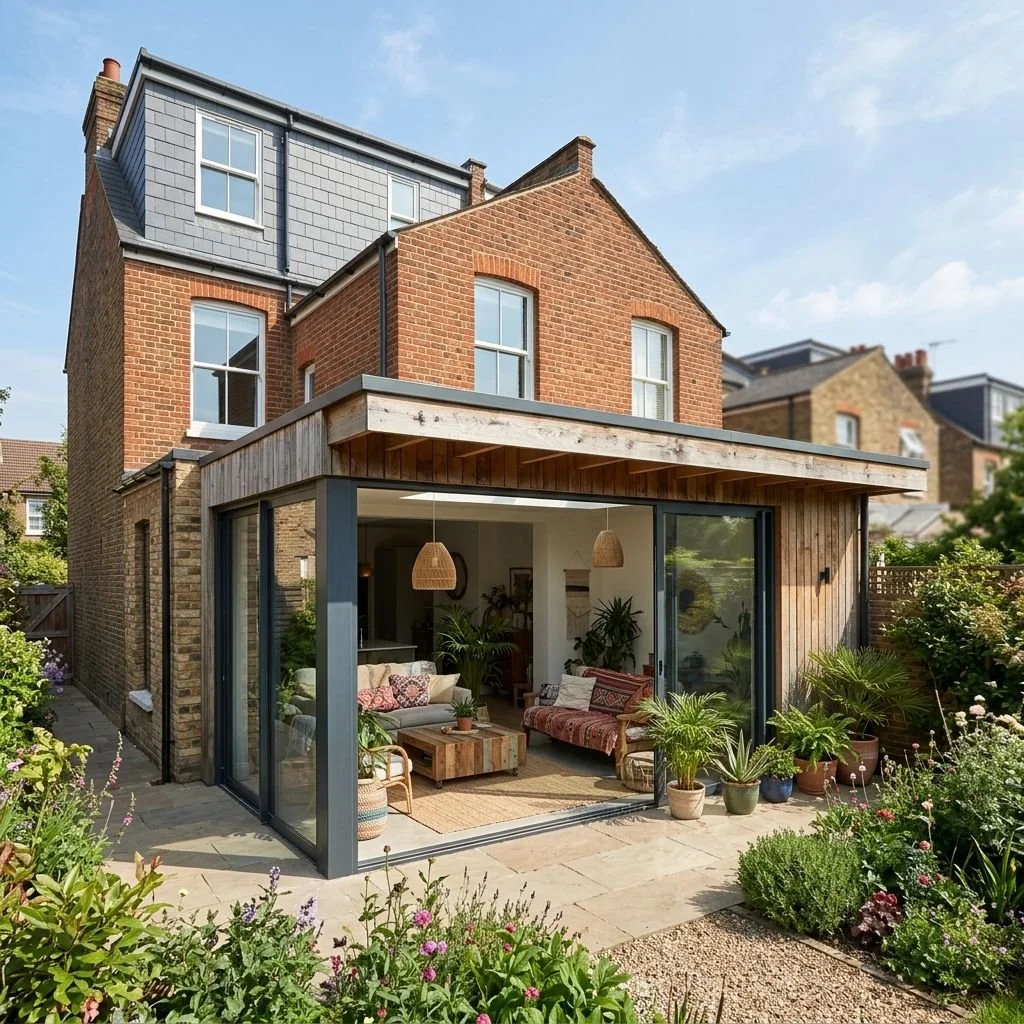
![A modern extension with large glass sliding doors on a brick house, overlooking a garden with potted plants and flowers, and interior living room furniture including couches and hanging lamps.]()
Rear Extension – More room for family
-
![A modern home with a glass sliding door leading to a lush garden patio, featuring outdoor seating and potted plants.]()
Rear Extension - Bright, stylish and sustainable
-
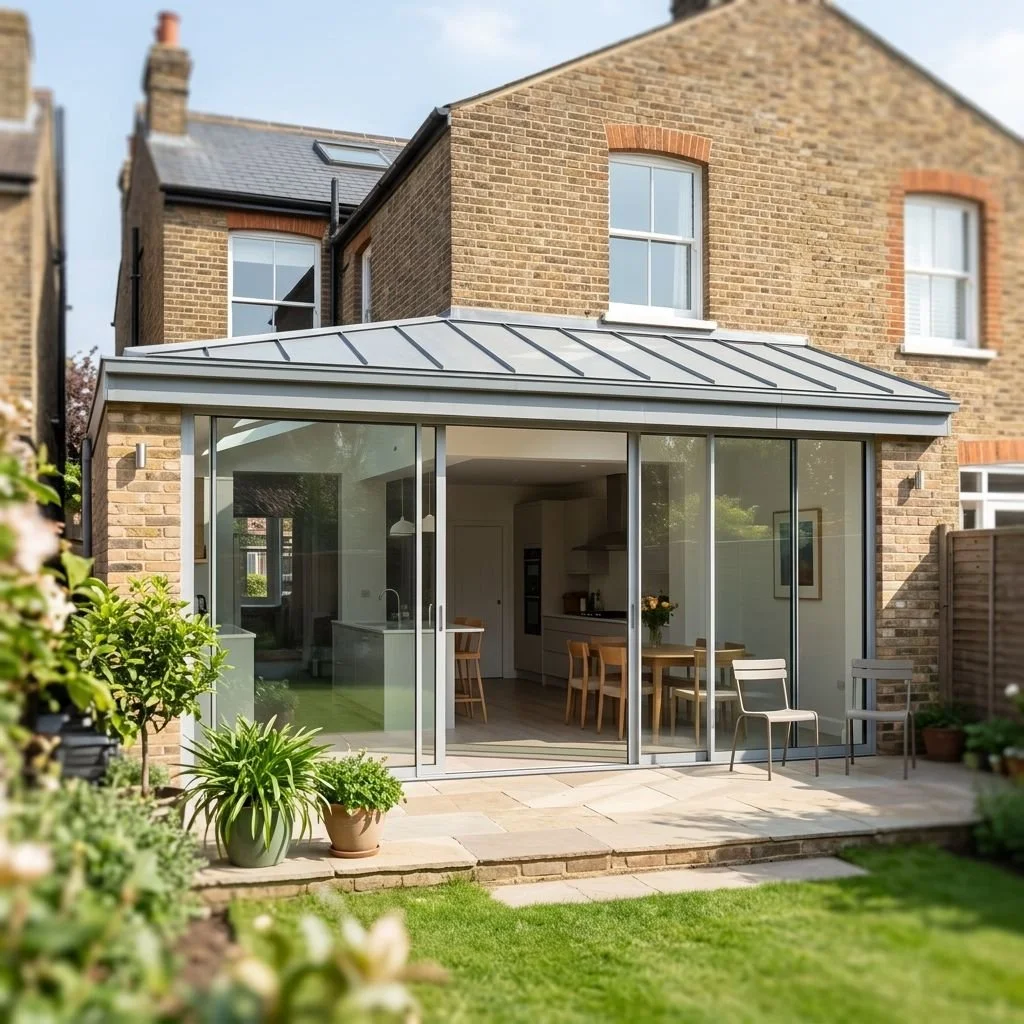
![A modern glass extension on a brick house with a potted plant and garden outside.]()
Rear Extension – Bringing home and garden together






Clarity before you begin.
Discover our approach to residential architecture, our design process, the services we provide and how we structure our fees.
Our brochure explains what to expect at each stage, helping you make informed decisions before proceeding.
Artist of Architecture
Our approach, services and fees.
The Design Process
Architectural Design Process
Each project follows a structured approach designed to reduce risk and improve planning success. Find out more about the full Design Process we use →
Initial Consultation
We begin by discussing: Project objectives, Site opportunities, Budget considerations, Planning requirements, Desired outcomes.
Survey and Analysis
A detailed understanding of the property is essential. We review: Existing layouts, Site constraints, Structural considerations, Access arrangements, Neighbouring context.
Concept Design
Concept proposals explore different approaches and design possibilities. This stage establishes: Spatial arrangements, Building form, External appearance, Functional improvements.
Planning Stage
Where planning permission is required, we prepare and submit the necessary documentation.
Technical Design
Detailed information is produced for construction purposes, ensuring the project can be delivered efficiently and accurately.
Construction Support
If desired Artist of Architecture can remain involved throughout the construction phase to help maintain design quality and respond to site-related queries.
Areas Served Around Hampton
Artist of Architecture provides residential architectural building design services in Hampton and the surrounding areas within the London Borough of Richmond upon Thames and South West London.
Projects are regularly undertaken in:
Hampton
Hampton Hill
Fulwell
Hanworth
East Molesey
West Molesey
and surrounding areas.
Looking for another location?
Explore the areas we serve across London, or get in touch to discuss your project. We'll be happy to advise whether we cover your location.
About Us
Artist of Architecture is a residential architecture studio and building design company with over a decade of experience helping homeowners navigate the complete design and construction process, from initial feasibility studies and planning applications through to building regulations approval, tender and construction.
As an intentionally small, author-led studio, every project is led by the same designer from the first consultation through to the completion of the technical drawings. Clients work directly with the person responsible for the design, ensuring continuity throughout the project, clear communication and a detailed understanding of the brief at every stage.
Over the years, our practice has prepared planning applications, permitted development submissions and building regulations packages for rear extensions, side return extensions, loft conversions, renovations, internal reconfigurations and new-build homes. This includes projects within conservation areas, properties affected by planning constraints and sites requiring careful coordination with local planning requirements.
This studio regularly supports clients through planning submissions, building regulations approval, tender documentation and contractor coordination, helping bridge the gap between design and construction. Drawings and specifications are developed with consideration of buildability, construction methods and project costs, helping reduce uncertainty before work begins on site.
Interior design is considered alongside the architecture from an early stage, allowing layouts, joinery, lighting, materials and finishes to be developed as part of a coordinated design process rather than as separate decisions later in the project.
Whether the project involves an extension, renovation, loft conversion or new-build home, the focus is on creating thoughtful, practical and enduring residential architecture that responds to the brief, the property and the realities of construction.
Architecture Guides
We publish a series of guides discussing planning and technical design, residential building design and cost considerations across Richmond upon Thames.
Featured Hampton Guides:
Extension Cost Per m² UK Explained: Richmond Homeowner's Guide to House Extension Costs
Loft Conversions in Richmond: Design Ideas, Planning Permission & Costs
Garden Rooms in Richmond: Design Ideas, Planning Permission & Costs
Architectural Drawings Richmond Cost: Prices, Planning Drawings & Extension Design Fees
Extension Planning Permission Richmond: A Complete Guide for Homeowners
Planning clarity for your Hampton project
Not sure whether your Hampton property requires planning permission or falls under permitted development?
We can review your property and outline the likely planning route based on the existing building, previous alterations, local planning considerations and the type of work proposed.
This early assessment helps clarify the opportunities, constraints and next steps before committing to detailed design work.
Why Homeowners Choose Artist of Architecture
Residential projects in Hampton require more than drawings. They require a clear understanding of the property, its surroundings, local planning considerations and the opportunities available within the existing building.
Homeowners choose Artist of Architecture because we provide:
✓ End-to-end architectural service from concept design through to construction information
✓ Experience designing homes within Hampton’s varied residential character
✓ Bespoke residential design tailored to each property and client brief
✓ Experience with conservation areas, heritage-sensitive properties and planning constraints
✓ Planning and technical design expertise
✓ Direct collaboration with your designer throughout the project
✓ Clear communication at every stage
✓ Support from initial feasibility through planning, technical design and construction
From feasibility studies and planning applications through to detailed design and construction support, we help homeowners create thoughtful residential architecture that balances functionality, character and long-term value.
We take on a limited number of projects each year to maintain design quality, continuity and personal involvement.
House Extensions Hampton FAQs
Planning Permission for House Extensions in Hampton
Do I need planning permission for a house extension in Hampton?
Many house extensions in Hampton require planning permission, particularly for double-storey extensions, side-return extensions, wraparound extensions, and properties located within conservation areas. Some smaller extensions may be permitted under permitted development rights. Homes in Hampton Village, Hampton Hill, and Hampton Wick may be subject to additional planning controls, so professional advice is recommended before starting a project.
What size extension can I build without planning permission in Hampton?
You may be able to build an extension without planning permission in Hampton under permitted development rights, provided the proposal complies with restrictions on height, depth, width, and site coverage. These rights may not apply to listed buildings, flats, maisonettes, conservation area properties, or homes affected by Article 4 Directions.
Can I extend my house in a Hampton conservation area?
Yes, you can extend a house in a Hampton conservation area, but the design must preserve or enhance the character of the area. Richmond upon Thames Council will assess factors such as materials, scale, roof design, architectural detailing, and impact on neighbouring properties. Conservation area extensions often require a more sensitive design approach than standard residential projects.
What are the conservation area rules in Hampton?
Conservation area extensions in Hampton must respect the architectural character of the surrounding neighbourhood. Planning applications are assessed against local conservation policies, design quality, building proportions, materials, and streetscape impact. Properties in Hampton Village and Hampton Hill conservation areas may be subject to stricter planning requirements.
House Extension Costs in Hampton
How much does a house extension cost in Hampton?
House extension costs in Hampton typically range from £2,400 to £4,800+ per square metre, depending on the size, specification, and complexity of the project. Factors affecting cost include structural alterations, glazing, site access, interior finishes, and heritage requirements. High-end extensions and complex structural works generally cost more.
How much does a loft conversion cost in Hampton?
A loft conversion in Hampton typically costs between £45,000 and £95,000+, depending on the design and level of structural work required. Dormer loft conversions, mansard loft conversions, and hip-to-gable conversions vary in cost, while additional bathrooms, bespoke joinery, and conservation area requirements can increase overall expenditure.
How much do architectural drawings cost in Hampton?
The cost of architectural drawings in Hampton depends on the type and complexity of the project. Architectural services may include concept design, planning drawings, building regulations drawings, and technical construction packages. Larger extensions, heritage projects, and new-build homes generally require more detailed design work.
Does a loft conversion or extension add more value in Hampton?
Both loft conversions and house extensions can increase property value in Hampton. The most suitable option depends on the existing property, available space, planning constraints, and local market conditions. A feasibility study can help identify which solution offers the greatest benefit for your home.
Design, Planning & Construction Process
How long does a house extension take in Hampton?
A typical house extension in Hampton takes between 4 and 9 months from initial design to completion. This usually includes feasibility studies, planning applications, technical design, and construction. Larger projects, conservation area properties, and listed buildings may require additional time.
How long does planning permission take in Hampton?
Planning applications in Hampton are usually determined by Richmond upon Thames Council within 8 to 12 weeks of submission. More complex proposals, conservation area projects, and listed building applications may take longer depending on consultations and planning requirements.
How do I start a house extension project in Hampton?
The best way to start a house extension project in Hampton is with an architectural consultation or feasibility study. This helps assess planning constraints, permitted development rights, project costs, design opportunities, and property-specific considerations before moving forward with detailed design and planning applications.
Do house extensions require building regulations approval in Hampton?
Yes. Most house extensions in Hampton require building regulations approval. Building regulations ensure that construction work meets standards for structural safety, fire protection, insulation, ventilation, drainage, and energy efficiency.
Do I need structural calculations for a house extension?
Yes. Structural calculations are usually required for extensions involving steel beams, load-bearing wall removals, new foundations, roof alterations, or structural openings. These calculations are normally prepared by a structural engineer during the technical design stage.
Do I need to notify neighbours before building an extension in Hampton?
You do not usually need to notify neighbours before submitting a planning application, but early communication can help reduce objections and avoid delays. If the works affect a shared wall or boundary, the Party Wall etc. Act 1996 may require formal notice to adjoining owners.
House Extension Planning Permission FAQs in Hampton
Can I extend my house without planning permission in Hampton?
Some small house extensions in Hampton may fall under permitted development rights, but many properties require planning permission due to conservation areas, Article 4 Directions, listed buildings, and Richmond upon Thames Council planning controls.
What extensions are classed as permitted development in Hampton?
Some single-storey rear extensions and certain loft conversions may qualify as permitted development if they meet limits on height, depth, width, and site coverage. Properties in Hampton Village, Hampton Hill, and other protected areas may have additional restrictions.
Do I need planning permission for a two-storey extension in Hampton?
Yes, most two-storey extensions in Hampton require planning permission. Richmond upon Thames Council considers factors including building scale, overlooking, daylight, neighbouring properties, and the impact on local character.
How strict is Richmond upon Thames Council on house extensions?
Richmond upon Thames Council applies detailed planning and design policies to house extensions in Hampton. Proposals must respect the existing property, neighbouring homes, local character, and conservation area guidance where applicable.
Can planning permission be refused for a small extension in Hampton?
Yes. Even small extensions can be refused if they affect privacy, daylight, neighbouring amenity, architectural character, or fail to meet planning requirements.
What happens if I build an extension without planning permission in Hampton?
Building an extension without the required planning permission may result in enforcement action from Richmond upon Thames Council, including retrospective planning applications or requirements to alter or remove unauthorised works.
How long does planning permission last in Hampton?
Planning permission for a house extension in Hampton is normally valid for three years from the approval date. Work must usually begin within this period to keep the permission valid.
Can I extend a listed building in Hampton?
Yes, but listed buildings require careful consideration. Extensions usually need planning permission and Listed Building Consent to protect the historic and architectural significance of the property.
Do Article 4 Directions affect house extensions in Hampton?
Yes. Article 4 Directions can remove permitted development rights, meaning planning permission may be required for works that would normally be allowed without an application.
Can neighbours object to my extension in Hampton?
Yes. Neighbours can submit comments during the planning process, but Richmond upon Thames Council makes decisions based on planning policies, design quality, and material planning considerations.
Do rear extensions always need planning permission in Hampton?
No. Some smaller rear extensions may be allowed under permitted development. Larger rear extensions, conservation area properties, and listed buildings often require planning permission.
Do side return and wraparound extensions need planning permission in Hampton?
Most side return and wraparound extensions in Hampton require planning permission because they increase the overall footprint of the property and may affect neighbouring homes, appearance, and local character.
House Extension Design & Types in Hampton FAQs
What is the most popular extension type in Hampton?
Rear extensions and side return extensions are popular house extension designs in Hampton, particularly for period homes where homeowners want larger kitchens, dining areas, and open-plan family spaces.
What is a side return extension?
A side return extension uses the unused space at the side of a property to increase the internal floor area. It is often used to create larger kitchens, dining areas, and improved layouts in Hampton homes.
What is a wraparound extension?
A wraparound extension combines a rear extension and side return extension to maximise ground floor space. This creates a larger open-plan layout with better natural light, circulation, and connection to the garden.
What is the difference between single and double storey extensions in Hampton?
A single-storey extension adds space to one floor, while a double-storey extension creates additional space across two levels. Double-storey extensions usually require planning permission due to their larger scale and impact on neighbouring properties.
Can I add a glass extension to my house in Hampton?
Yes, glass extensions can work well in Hampton when carefully designed. They must meet building regulations for insulation and energy performance, and extra consideration may be needed for conservation areas and period properties.
Are open-plan kitchens allowed in Hampton?
Yes. Open-plan kitchen, dining, and family spaces are common goals for house extensions in Hampton. Good design can improve natural light, functionality, and how the home connects with the garden.
Can I extend a period property in Hampton?
Yes, period homes in Hampton can often be extended with a suitable design approach. Extensions must consider the existing architecture, planning requirements, conservation areas, and the character of the surrounding area.
Do modern extensions work with traditional homes in Hampton?
Yes. Contemporary extensions can complement traditional Hampton properties by either matching existing materials or creating a high-quality modern contrast. The key is a design that respects the original building.
What materials are best for house extensions in Hampton?
Popular extension materials include brick, glass, timber, and steel. In conservation areas, materials usually need to complement the existing property and respond sensitively to the local architectural character.
How can I increase natural light in a Hampton house extension?
Natural light can be improved through rooflights, skylights, large windows, glazed doors, roof glazing, and open-plan layouts. A well-designed extension can make a home feel brighter and more spacious.
Do I need an architectural firm for a house extension in Hampton?
An architectural firm or architectural designer is not legally required for every extension, but professional design advice can improve layouts, planning approval chances, construction accuracy, and overall project quality.
House Extension Costs in Hampton FAQs
How much does a house extension cost in Hampton?
House extensions in Hampton typically cost between £2,400 and £4,800 per m², depending on the size, design complexity, materials, structural work, site access, and specification level. Bespoke architectural finishes and complex construction details can increase costs.
Why are house extensions expensive in Hampton?
House extension costs in Hampton are influenced by London construction prices, skilled labour costs, planning requirements, conservation considerations, and the demand for high-quality design in period and family homes.
What is the cheapest way to extend a house in Hampton?
The most cost-effective house extension in Hampton is usually a simple single-storey rear extension with a straightforward layout, standard materials, limited structural steel, and efficient construction methods.
Are loft conversions cheaper than house extensions in Hampton?
Loft conversions in Hampton can be more cost-effective than extensions because they use existing roof space. Costs depend on the roof structure, insulation requirements, staircase design, and whether bathrooms or structural alterations are needed.
What affects house extension costs the most in Hampton?
The biggest cost factors for a Hampton house extension include structural steelwork, foundations, glazing, drainage, site access, finishes, and the complexity of the design. Conservation requirements can also affect costs for some properties.
Can I build a house extension in Hampton with a £100,000 budget?
Yes, a £100,000 budget may achieve a modest house extension in Hampton depending on size, specification, planning requirements, and construction complexity. A feasibility assessment can help determine what is achievable.
What type of extension adds the most value to a house in Hampton?
Rear kitchen extensions, side return extensions, and well-designed loft conversions often add the most value to Hampton homes by improving space, layout, and functionality. The value increase depends on design quality and the local property market.
What is the cheapest type of house extension in Hampton?
The cheapest house extension type is usually a simple single-storey rear extension with a compact footprint, standard finishes, and minimal structural changes. More complex designs with large glazing areas or structural alterations usually cost more.
Is it cheaper to extend or move house in Hampton?
For many Hampton homeowners, extending can be more cost-effective than moving when the existing location works well. Moving involves stamp duty, estate agent fees, and relocation costs, while an extension can improve the current home.
What adds the most value to a house in Hampton?
The improvements that typically add the most value include kitchen extensions, additional bedrooms through loft conversions, improved layouts, and better connections between indoor and outdoor spaces.
Loft Conversions in Hampton FAQs
What is a dormer loft conversion in Hampton?
A dormer loft conversion is a roof extension that creates additional headroom and usable floor space, usually at the rear of a property. It is one of the most popular loft conversion types for Hampton homes.
What is a mansard loft conversion in Hampton?
A mansard loft conversion involves altering the roof structure to create a near-vertical rear wall and flat roof, providing maximum internal space. Mansard conversions usually require planning permission due to their scale and appearance.
Do loft conversions in Hampton need steel beams?
Most loft conversions require structural steel beams (RSJs) to support the new floor structure and roof alterations. Structural calculations ensure the conversion is safe and meets building regulations.
Can I add a bathroom to a loft conversion in Hampton?
Yes, a bathroom can usually be added to a loft conversion in Hampton if there is suitable space, plumbing, drainage, ventilation, and compliance with building regulations. Loft bathrooms are a common way to increase functionality.
Do loft conversions add value to homes in Hampton?
Yes, a well-designed loft conversion can increase the value and usability of a Hampton property, particularly when it creates an additional bedroom, bathroom, or flexible family space.
Do I need planning permission for a loft conversion in Hampton?
Many loft conversions in Hampton may fall under permitted development rights if they meet specific requirements. Planning permission may be required for larger roof alterations, mansard conversions, conservation area properties, or listed buildings.
Can I convert the loft in a terraced house in Hampton?
Yes, loft conversions are common in Hampton terraced and period properties. The design must consider roof structure, permitted development limits, party wall requirements, and any local planning restrictions.
What is the best type of loft conversion in Hampton?
The best loft conversion depends on the property:
Dormer loft conversions: practical and cost-effective for creating extra space
Mansard loft conversions: maximise available space but often require planning permission
Hip-to-gable loft conversions: suitable for properties where the roof shape allows additional width
Planning Process for House Extensions in Hampton FAQs
What is the planning process for a house extension in Hampton?
The planning process usually includes: 1. Feasibility assessment, 2. Concept design, 3. Preparation of architectural drawings, 4. Planning application submission to Richmond upon Thames Council, 5. Consultation period, 6. Planning decision (usually around 8 weeks for standard householder applications).
Why are planning applications refused in Hampton?
Common reasons for refusal include poor design quality, excessive size or bulk, overlooking neighbours, loss of privacy, impact on local character, and proposals that do not meet Richmond upon Thames planning policies.
What delays planning permission in Hampton?
Planning delays can be caused by design changes requested by planning officers, missing documents, neighbour comments, conservation concerns, heritage issues, or the need to revise proposals to meet planning requirements.
How do I get planning permission approved in Hampton?
Planning approval is more likely when a proposal demonstrates high-quality design, appropriate scale, good relationships with neighbouring properties, and a clear understanding of Richmond upon Thames planning guidance and local character.
What is included in a planning application in Hampton?
A planning application usually includes existing and proposed drawings, site location plans, block plans, application forms, and supporting documents such as a design and access statement where required by Richmond upon Thames Council.
How long does planning permission take in Hampton?
Most householder planning applications in Hampton are typically decided within around 8 weeks, although larger projects, conservation area properties, listed buildings, or complex proposals may take longer.
Does Hampton have conservation area planning restrictions?
Yes. Some parts of Hampton, including areas with historic buildings and architectural character, have additional planning considerations. Extensions must carefully consider materials, appearance, scale, and the impact on the surrounding area.
Can I appeal a refused planning application in Hampton?
Yes. If a planning application is refused, you can submit an appeal through the Planning Inspectorate. Many homeowners first review the refusal reasons and consider whether amendments could address the planning concerns.
Start Your Hampton Home Project
Designing residential projects in Hampton requires careful balance between planning policy, architectural quality, and practical use of space. Whether improving a period property, extending a family home, or reconfiguring internal layouts, a considered approach leads to better long-term outcomes.
Artist of Architecture provides tailored design services across Hampton, supporting homeowners from initial ideas through to planning and delivery. Start Your Hampton Home Project →
Are you considering a project in Hampton or surrounding areas?
Book a free consultation to discuss your project.
About this page
Prepared by Vladis, Director at Artist of Architecture. Responsible for residential design, planning strategy and project delivery across extension, loft conversion and new-build schemes. Over 10 years’ experience preparing planning applications, permitted development submissions and building regulations packages with local planning authorities.
Last updated: 2026
Disclaimer: The information on this website is provided for general informational purposes only and does not constitute legal, planning, architectural, or professional advice. Planning requirements, costs, and timescales can vary depending on the property, project, and site-specific circumstances. While every effort has been made to ensure accuracy, no guarantee is given that the information is complete, current, or applicable to your situation. For advice specific to your property and project, please contact Artist of Architecture directly.