Architecture Firm
in Wimbledon
Artist of Architecture is a boutique bespoke architecture firm and building design company creating elegant residential spaces across Wimbledon and South West London.
This studio specialises in quality homes, bespoke renovations, high-end extensions and carefully crafted interiors designed around people and their needs.
From large detached family residences near Wimbledon Village to period homes and modern developments, designing spaces that balance beauty, practicality and long-term value.

Bespoke Residential Design in Wimbledon, London (SW19 & SW20)
Wimbledon is one of London’s most desirable and architecturally diverse areas, known for its combination of period homes, green surroundings, and high-quality residential developments. From Victorian and Edwardian terraces to 1930s family houses, contemporary apartments, and properties near Wimbledon Village and the Common, each project requires a careful and context-driven design approach.
Artist of Architecture is an architecture firm working throughout Wimbledon and surrounding SW19 areas, supporting homeowners, developers, landlords, and property investors in unlocking the full potential of their properties. Through a combination of creative design, planning expertise, and technical knowledge, we guide projects from early concept through to construction.
Whether you are planning a house extension, loft conversion, full refurbishment, new build home, or residential development, we provide a clear, structured, and highly personalised service tailored to Wimbledon’s unique planning and architectural context.
Residential Design in Wimbledon
Wimbledon properties vary widely in style, age, and condition. This diversity requires a tailored design response for every project.
We begin by understanding:
The existing structure and spatial layout
Planning constraints within the London Borough of Merton
The character of surrounding streets and neighbouring properties
Opportunities to improve space, light, and functionality
Orientation, daylight, and garden relationships
Long-term adaptability and property value
Rather than applying a fixed design style, each project is developed individually—ensuring the proposal enhances the property while responding sensitively to its context.
Our work is shaped both by the architectural character of Wimbledon and by your specific requirements, creating spaces that feel well considered, practical, and refined.
Architecture Services in Wimbledon
House Extensions in Wimbledon
House extensions are one of the most effective ways to improve space and increase property value in Wimbledon. However, planning sensitivity in many parts of SW19 means that successful outcomes depend on thoughtful design and early feasibility analysis.
Common extension types include:
Rear Extensions
Typically used to create larger kitchen, dining, and family spaces. Designs must balance internal gain with garden space and neighbouring impact.
Side Extensions
Ideal for properties with unused side access, helping to improve layout efficiency and internal flow.
Wraparound Extensions
Combining rear and side extensions, these can completely transform ground floor layouts but require careful massing and planning justification.
Double Storey Extensions
Where appropriate, these provide additional upper floor accommodation, though height, scale, and overlooking are closely assessed.
Kitchen Extensions
Creating open-space areas connecting kitchen, dinning and outdoor space.
Side Return Extensions
By extending into the unused strip of land along the side of the property, the ground floor can be widened in a way that feels natural, proportionate, and well integrated.
Conservatory Extensions
Many homeowners seek additional space but do not necessarily want to undertake a large-scale extension project. A conservatory offers an efficient way to expand key areas of the home, creating space for dining, entertaining, relaxing, working from home, or simply enjoying views of the garden.
Each proposal is developed in line with local planning policy, daylight considerations, and the architectural character of the original building.
Loft Conversions in Wimbledon
Loft conversions are a highly effective way to increase usable space without expanding the building footprint.
Many loft projects fall under permitted development, although conservation areas and specific design changes may require planning permission.
Common loft types include:
Key design considerations:
Roof structure and head height
Staircase integration
Natural light and ventilation
Privacy and overlooking
External appearance and street views
A well-designed loft conversion adds functional space while maintaining the external character of the property.
Home Renovation, Refurbishment and Reconfiguration
In many Wimbledon homes, internal reconfiguration delivers greater benefits than outward expansion.
This approach focuses on improving how space is used rather than simply increasing floor area.
Typical renovation strategies include:
Removing, altering or repositioning internal walls
Improving circulation and spatial flow
Creating open-plan or zoned layouts
Updating outdated room arrangements
Integrating storage solutions
This is particularly valuable in period homes where traditional layouts may not align with modern lifestyles.
New Build Homes in Wimbledon
New build opportunities in Wimbledon are often found on infill sites or through replacement developments.
These projects require a highly strategic approach, responding carefully to:
Local planning policies and density expectations
Street character and surrounding architecture
Material selection and building form
Privacy, overlooking, and neighbour relationships
Sustainability and energy performance
Successful new build design depends on strong early-stage strategy and a clear architectural vision.
Conservation Areas and Planning Sensitivity
Wimbledon includes several conservation areas and architecturally sensitive locations, particularly around Wimbledon Village and surrounding residential streets.
Designing within these contexts requires:
Heritage-aware design strategies
Careful material selection
Respect for original architectural features
Clear and well-justified proposals
Detailed engagement with planning authorities
In these cases, the strength of the design rationale is just as important as the drawings themselves.
Planning Permission in Wimbledon (Merton Council)
Planning in Wimbledon is governed by the London Borough of Merton and is known for its attention to detail and design quality.
Key factors influencing approval include:
Impact on neighbouring properties
Scale, massing, and proportions
Relationship to surrounding buildings
Conservation area considerations
Sustainability and environmental performance
Early feasibility studies are essential to assess project viability before progressing into detailed design.
Sustainable Residential Design
Sustainability is a core part of modern residential design in Wimbledon.
We incorporate:
Maximised natural light and solar gain
High-performance insulation and glazing
Efficient spatial planning to reduce energy use
Durable, low-impact materials
Designs that support long-term adaptability
Sustainable design improves both environmental performance and everyday comfort.
Projects
-
![Modern backyard patio with outdoor dining and seating area, grill, surrounded by green plants and garden, with a glass extension on the house.]()
Home Extension – Sustainable design with green roof
-
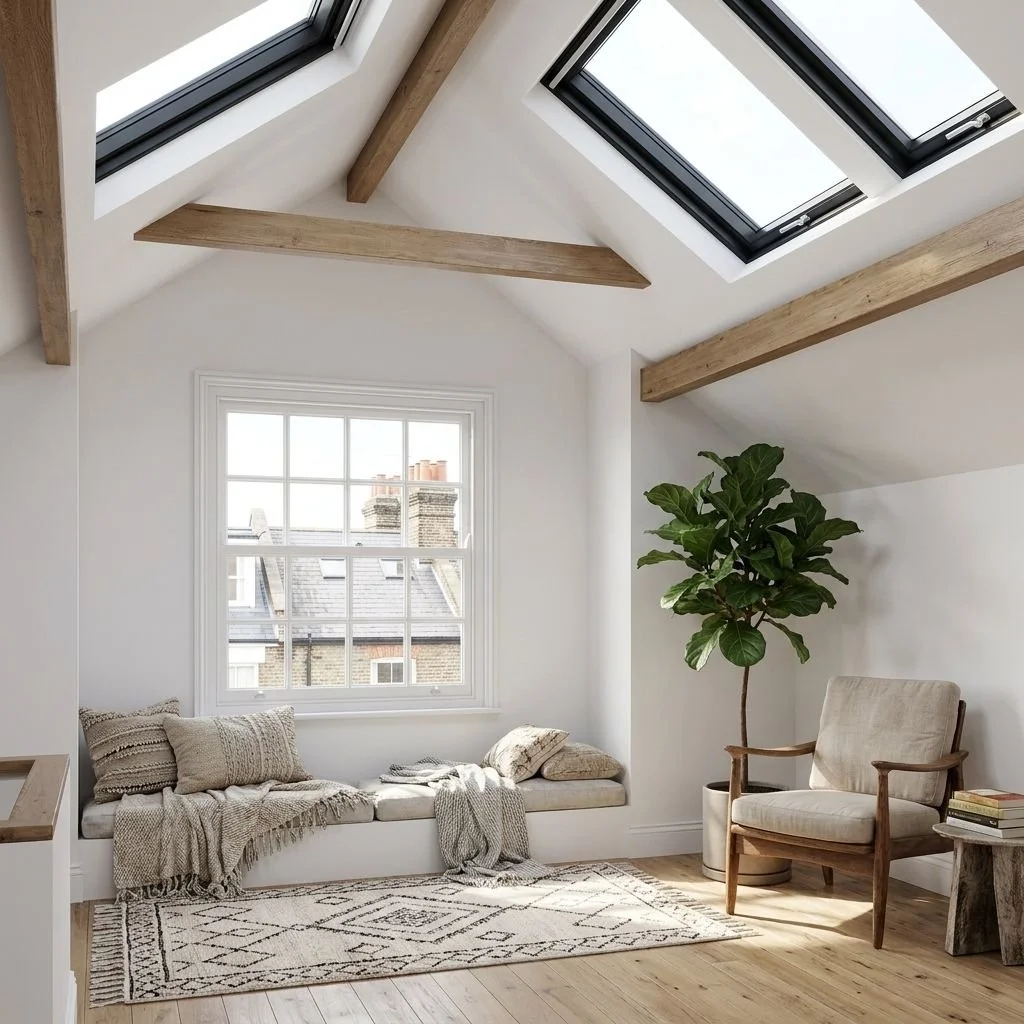
![A cozy attic room with a white window seat with cushions and blankets, a large window with a view of rooftops, skylights on the ceiling, a potted plant, an armchair, a small side table with books, and a beige and black patterned rug on wooden floors.]()
Loft Conversion - Making the most of attic space
-
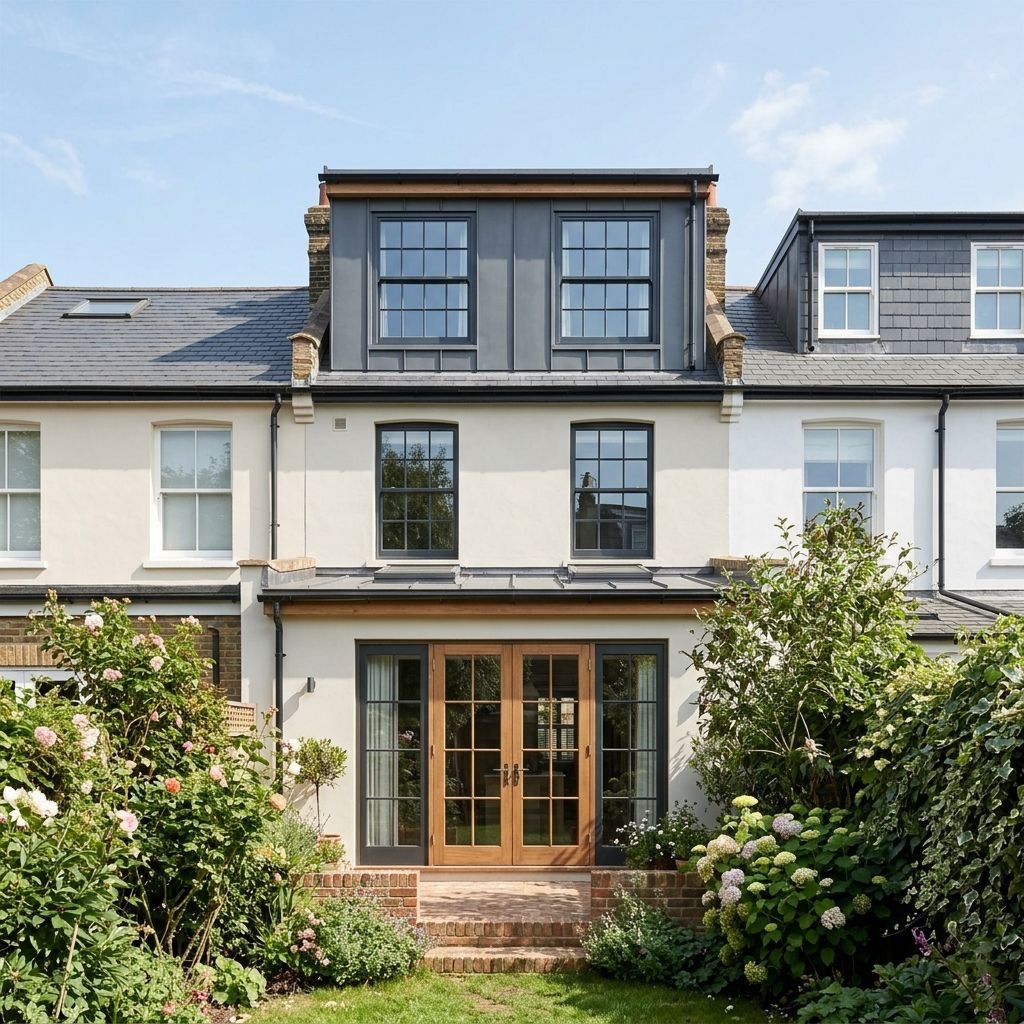
![Back view of a multi-story house with a garden, featuring a wooden patio door, white and grey exterior walls, multiple windows, and a blue sky.]()
Rear & Loft Extension – Making more of available space
-
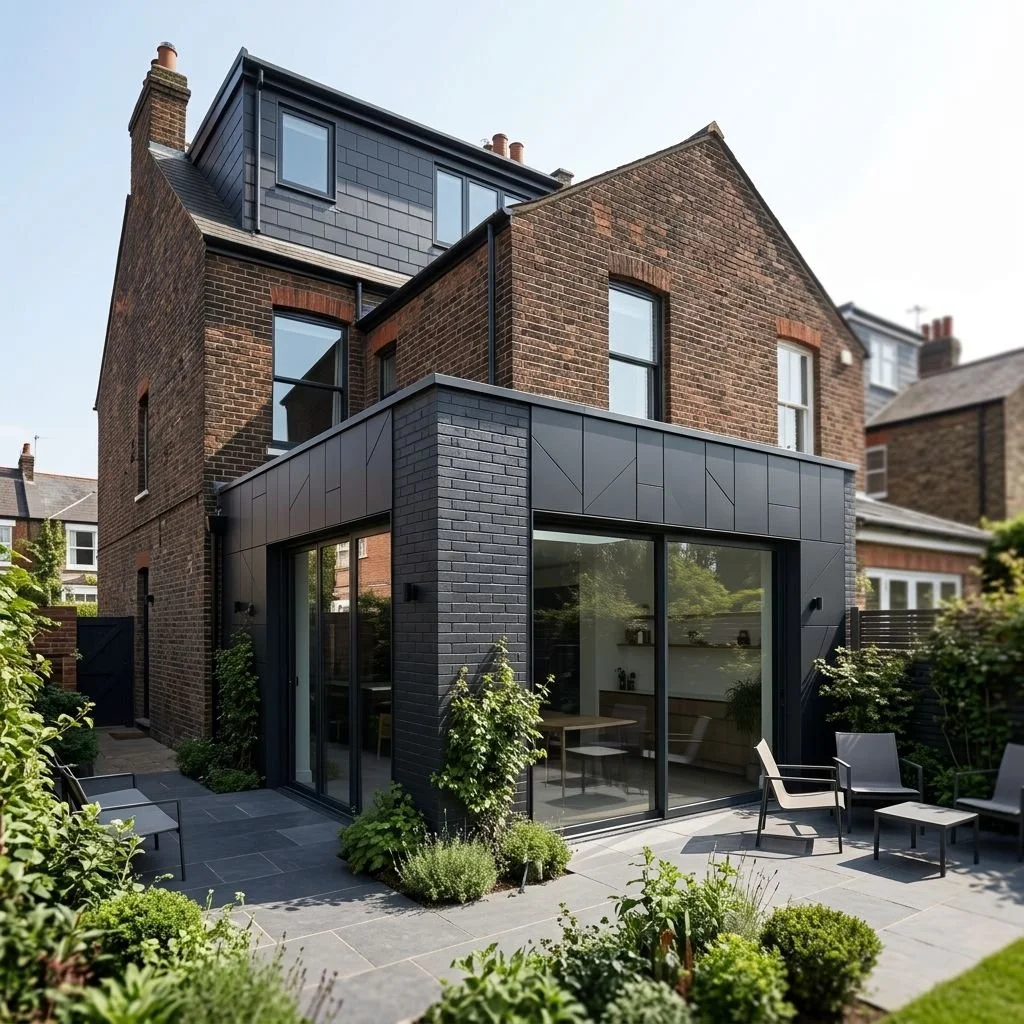
![A modern extension with black brick and metal cladding added to a traditional brick house, with large sliding glass doors opening to a patio with outdoor seating and plants.]()
Rear & Loft Extension – Making the most of every space
-
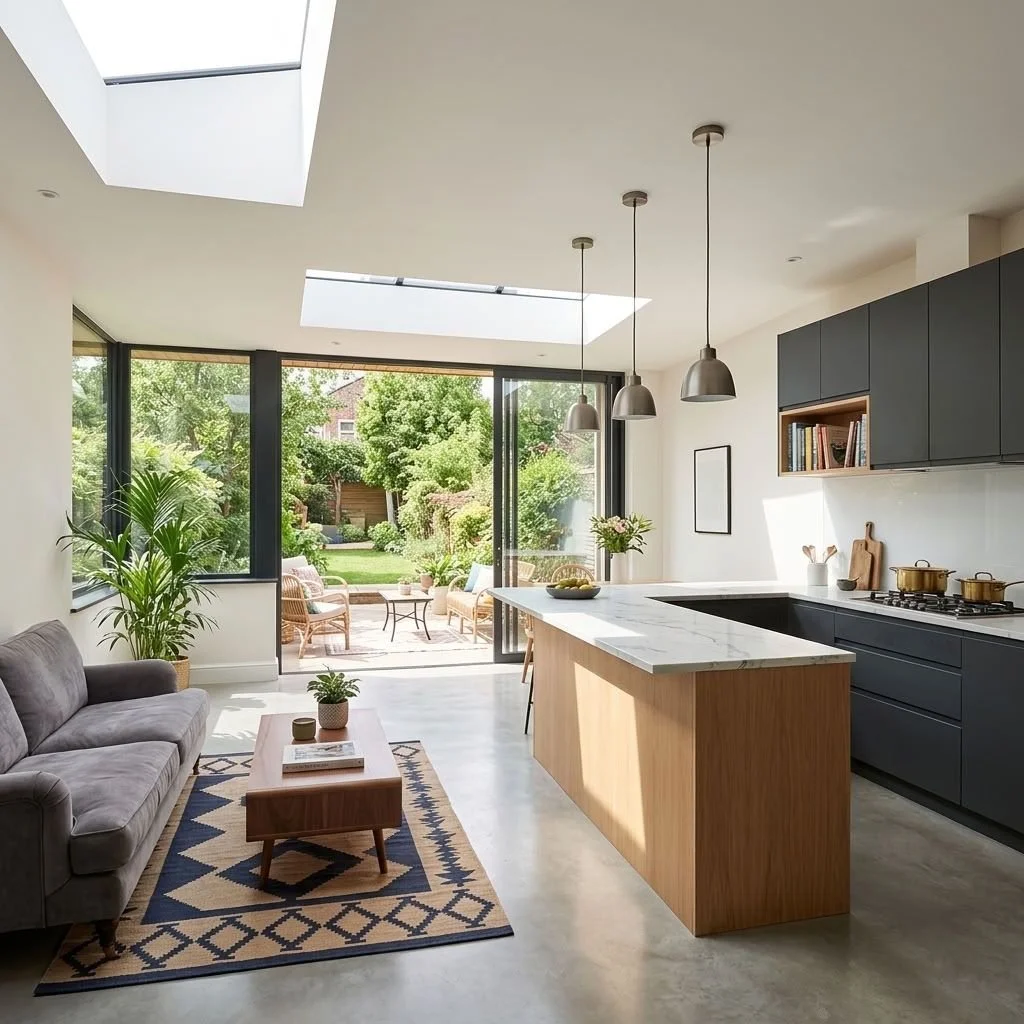
![Modern open-concept kitchen and living room with large skylights, sliding glass doors opening to a lush backyard, a gray sofa, wooden coffee table on a patterned rug, kitchen island with a marble countertop, black cabinetry, pendant lights, and indoor plants.]()
House Renovation – Creating brighter, more open spaces
-
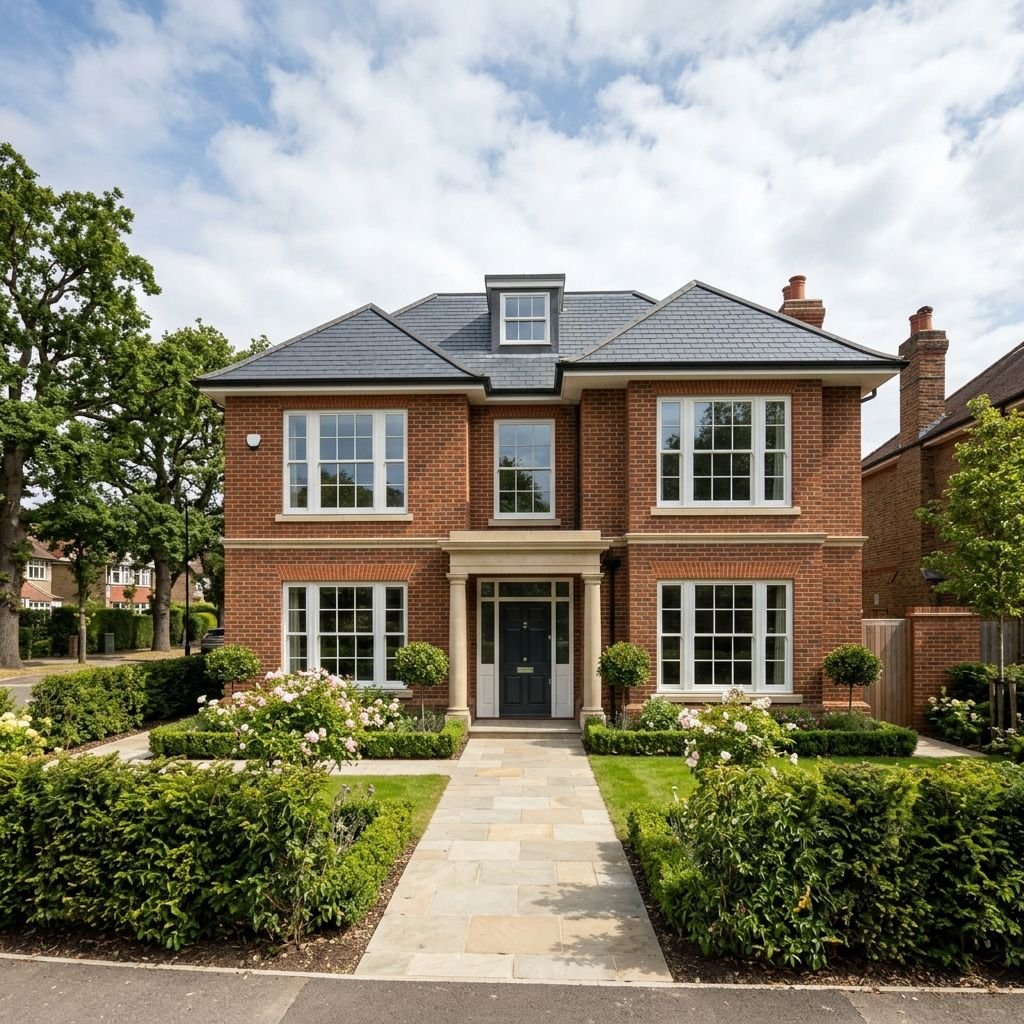
![A large, two-story brick house with a dark roof, multiple windows, and a central entrance framed by two columns, surrounded by a well-maintained garden with bushes and flowers, under a partly cloudy sky.]()
New Build House - Designed to feel like home
-
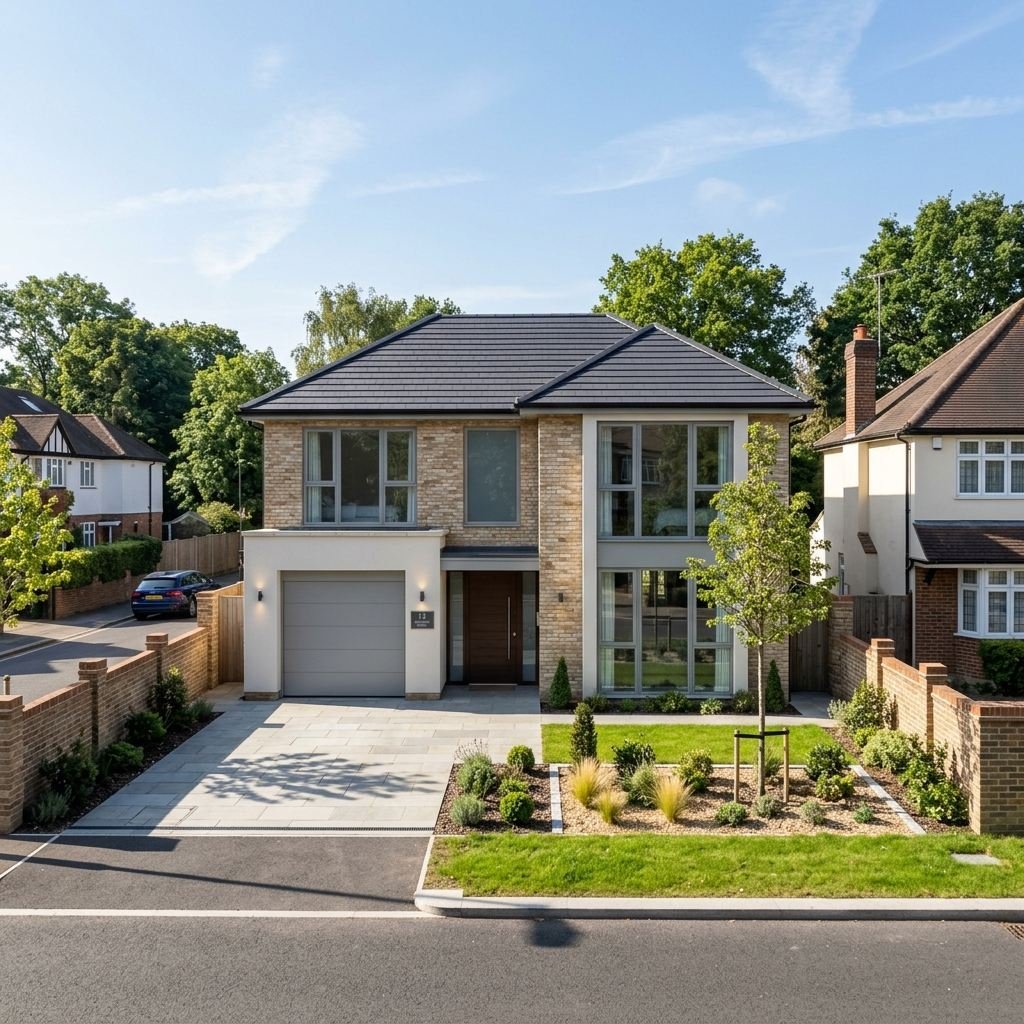
![Modern two-story house with brick and white exterior, large front windows, a garage, and well-maintained front yard with small trees and bushes.]()
New Build Home – Designed for Modern needs
-
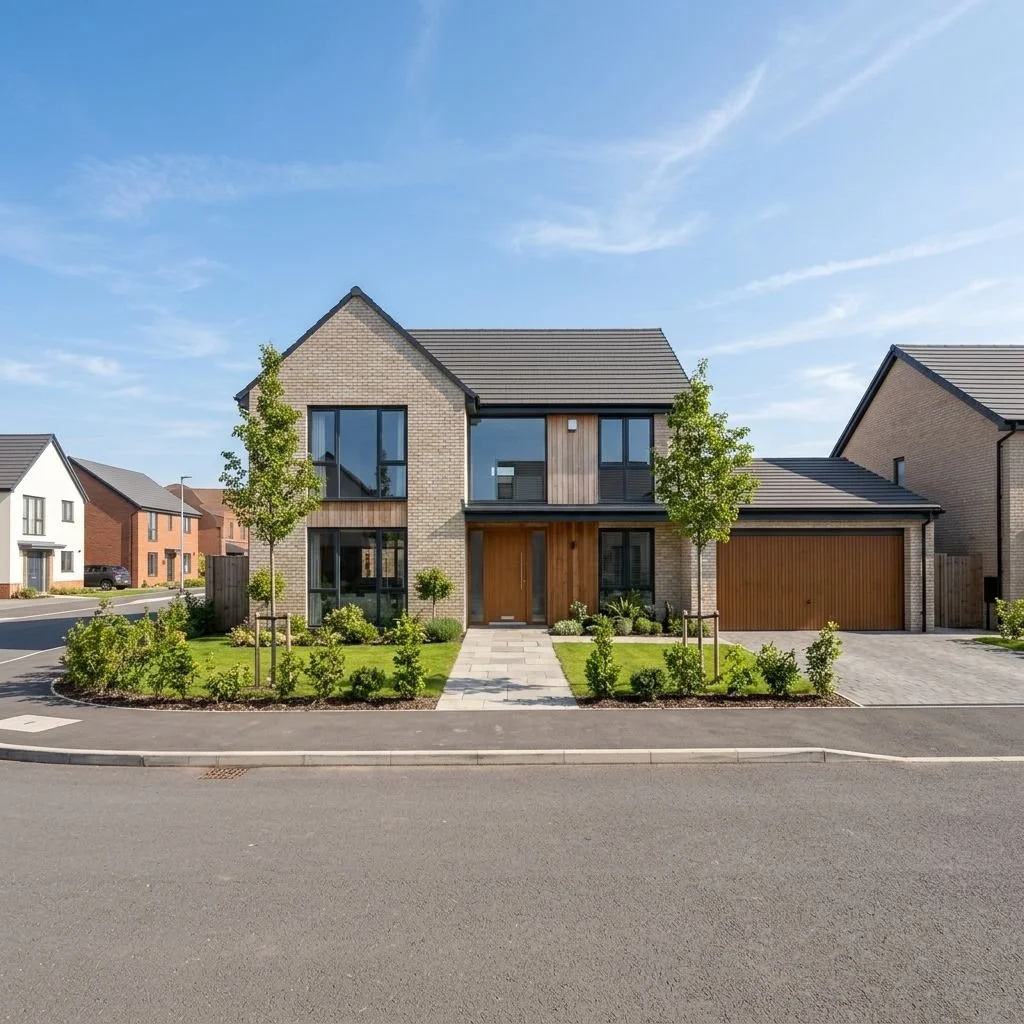
![Modern two-story house with brick and wood siding, large windows, and a double garage, surrounded by a well-manicured lawn and small trees under a blue sky.]()
New Build Home – Modern comfort, good design
-
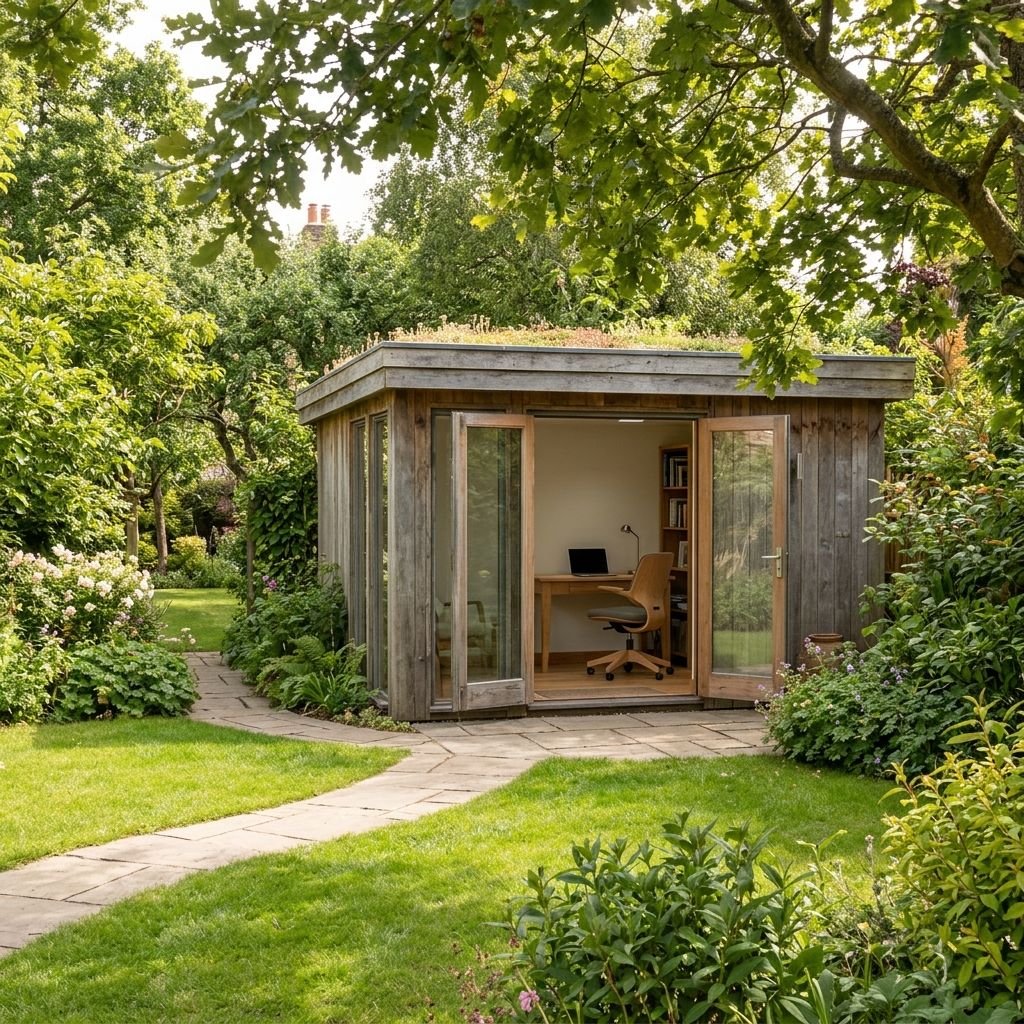
![Small wooden garden office with open glass doors, inside a desk, chair, and bookshelf, surrounded by lush green garden with trees, bushes, and a stone pathway.]()
Garden Room – A dedicated space to work and unwind
-
![A modern glass-walled garden room with beige wooden framing, sitting in a lush garden with flowering plants and a small pond, through which a furnished living room with armchairs, paintings, and a fireplace can be seen.]()
Garden Room – Work, relax and recharge
-
![Modern glass and steel small office or studio with sliding door, surrounded by greenery.]()
Garden Room – Making space for new ideas
-
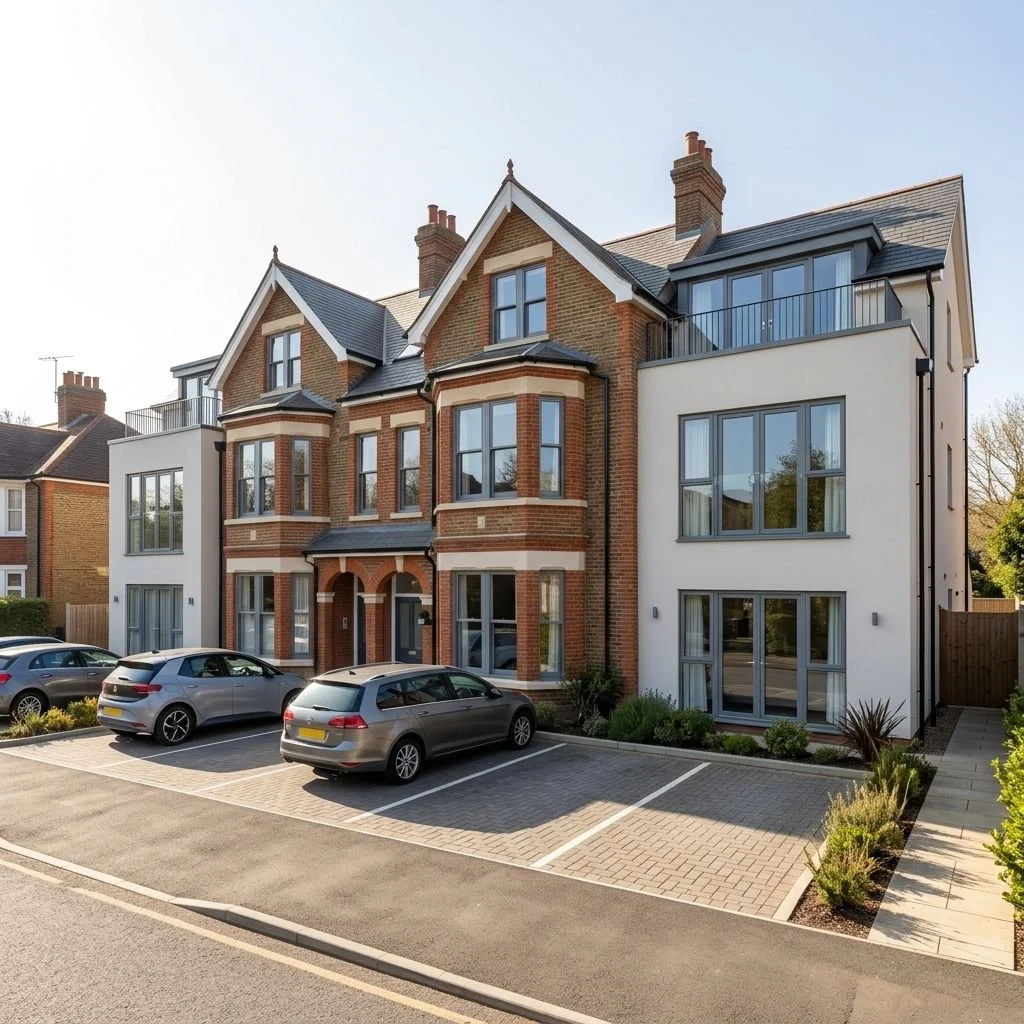
![Modern multi-story residential building with brick and white exterior, multiple windows, balconies, and a parking lot with cars in the foreground.]()
Property Development – Turning potential into value
-
![Modern townhouse with solar panels on the roof, greenery in front, parked gray Mini Cooper, bicycle nearby, and a wooden fence.]()
Property Development – Creating value through good design
-
![Modern townhouses with large windows, wooden and brick exteriors, small front yards with plants, parked cars, a vintage van, and bikes in a neighborhood with trees.]()
Property Development – Smarter design, greater potential
-
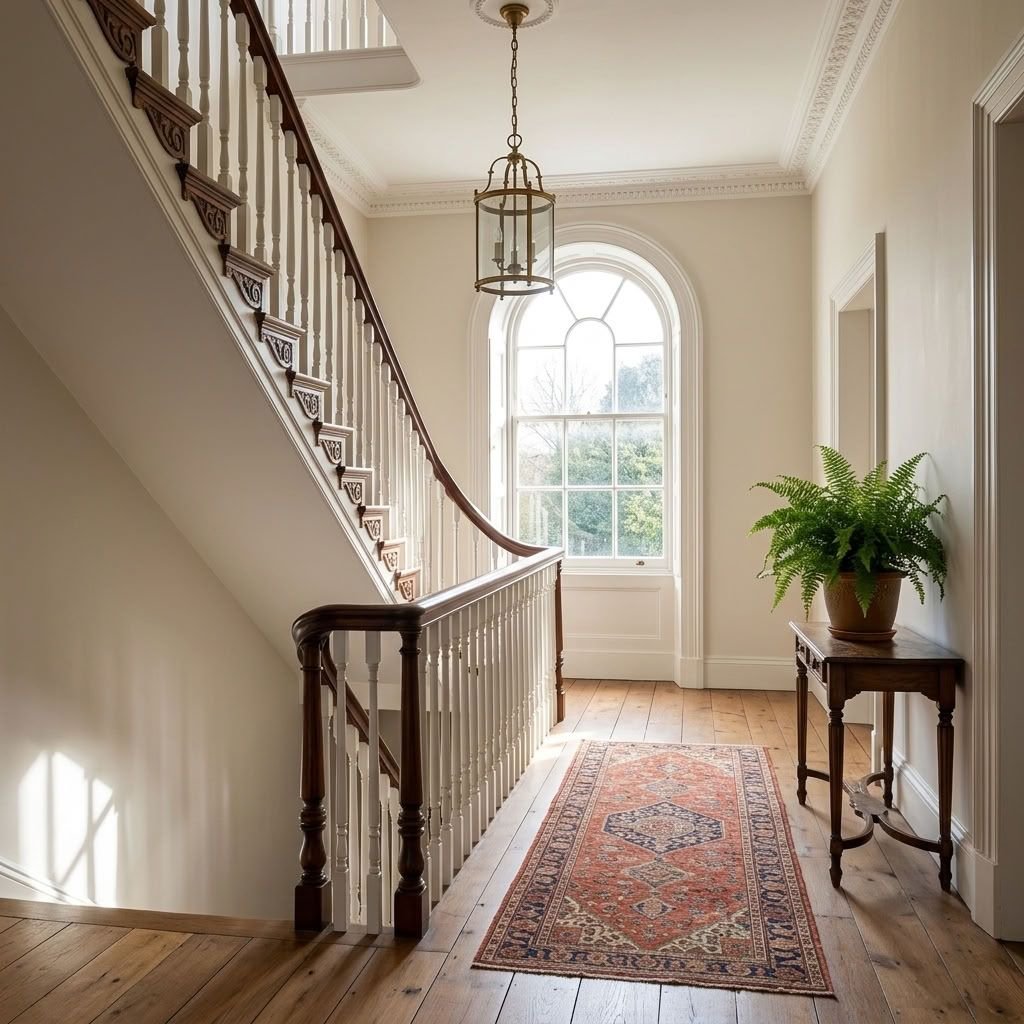
![A spacious stairway landing with a large arched window, a hanging lantern light fixture, a wooden side table with a potted fern, and a patterned rug on wooden floor.]()
Heritage Property - Refurbishment
-
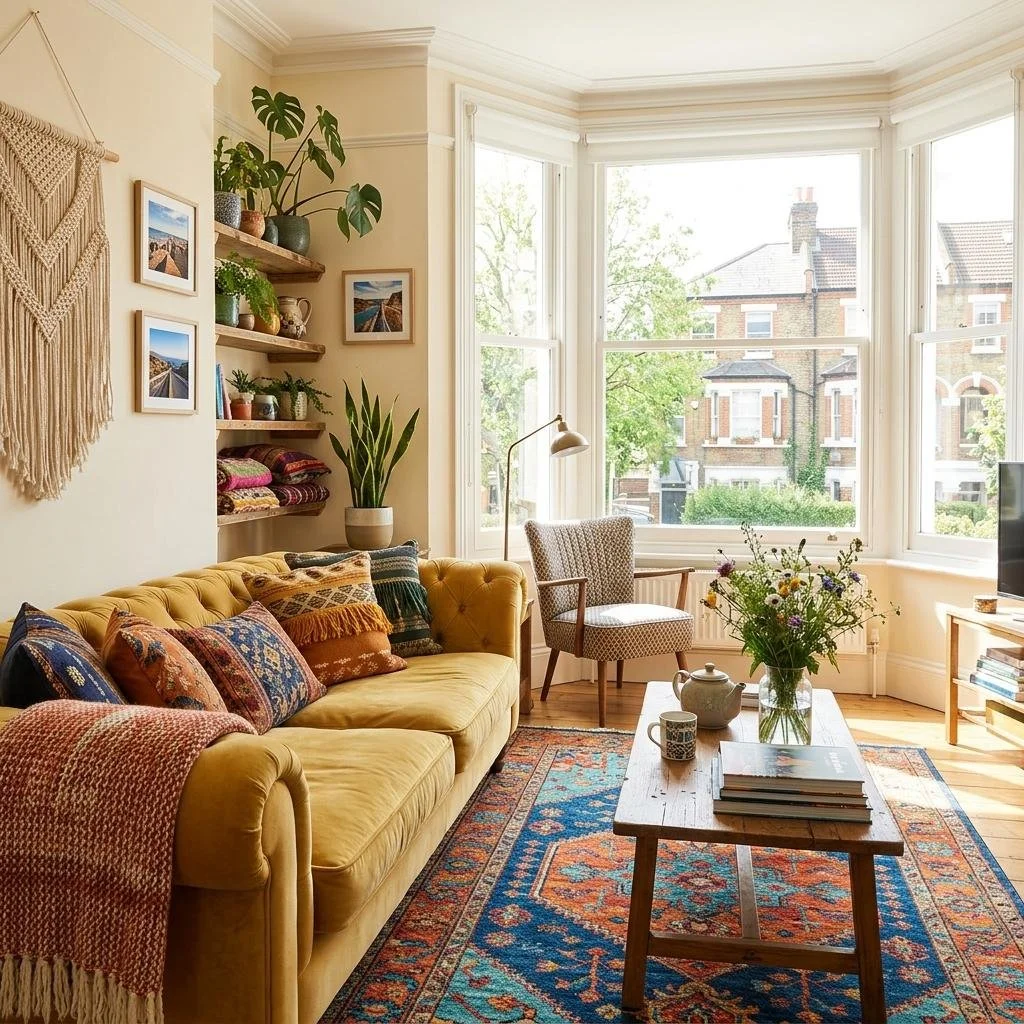
![A cozy living room with a yellow tufted sofa with colorful patterned cushions, a wooden coffee table with a vase of flowers, a patterned rug, large front windows showing trees and buildings outside, an armchair with a writing lamp, and wall decorations including framed pictures and a macrame wall hanging.]()
Interior Design - Boho style, bringing colour and character to home
-
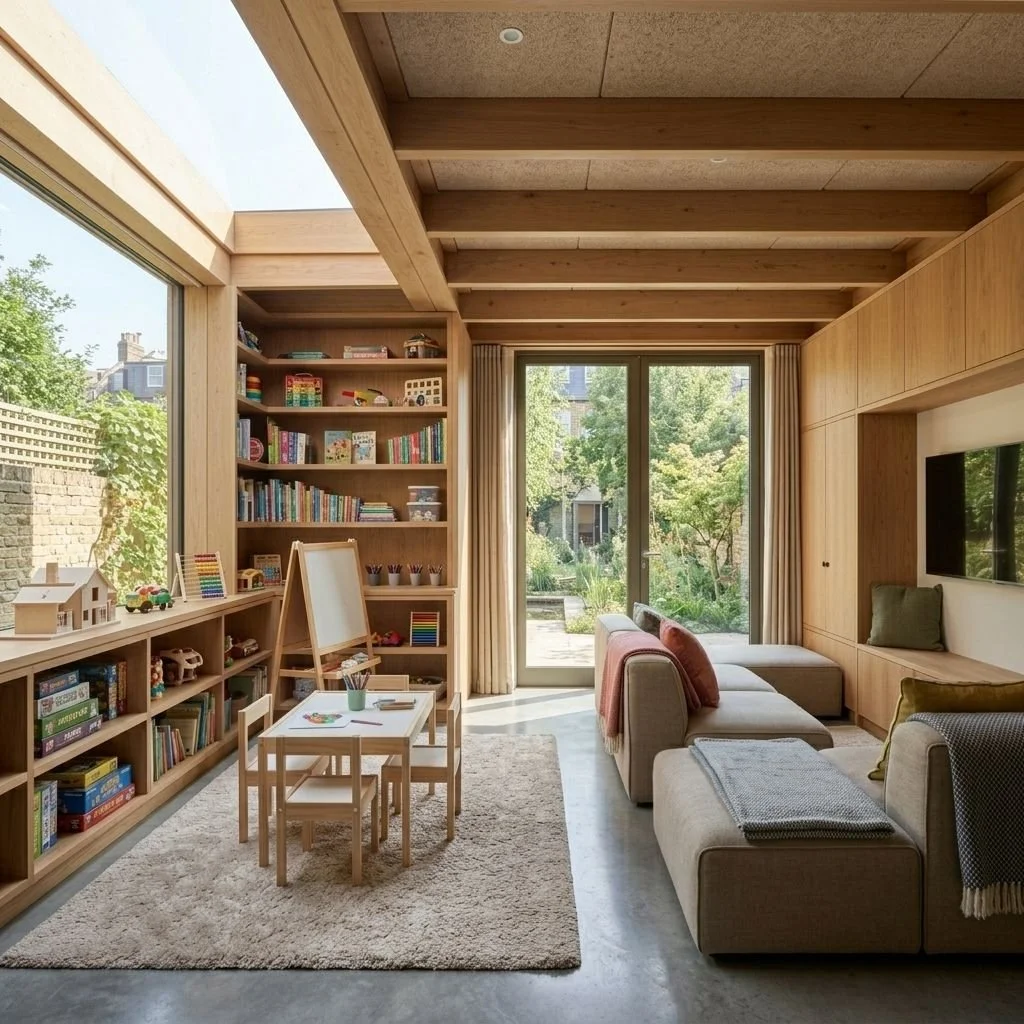
![A bright living room with large windows showing a garden outside. The room has wooden ceiling beams, a beige sectional sofa with cushions, a bookshelf filled with colorful books and toys, a small children's table with chairs, and a TV mounted on the wall. Light-colored curtains frame the windows.]()
Garage Conversion – Making Room for Play
-
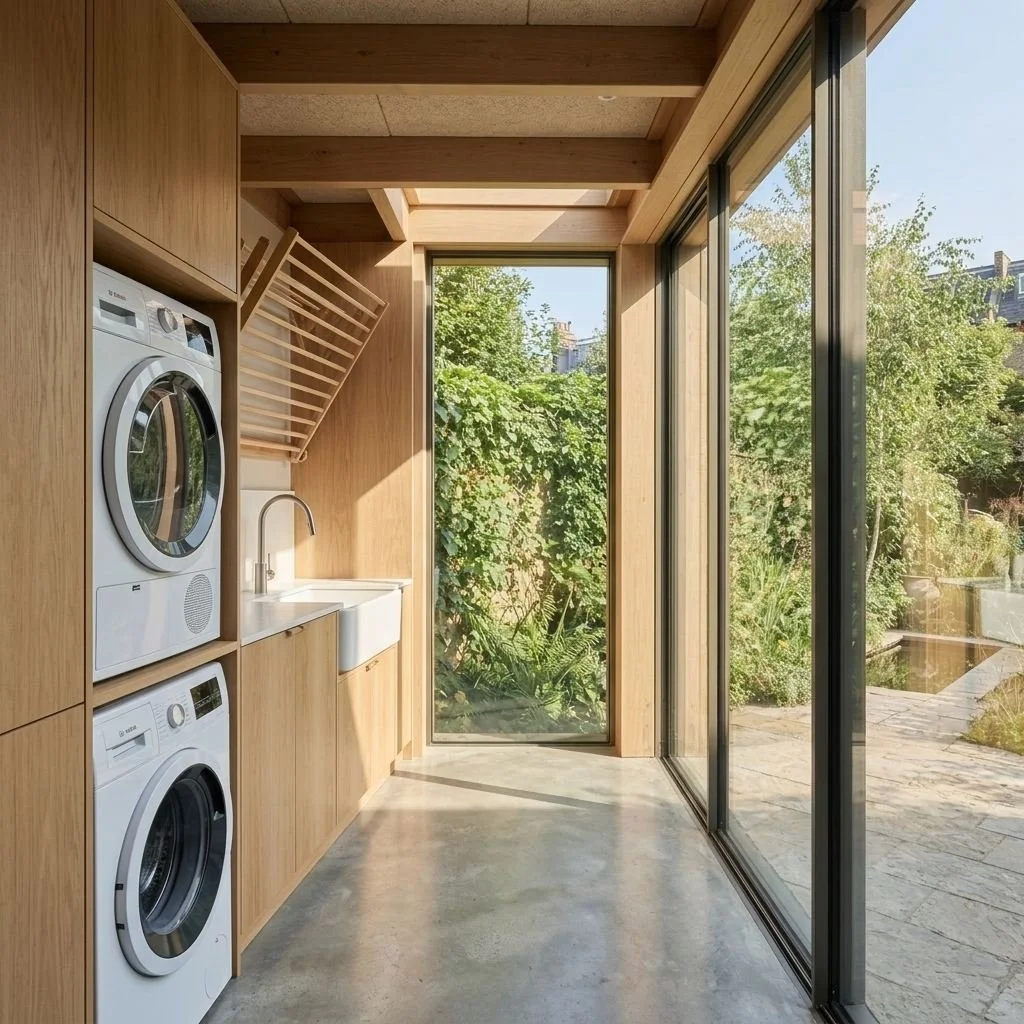
![A modern laundry room with wooden cabinetry, a stacked washer and dryer, a small white sink, and large sliding glass doors leading to an outdoor garden area.]()
Garage Conversions – Transforming unused space
-
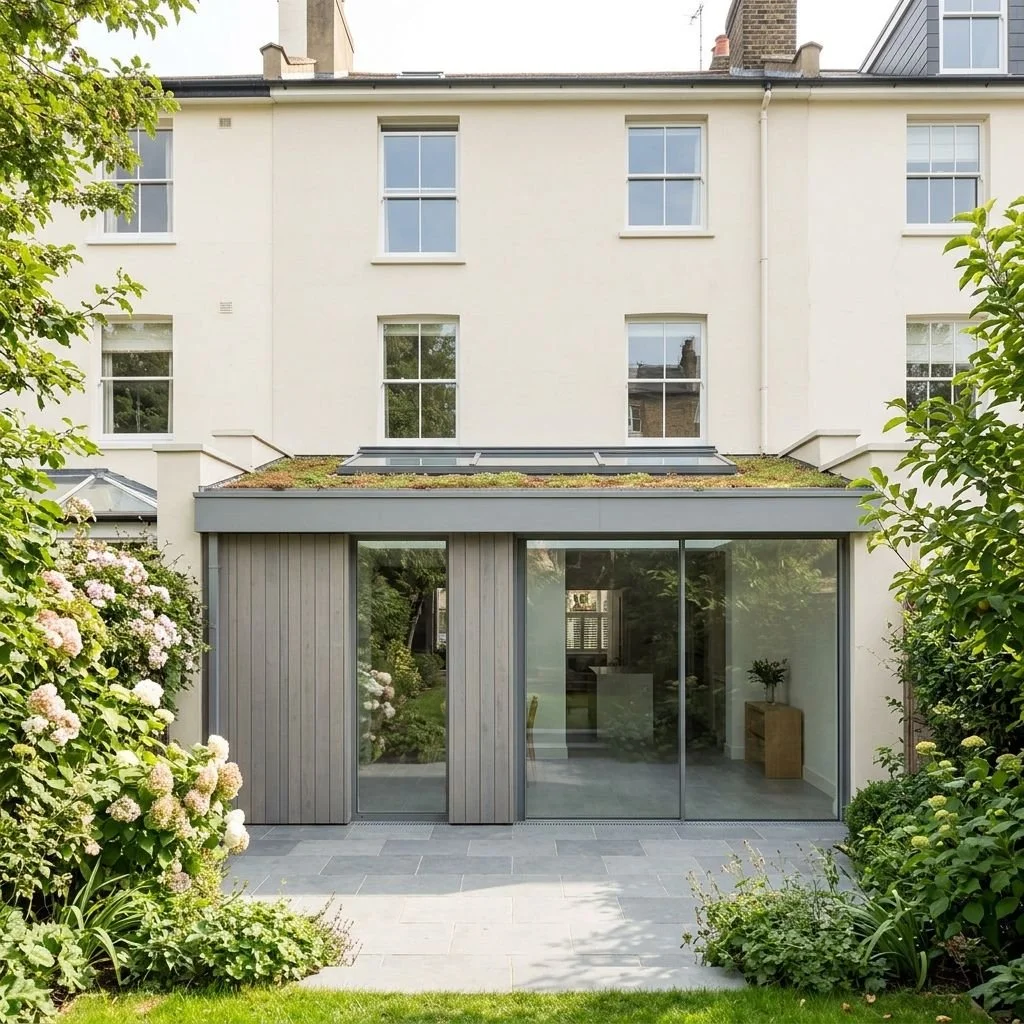
![Rear view of a modern white multi-story house with large glass sliding doors, small upper windows, and a roof with green moss or grass. The patio area has grey tiles and is surrounded by green plants and shrubs.]()
Rear Extension – More space, more light, better layout
-
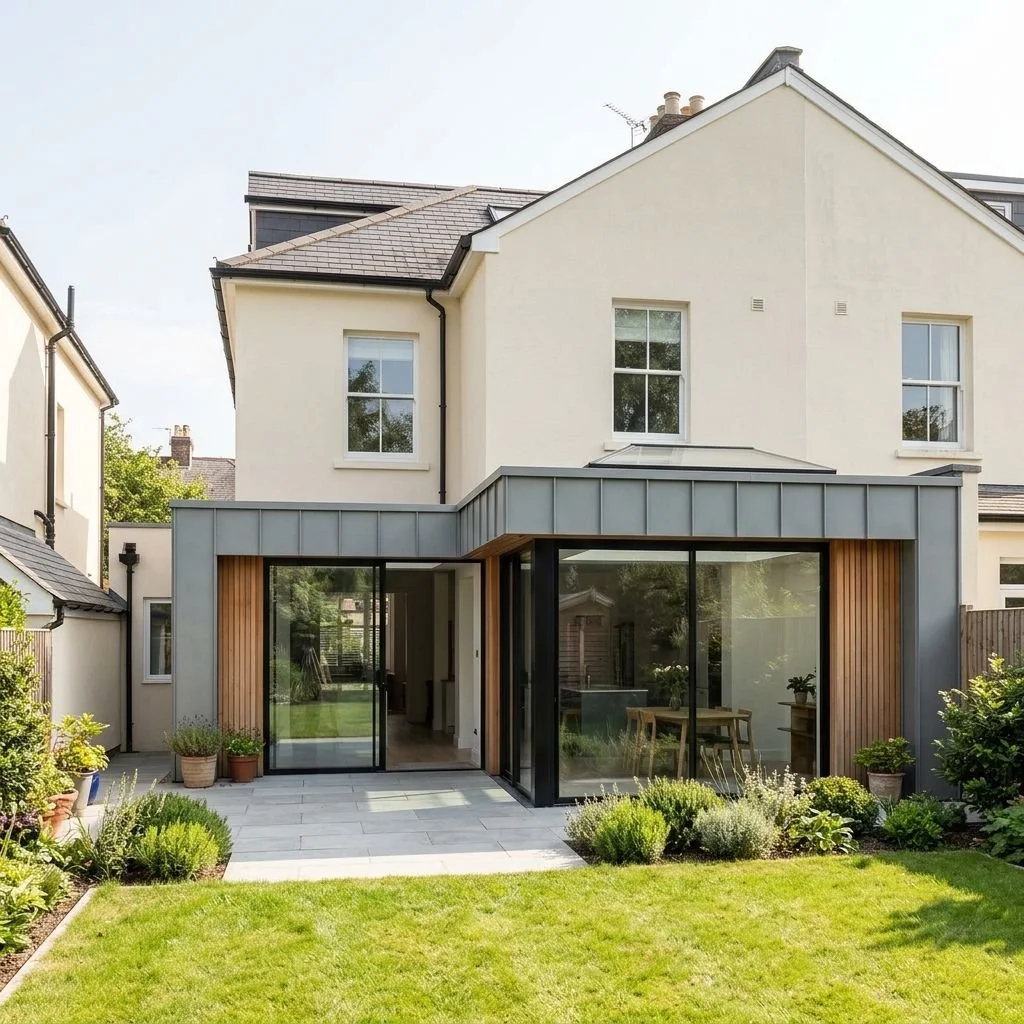
![Modern two-story house with white walls and a glass-enclosed back extension, surrounded by a garden with green grass and potted plants.]()
Rear Extension – Connecting home and garden
-
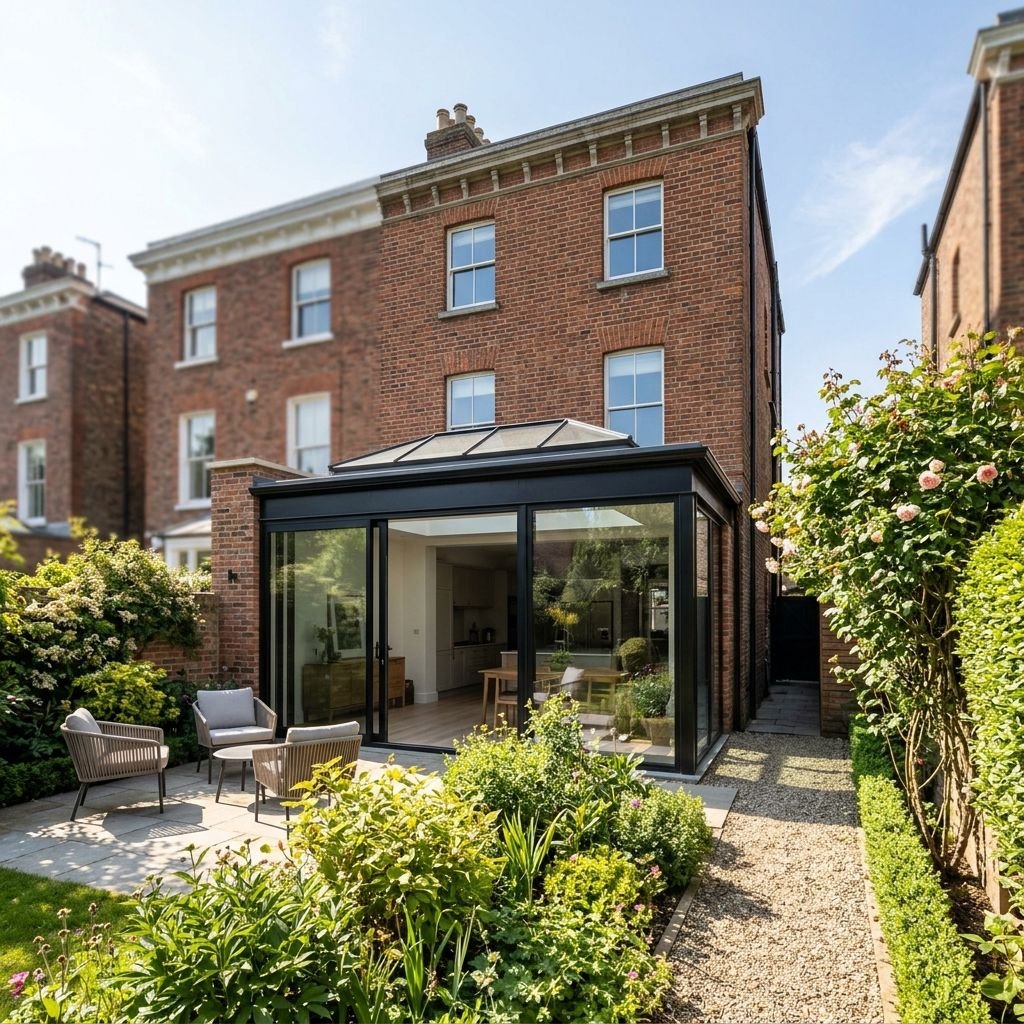
![A brick townhouse with an extension featuring large glass walls and a glass roof. There is a small outdoor patio with chairs and plants, surrounded by greenery and flowers.]()
Rear Extension – Maximising space and natural light
-
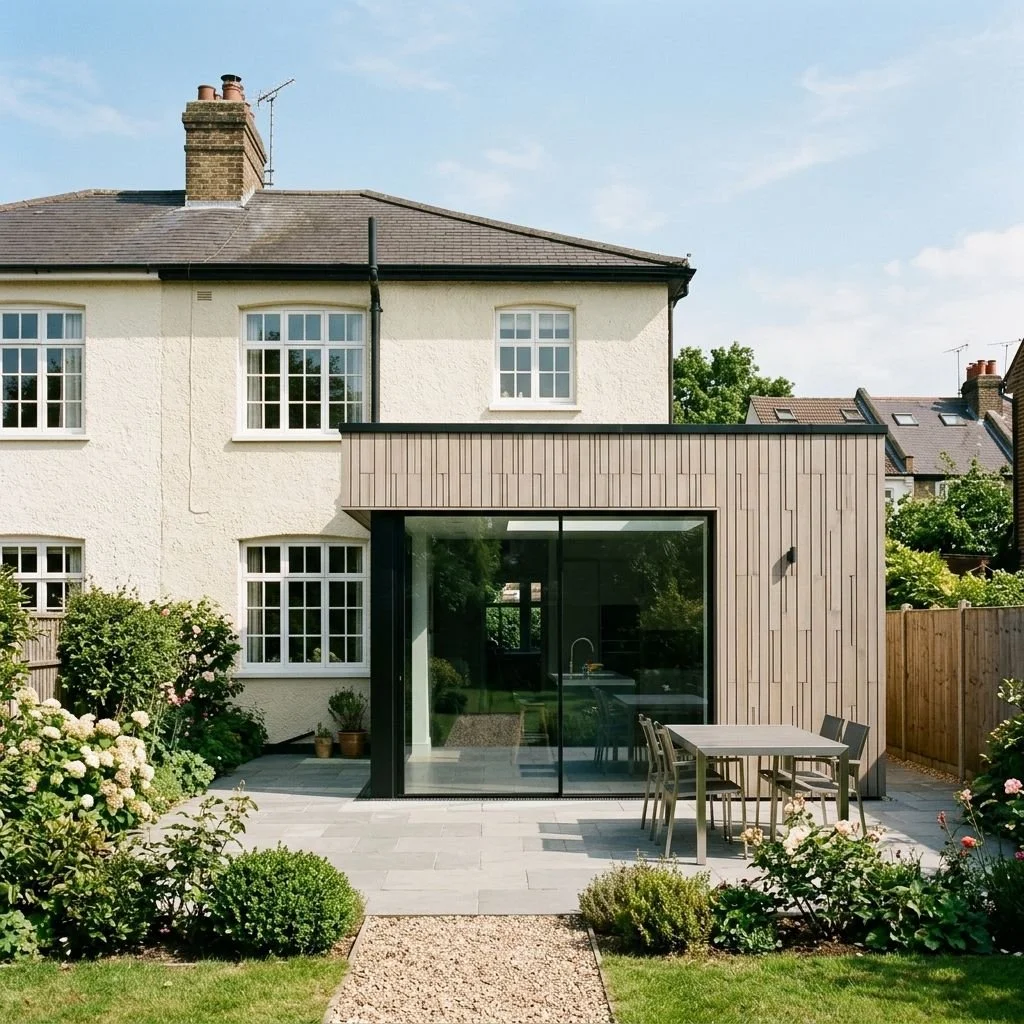
![Modern house with a backyard patio, outdoor dining table, garden plants, and a renovated extension with large glass sliding doors]()
Rear Extension – Creating brighter, more open spaces
-
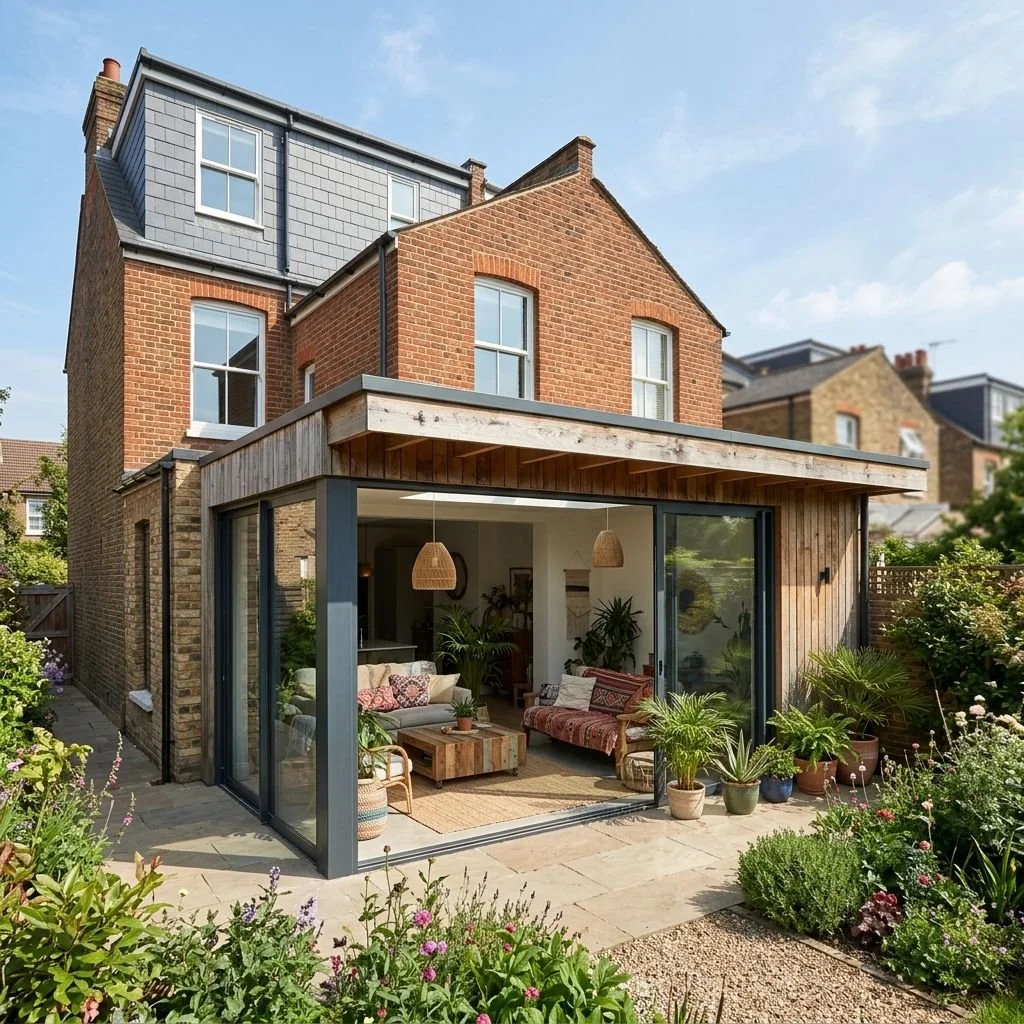
![A brick and wood extension with glass sliding doors, opening into a living room with sofas and potted plants, attached to a multi-story brick house. There are garden plants and flowers in the foreground.]()
Rear Extension – More room for family
-
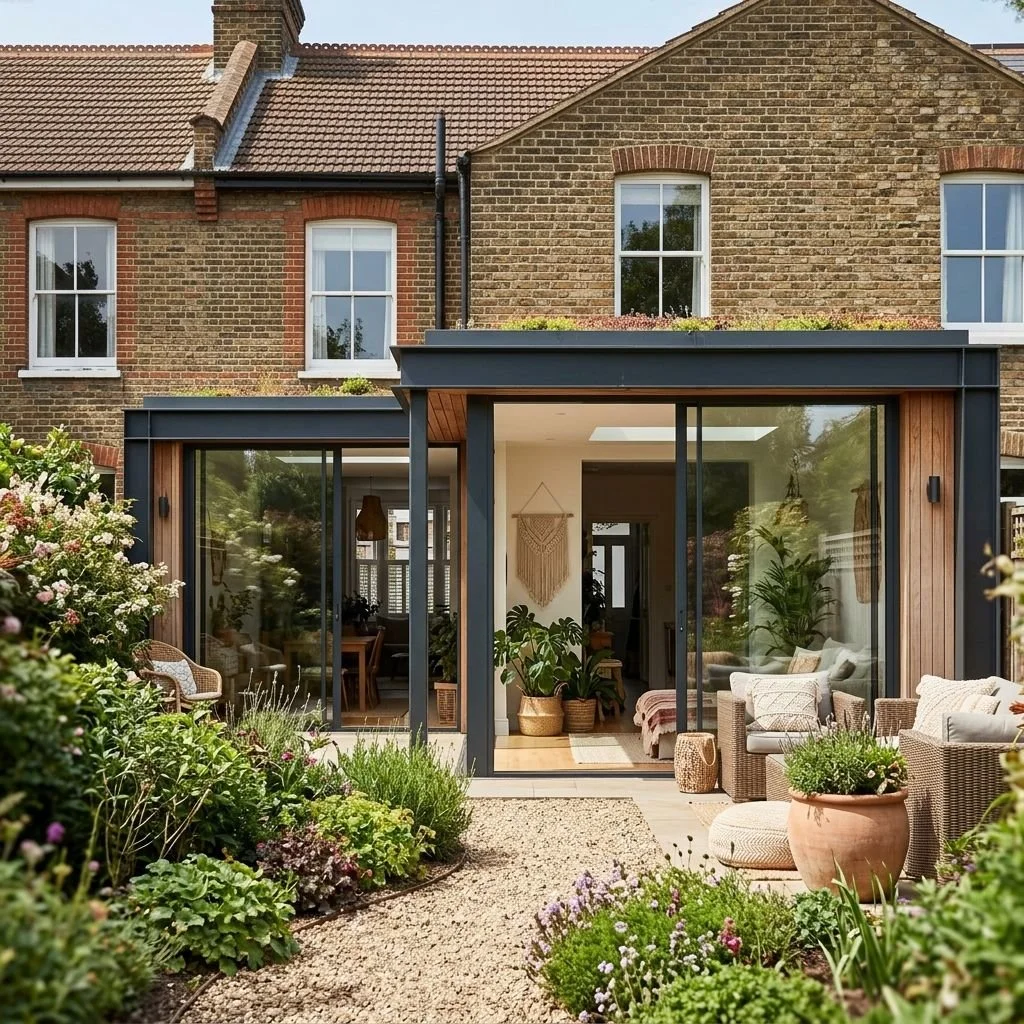
![A modern extension with large glass sliding doors attached to a traditional brick house, surrounded by a well-maintained garden with flowers and outdoor furniture.]()
Rear Extension - Bright, stylish and sustainable
-
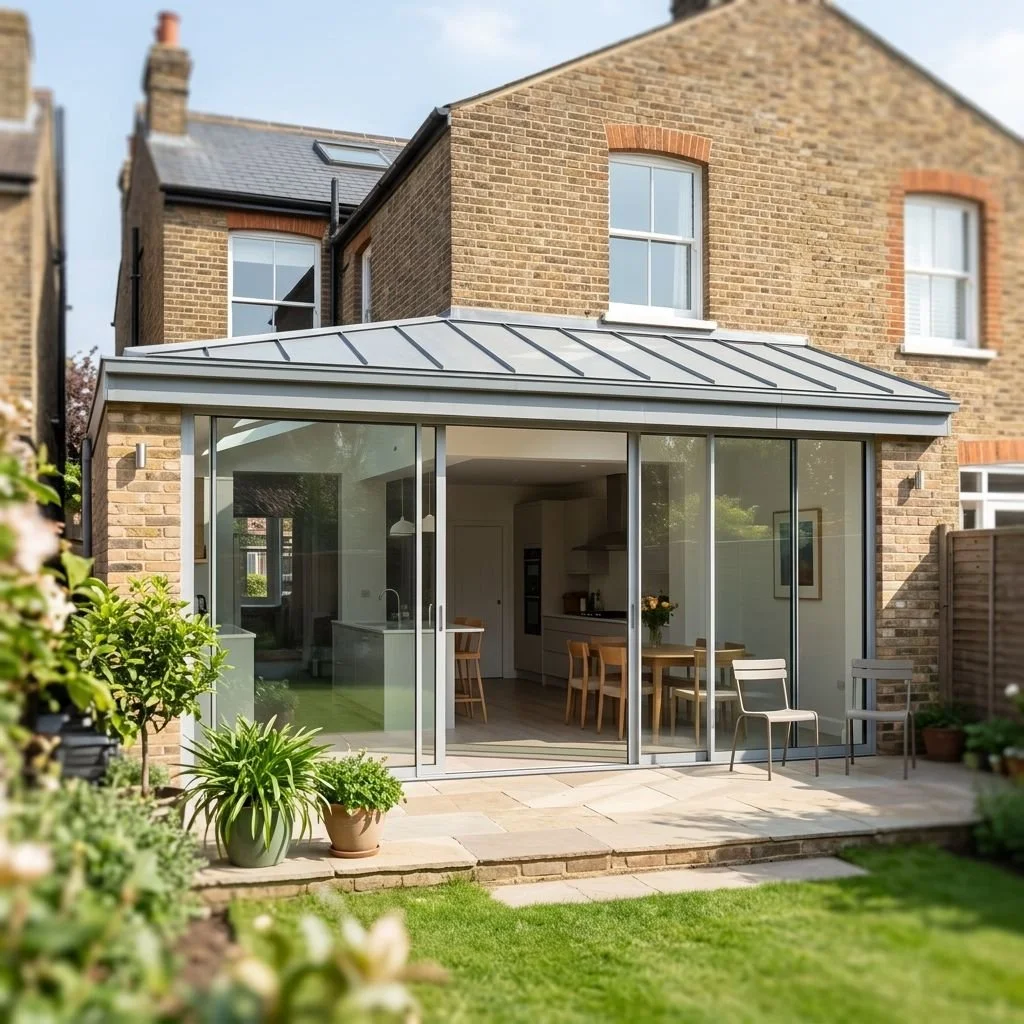
![A backyard view of a brick house featuring a modern sunroom with glass sliding doors, a metal roof, and outdoor seating, surrounded by green plants and a lawn.]()
Rear Extension – Bringing home and garden together






Clarity before you begin.
Discover our approach to residential architecture, our design process, the services we provide and how we structure our fees.
Our brochure explains what to expect at each stage, helping you make informed decisions before proceeding.
Artist of Architecture
Our approach, services and fees.
The Design Process
Every project follows a structured design process developed to provide clarity from the first conversation through to construction.
01 Initial Consultation
The process begins with understanding:
- Your objectives
- The existing property
- Potential opportunities
- Planning considerations
- Budget expectations
- Desired outcomes
This helps establish the most appropriate direction for the project.
02 Survey and Analysis
A detailed understanding of the property forms the foundation of good design.
We review:
- Existing layouts
- Building condition
- Site constraints
- Structural considerations
- Surrounding context
- Planning considerations
03 Concept Design
Initial design proposals explore different possibilities for improving the property.
This stage considers:
- Layout options
- Building form
- Natural light
- Materials
- Internal connections
- Relationship with gardens and surroundings
04 Planning Stage
Where required, planning information is prepared and submitted to the relevant authority.
Design proposals are developed with consideration of:
- Local planning policies
- Conservation requirements
- Heritage considerations
- Neighbouring impact
05 Technical Design
Detailed information is prepared to support construction.
This may include:
- Technical drawings
- Construction details
- Specifications
- Coordination information
06 Construction Support
Where required, Artist of Architecture can remain involved during construction to help maintain design intent and resolve design-related queries.
Artist of Architecture works throughout Wimbledon and nearby areas, including:
Wimbledon Village
South Wimbledon
Raynes Park
Merton Park
Colliers Wood
Putney
Kingston
Richmond
Areas Covered Around Wimbledon
About
Artist of Architecture studio works closely with homeowners seeking high-quality residential architecture with a personal and collaborative approach. Unlike larger firms, Artist of Architecture is intentionally kept small and author-led, allowing every client to work directly with the designer throughout the process. This creates greater flexibility, clearer communication and a stronger design outcome shaped around individual needs rather than standardised solutions.
Whether transforming an existing property or designing a contemporary new home, the focus is always on creating spaces that feel refined, practical and connected to the people’s needs. Careful attention is given to natural light, spatial flow, material quality and long-term value, ensuring every project is both visually distinctive and highly functional.
Our practice has experience supporting clients through complex planning processes, sensitive residential contexts and detailed construction stages.
Why Work With Artist of Architecture in Wimbledon
Working with a specialist architecture firm Artist of Architecture familiar with Wimbledon provides a clear advantage when dealing with local planning expectations and property constraints.
Benefits include:
Strong planning knowledge (Merton Council)
Clear and transparent communication
Creative, site-specific design solutions
Experience with conservation areas
Direct collaboration with the designer
Flexible and client-focused approach
End-to-end support from concept to construction
Careful balance of contemporary and contextual design
Wimbledon Architecture FAQs
1. Do I need planning permission for a house extension in Wimbledon?
Many house extensions in Wimbledon fall under permitted development. However, larger extensions and properties in conservation areas usually require approval from the London Borough of Merton. A feasibility study helps confirm whether planning permission is required before design begins.
2. How much does a house extension cost in Wimbledon?
House extension costs in Wimbledon typically range from £2,400 to £4,500 per m². Costs vary depending on size, design complexity, materials, and glazing. A clear design and cost plan helps manage budget and avoid unexpected expenses.
3. How long does planning permission take in Wimbledon?
Planning permission in Wimbledon usually takes around 8 weeks once submitted. Including design and preparation, the full process typically takes 2 to 4 months. More complex projects or conservation area applications may take longer.
4. What is the best type of loft conversion in Wimbledon?
Dormer loft conversions are the most common in Wimbledon as they provide a good balance of cost, space, and planning flexibility. Hip-to-gable conversions suit semi-detached homes, while mansard conversions maximise space but usually require planning permission.
5. Can I extend my house in a Wimbledon conservation area?
Yes, you can extend a house in a Wimbledon conservation area, but planning permission is usually required. The design must respect the character of the property and surrounding area, with careful attention to scale, materials, and proportions.
6. How much value does an extension add in Wimbledon?
A well-designed extension in Wimbledon can add between 10% and 26% to a property’s value. Open-plan kitchen extensions, additional bedrooms, and improved layouts typically deliver the highest return.
7. Do I need an architecture firm for a home renovation in Wimbledon?
You are not legally required to use an architecture firm, but professional design improves planning success, functionality, and overall quality. It also helps avoid costly mistakes and ensures the project meets local planning requirements.
8. What types of properties are common in Wimbledon?
Wimbledon includes Victorian and Edwardian terraces, 1930s semi-detached homes, detached houses, and modern developments. Each property type requires a tailored design approach to maximise space, natural light, and value.
9. What is permitted development in Wimbledon?
Permitted development allows certain home improvements, such as small extensions or loft conversions, without full planning permission. Rights may be restricted in conservation areas or for flats, so early assessment is important.
10. How do I start a home extension project in Wimbledon?
Start with a consultation and feasibility study to assess design options, planning constraints, and budget. The process then moves to concept design, planning submission, and technical drawings before construction begins.
11. Are basement extensions common in Wimbledon?
Basement extensions are less common in Wimbledon but are used in high-value areas where space is limited. They require careful structural design, waterproofing, and planning approval.
12. What affects planning approval in Wimbledon?
Planning approval in Wimbledon depends on design quality, scale, neighbour impact, and how well the proposal fits the surrounding area. Conservation area policies and sustainability are also key factors.
13. How can I maximise natural light in my Wimbledon home?
Natural light can be improved with rooflights, large glazing, and open-plan layouts. Good orientation and spatial planning help bring light deeper into the home while maintaining privacy and energy efficiency.
More Questions About Architecture Services in Wimbledon
People Also Ask
1. How much does it cost to renovate a house in Wimbledon?
Renovation costs in Wimbledon typically range from £1,500 to £3,500 per m². Light refurbishments are at the lower end, while full renovations with structural changes and high-quality finishes cost more.
2. What is the most cost-effective way to extend a house in London?
A rear single-storey extension or side return extension is usually the most cost-effective option. These maximise space without complex structural work, making them more affordable than larger or multi-storey extensions.
3. Do I need planning permission for a loft conversion in Wimbledon?
Many loft conversions in Wimbledon fall under permitted development. However, conservation areas or significant roof changes usually require planning permission from the London Borough of Merton.
4. How long does a house extension take from start to finish?
A house extension in Wimbledon typically takes 4 to 12 months from design to completion. This includes design, planning approval (if required), and construction.
5. What adds the most value to a home in Wimbledon?
Open-plan kitchen extensions, loft conversions, and high-quality renovations add the most value. Improving layout, light, and usability has a strong impact on property value.
6. Can you extend a terraced house in Wimbledon?
Yes, terraced houses in Wimbledon can be extended with rear extensions, side return extensions, and loft conversions. Design must consider neighbouring properties and planning constraints.
7. What is the difference between permitted development and planning permission?
Permitted development allows certain works without full approval if rules are met. Planning permission is required for larger or more complex projects and involves formal approval from the local council.
8. Are wraparound extensions worth it in London homes?
Wraparound extensions are often worth it as they transform layout, improve natural light, and increase property value. They are more complex but deliver significant long-term benefits.
9. How do I choose the right architecture firm in Wimbledon?
Choose an architecture firm with Wimbledon experience, strong residential projects, and clear communication. A tailored design approach and proven planning success are key indicators.
10. What are the planning rules in Merton for extensions?
Planning rules are set by the London Borough of Merton and focus on scale, neighbour impact, and design quality. Extensions must fit the surrounding area and avoid overdevelopment.
11. Is it better to extend or move in Wimbledon?
Extending is often more cost-effective than moving due to high property prices and stamp duty. Improving your current home can add space and value without relocating.
12. What is the maximum size extension without planning permission?
Under permitted development, rear extensions can extend up to 3m for terraced and semi-detached houses and 4m for detached homes, with larger sizes possible under prior approval.
13. How can I make my home more energy efficient in Wimbledon?
Improve energy efficiency with better insulation, high-performance glazing, and efficient layouts. Good design reduces heat loss and improves long-term comfort and energy use.
If you are considering a project in Wimbledon, Artist of Architecture provides the expertise and guidance needed to move forward with confidence.
From early ideas through to construction, we help transform properties into well-designed, functional, and durable spaces tailored to your needs and the character of Wimbledon.
Get in touch to discuss your project and explore the possibilities for your property. Enquire Now →
Start Your Wimbledon Project
Are you considering a project in Wimbledon or surrounding areas?
Book a free consultation to discuss your project.