Home > Guides > Architecture Guides > Richmond > Rear Extension Design Guide for the London Borough of Richmond upon Thames: Design Ideas, Planning Permission & Costs (2026)
Rear Extension Design Guide for the London Borough of Richmond upon Thames: Design Ideas, Planning Permission & Costs (2026)
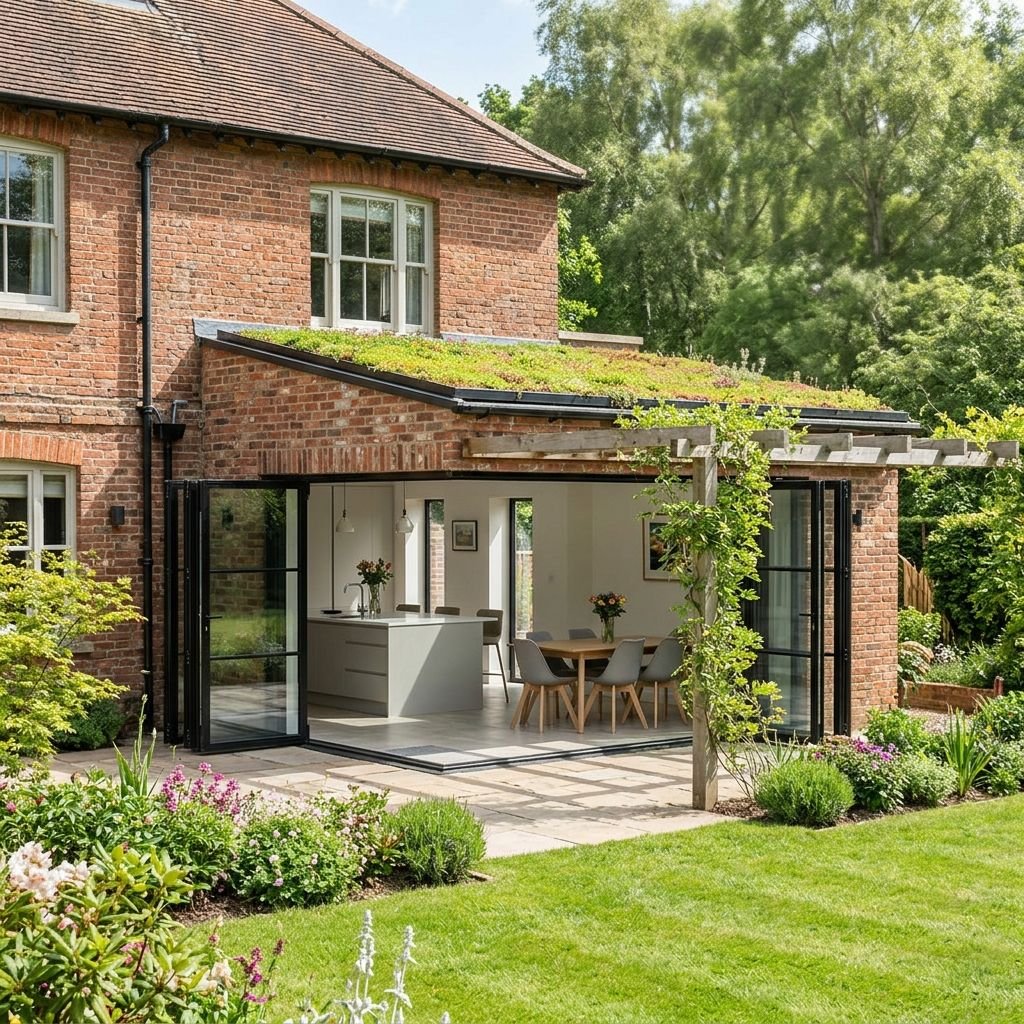
Rear Extension Design Across the London Borough of Richmond upon Thames
Rear extensions remain one of the most effective ways to improve an existing home without relocating. Across the London Borough of Richmond upon Thames, homeowners are choosing to extend rather than move, creating more practical layouts, increasing usable floor area and adapting period and modern properties to meet changing household needs.
This guide explains the key design principles, planning considerations, typical costs and common questions surrounding rear extensions within the borough. Whether your property is in Richmond, Twickenham, Teddington, Barnes, Kew, East Sheen, Mortlake, Petersham, Ham, Hampton, Hampton Wick, St Margarets or another part of the borough, understanding the design process before starting a project can help achieve a more successful outcome.
Every property presents different opportunities and constraints. Victorian terraces, Edwardian houses, early 20th-century semi-detached homes, detached family houses and more contemporary developments all require an approach that responds to their individual proportions, site conditions and planning context. A carefully considered design should enhance how the home functions while remaining appropriate to its surroundings.
As an architecture firm working across southwest London, Artist of Architecture prepares bespoke rear extension designs that balance aesthetics, functionality, planning policy and long-term value.
Why Homeowners Extend Properties Instead of Moving
The London Borough of Richmond upon Thames continues to attract homeowners because of its established neighbourhoods, excellent schools, extensive green spaces and strong transport connections into central London. As property values have continued to increase, extending an existing home has become an attractive alternative to purchasing a larger property.
A well-designed rear extension can help to:
increase internal floor area
create larger kitchen and dining spaces
improve the connection between the house and garden
introduce more natural daylight
improve circulation throughout the ground floor
accommodate changing family requirements
create flexible spaces for working from home
increase the long-term appeal of the property
Unlike loft conversions, which primarily add accommodation above, rear extensions have the potential to transform how the main areas of a home function on a daily basis. Many period properties within the borough were designed with compartmentalised layouts that no longer reflect how households typically use their homes today.
Rather than simply adding more space, a successful rear extension should improve the overall relationship between existing rooms, circulation routes and outdoor spaces.
Which Properties Are Most Suitable for Rear Extensions?
Rear extensions can be successfully incorporated into a wide variety of residential properties found throughout the London Borough of Richmond upon Thames.
These commonly include:
Victorian terraces
Edwardian houses
early 20th-century semi-detached properties
detached, semi-detached and terraced family homes
townhouse developments
modern residential properties
Each property type presents different design opportunities.
Victorian and Edwardian homes often benefit from replacing small rear kitchens and narrow utility spaces with larger open-plan layouts that improve daylight and strengthen the connection to the garden.
Semi-detached houses may provide greater flexibility for extending across the full width of the property, while detached houses can often accommodate more substantial additions where planning considerations allow.
More contemporary homes may already have generous glazing and open layouts, meaning the focus shifts towards improving functionality, energy performance and spatial flow rather than dramatically altering the internal arrangement.
A bespoke design should always respond to the individual characteristics of the existing property rather than following a standard template.
Single-Storey Rear Extensions
Single-storey rear extensions remain the most common type of residential extension across the borough because they provide significant improvements without substantially altering the overall scale of the property. Our Rear Extension Design Service → and Single-Storey Rear Extension Design Service → explains the architectural process, planning considerations and design approach we use for residential projects.
See how these principles are applied in our Rear Extension in Richmond →
They are particularly suitable where homeowners wish to:
enlarge an existing kitchen
create a combined kitchen and dining area
improve access to the garden
introduce additional daylight
improve internal circulation
create more flexible family spaces
Although these projects may appear relatively straightforward, their success often depends on careful consideration of factors including:
the orientation of the garden
the position of neighbouring properties
structural alterations
ceiling heights
roof form
drainage constraints
opportunities for natural ventilation
material selection
A modest extension that is carefully proportioned and thoughtfully detailed will often deliver a better result than a larger addition that overwhelms the original property.
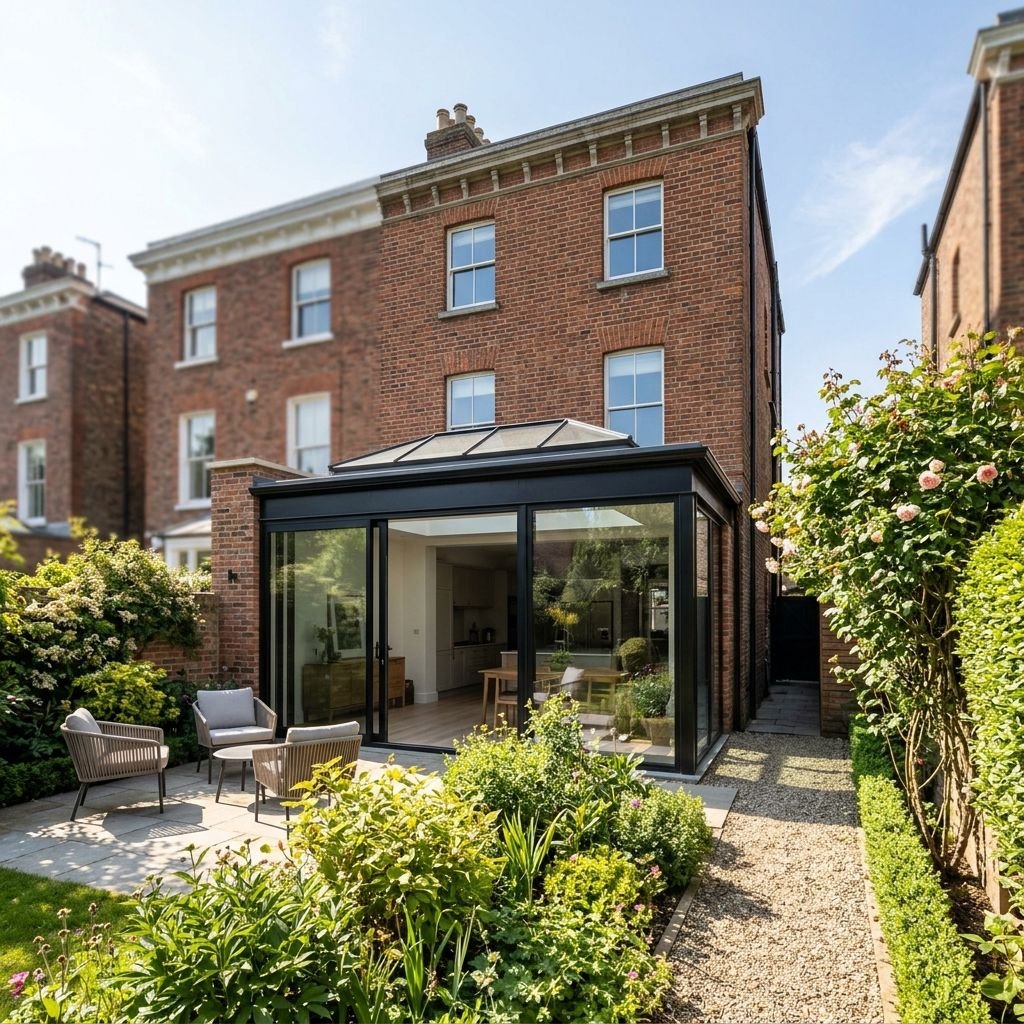
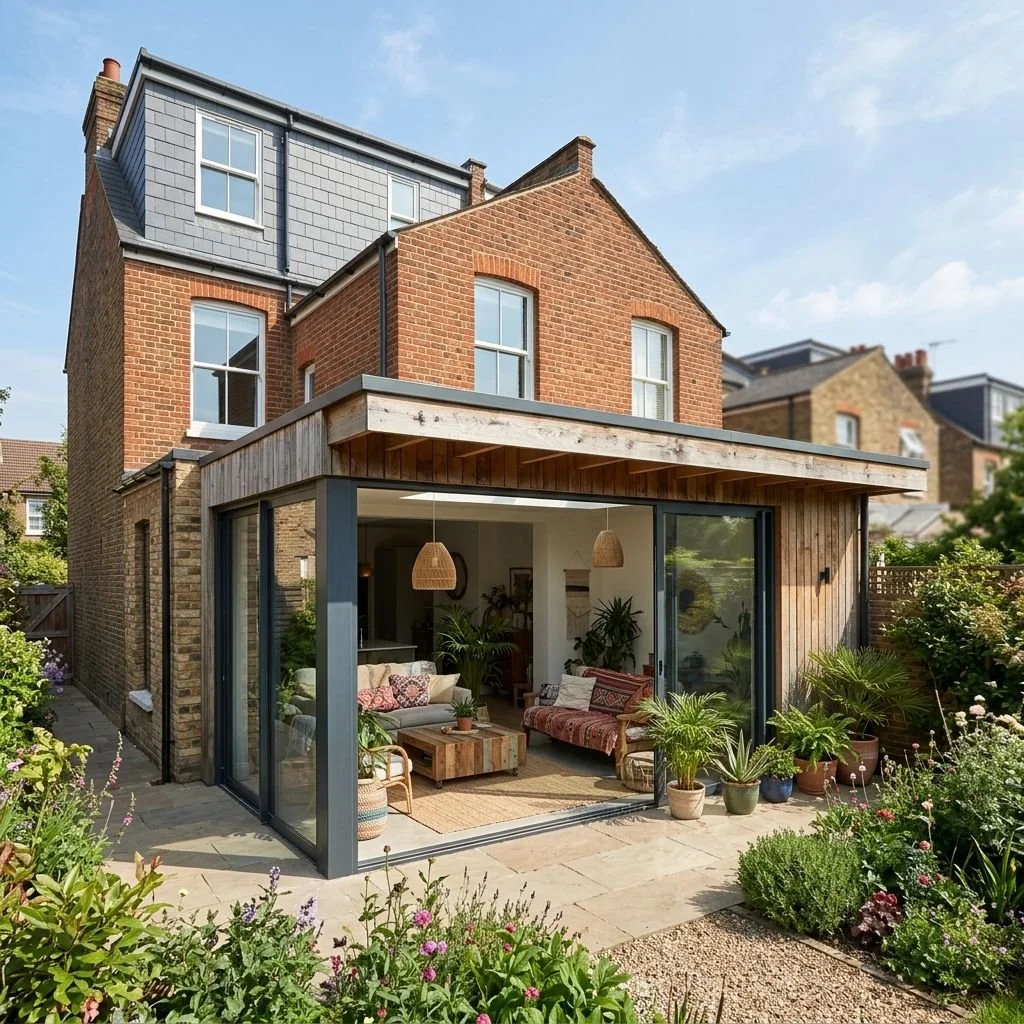
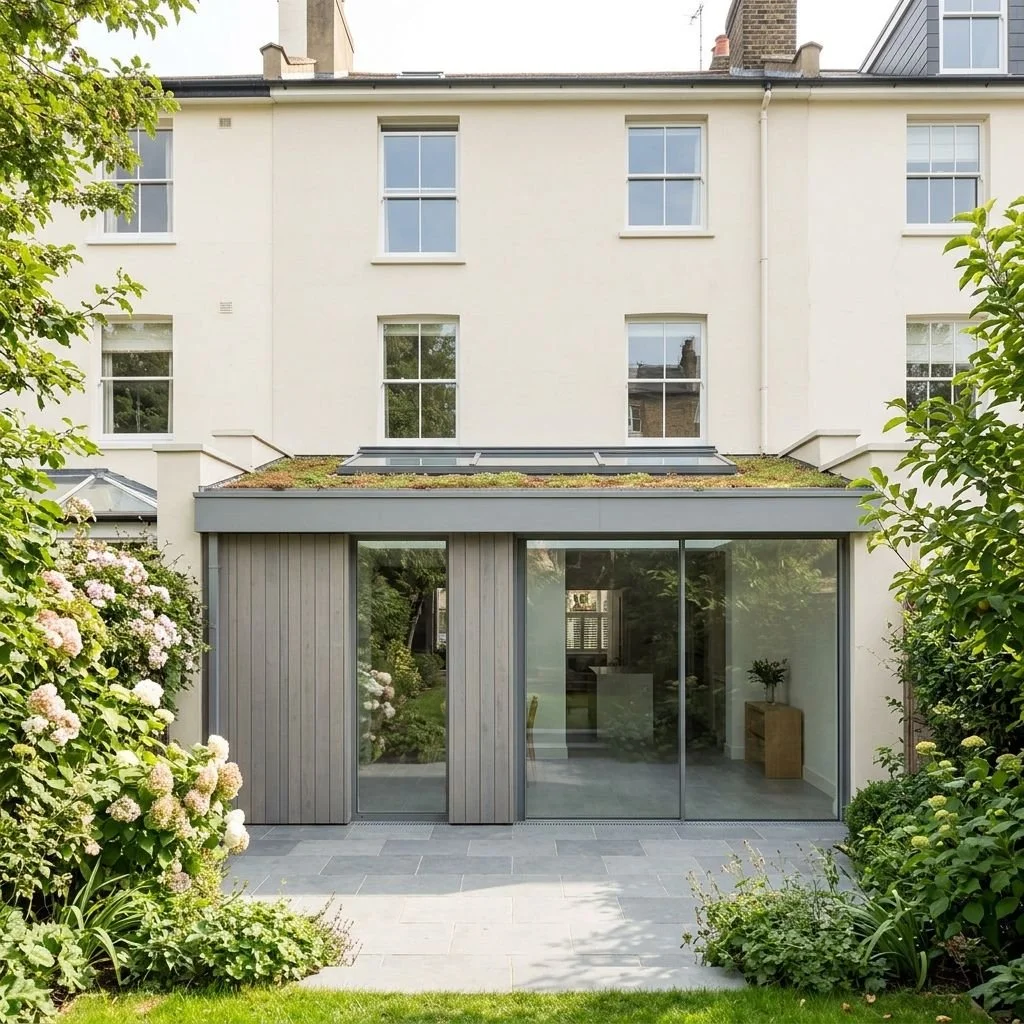
More design ideas for single storey rear extensions
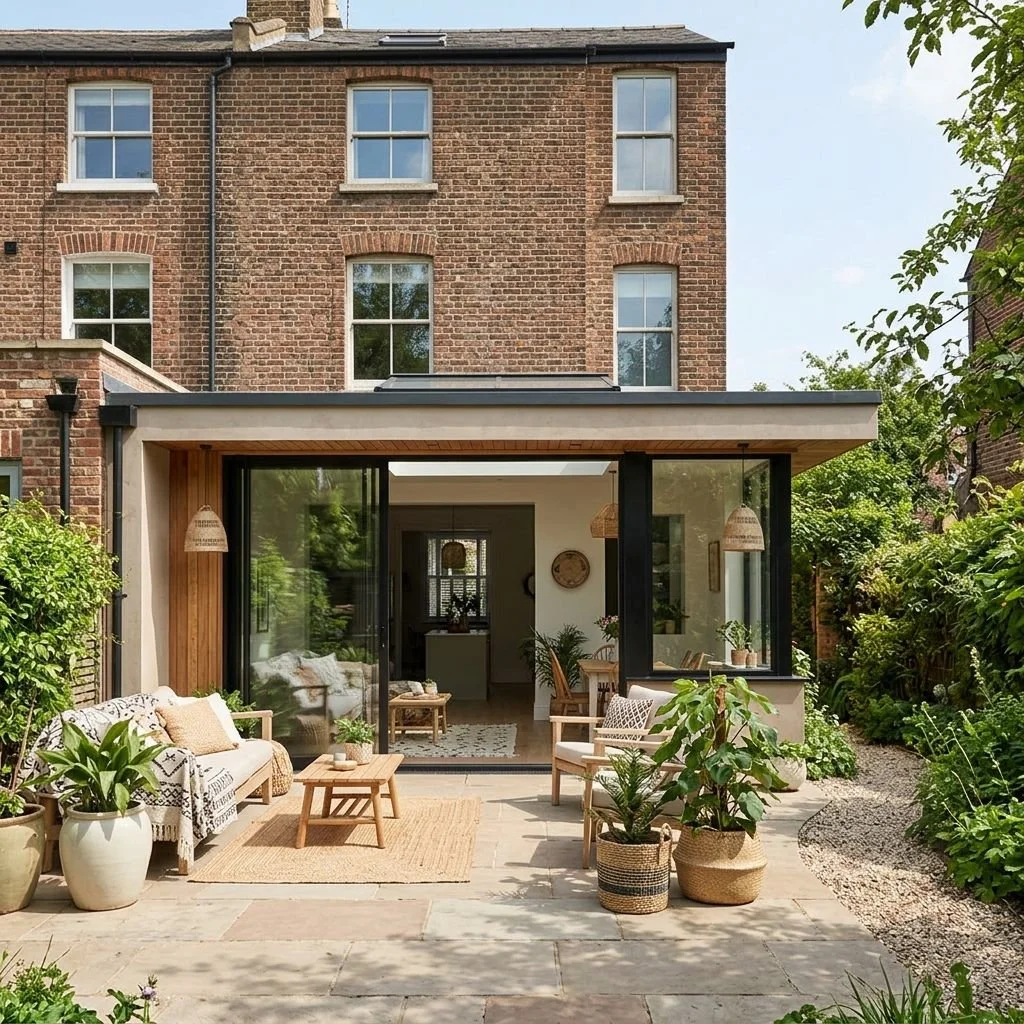
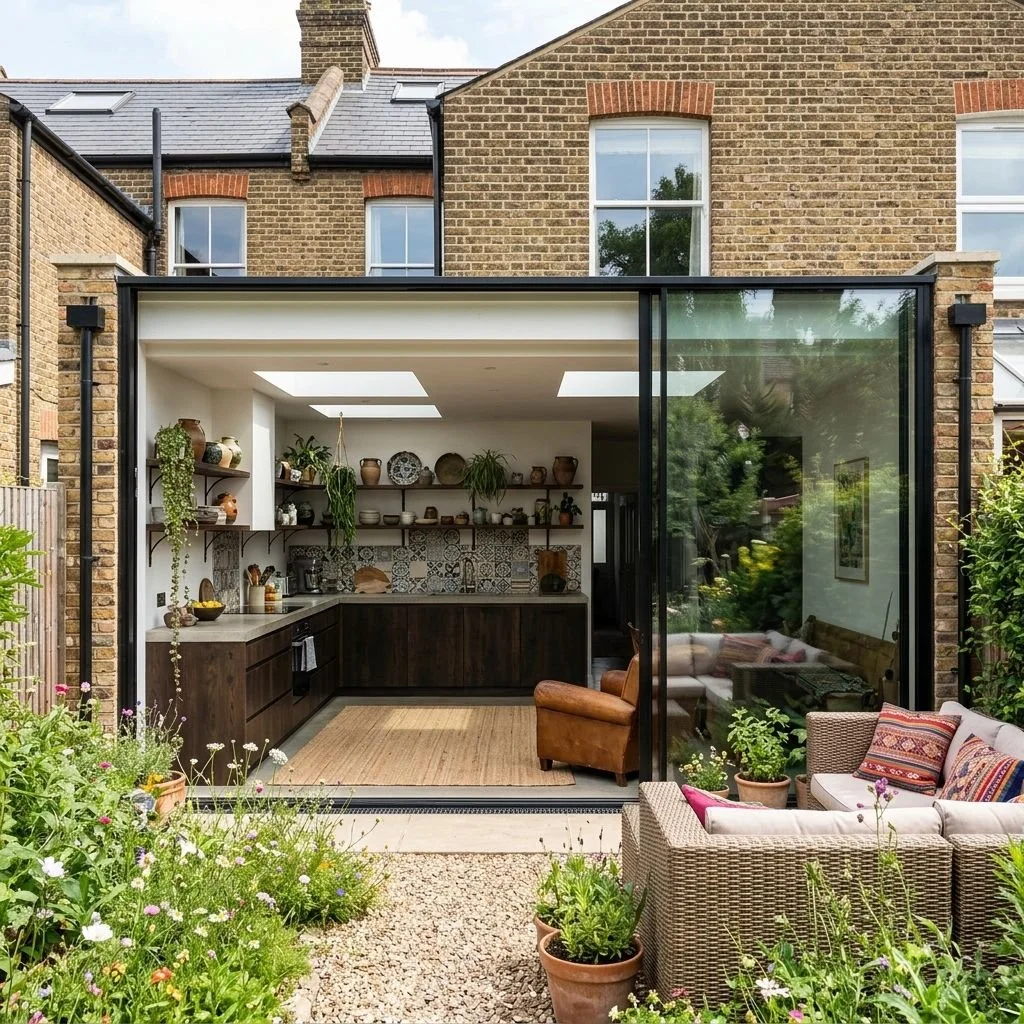
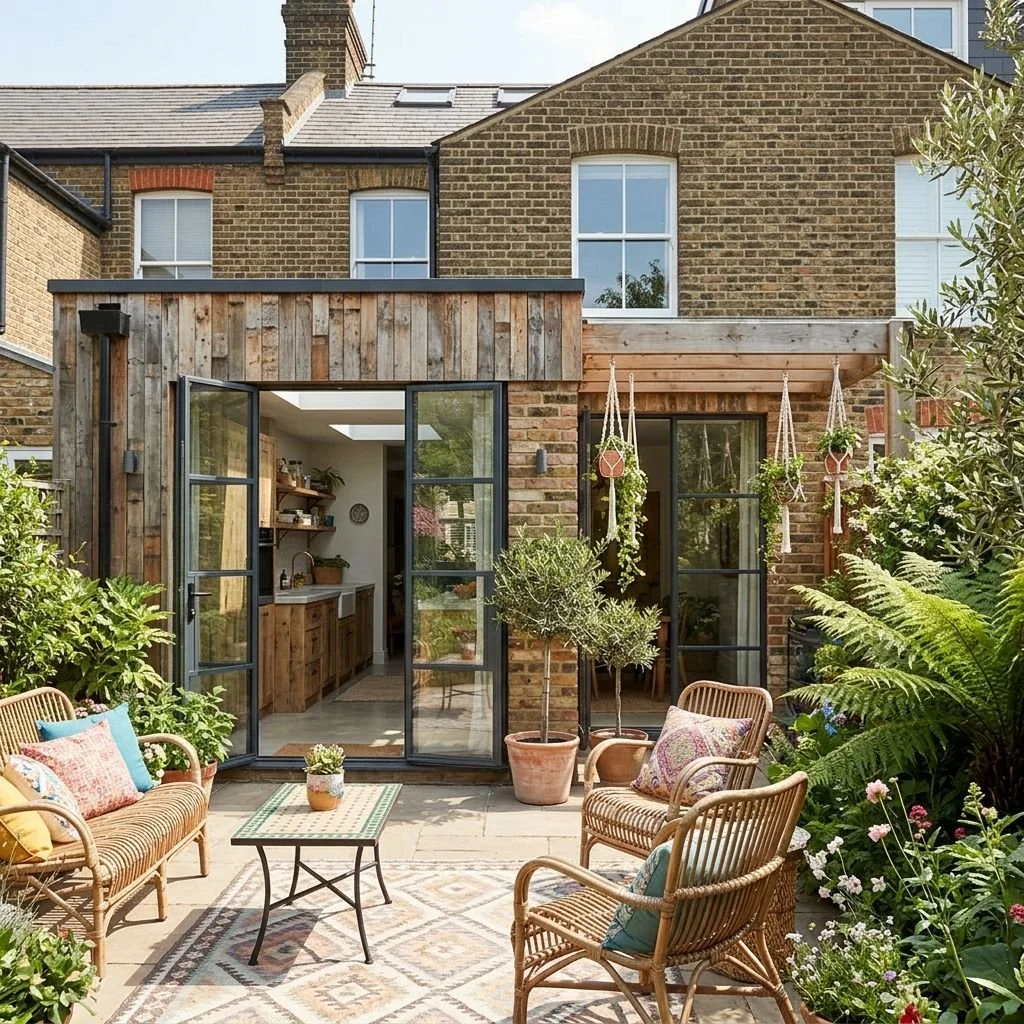
Boho style rear extension
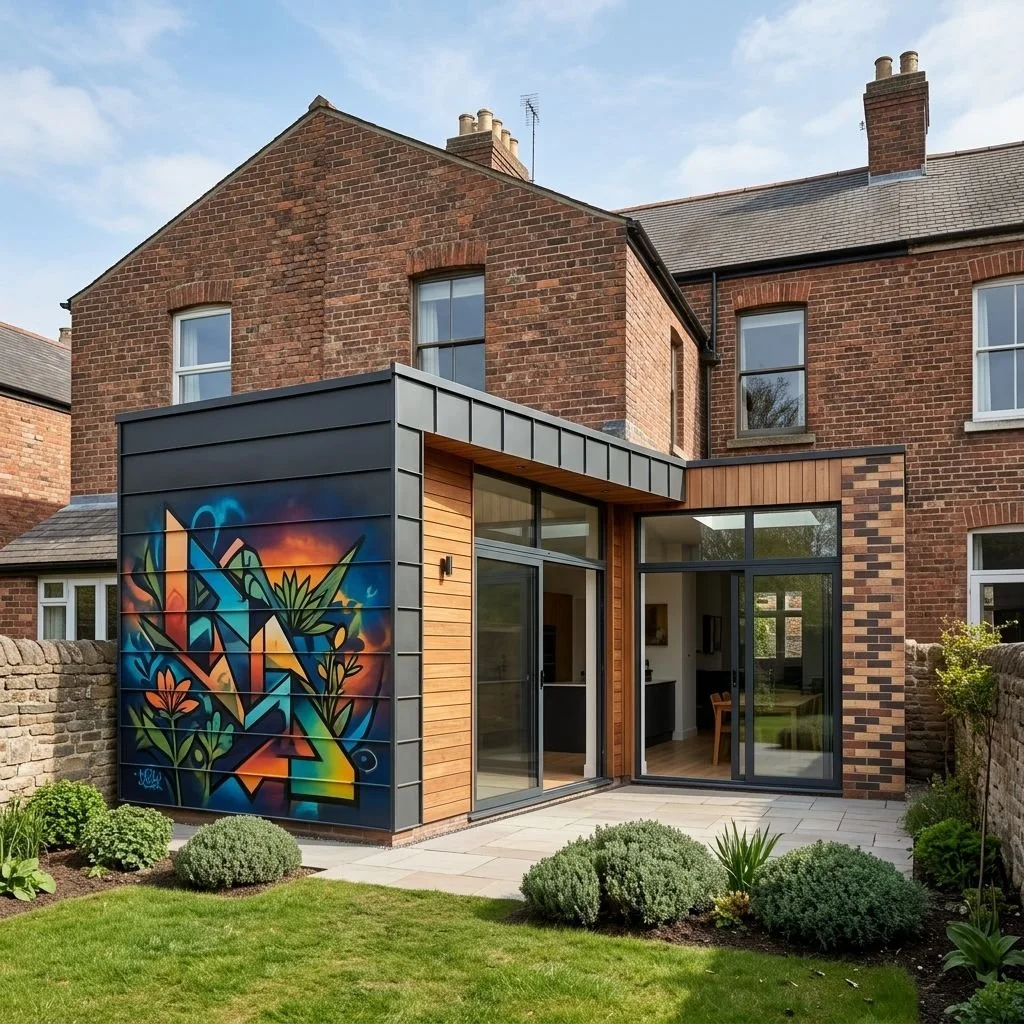
Graffiti style rear extension
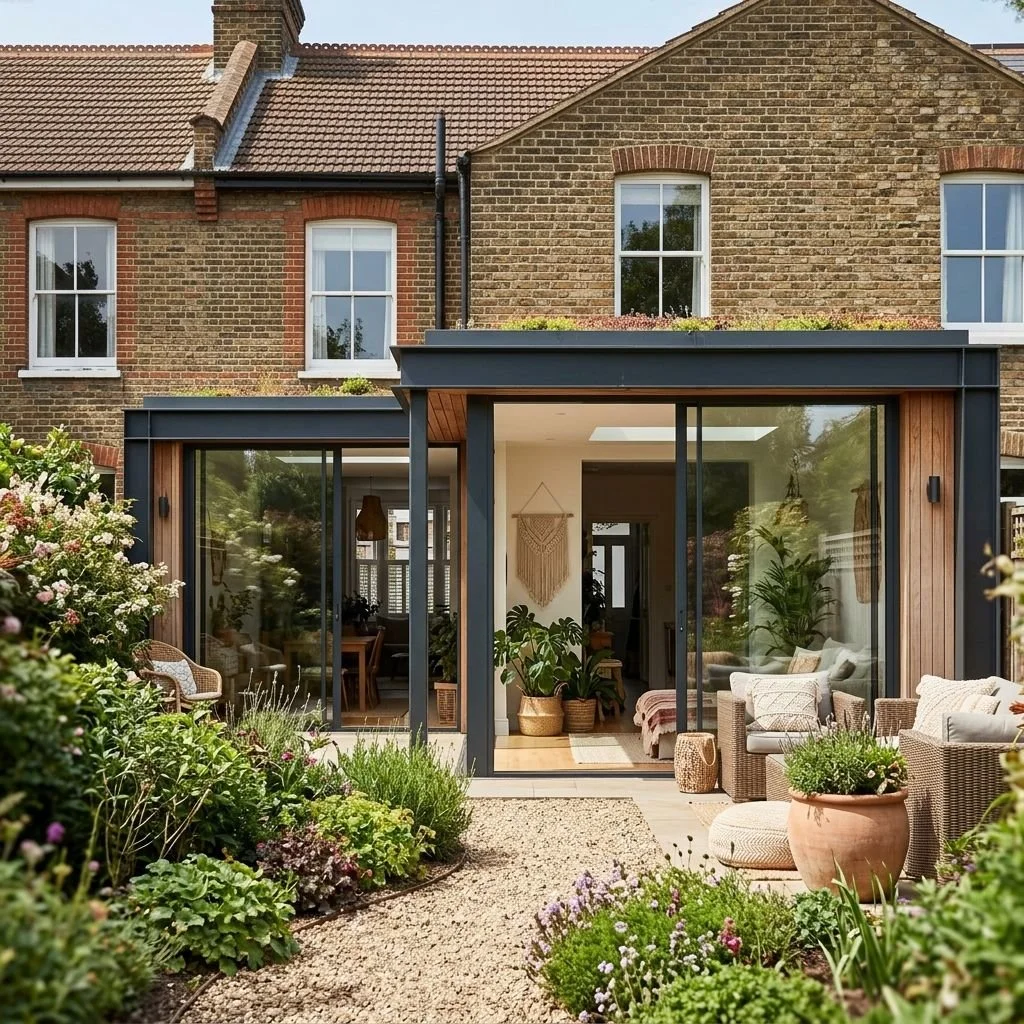
Rear extension with exposed metal beams and maximising views
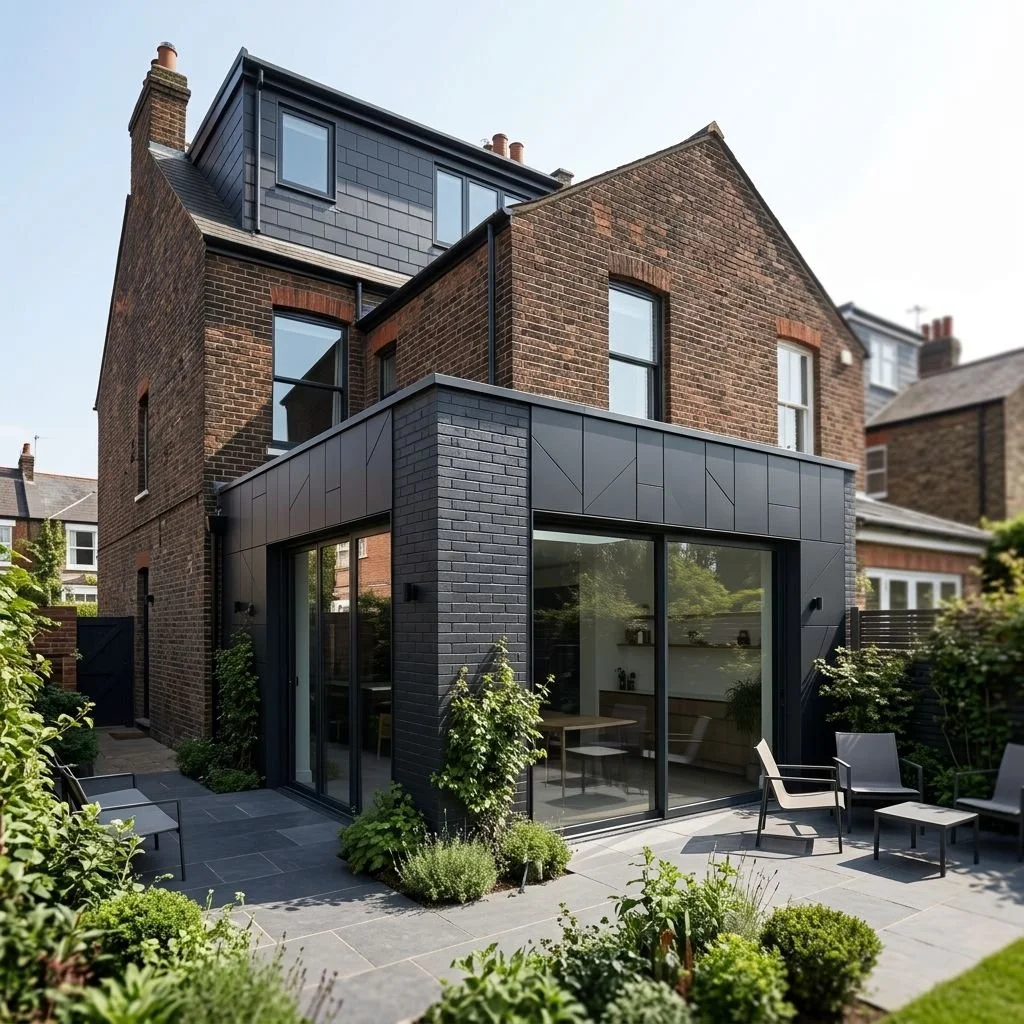
Urban style extension with patterned cladding
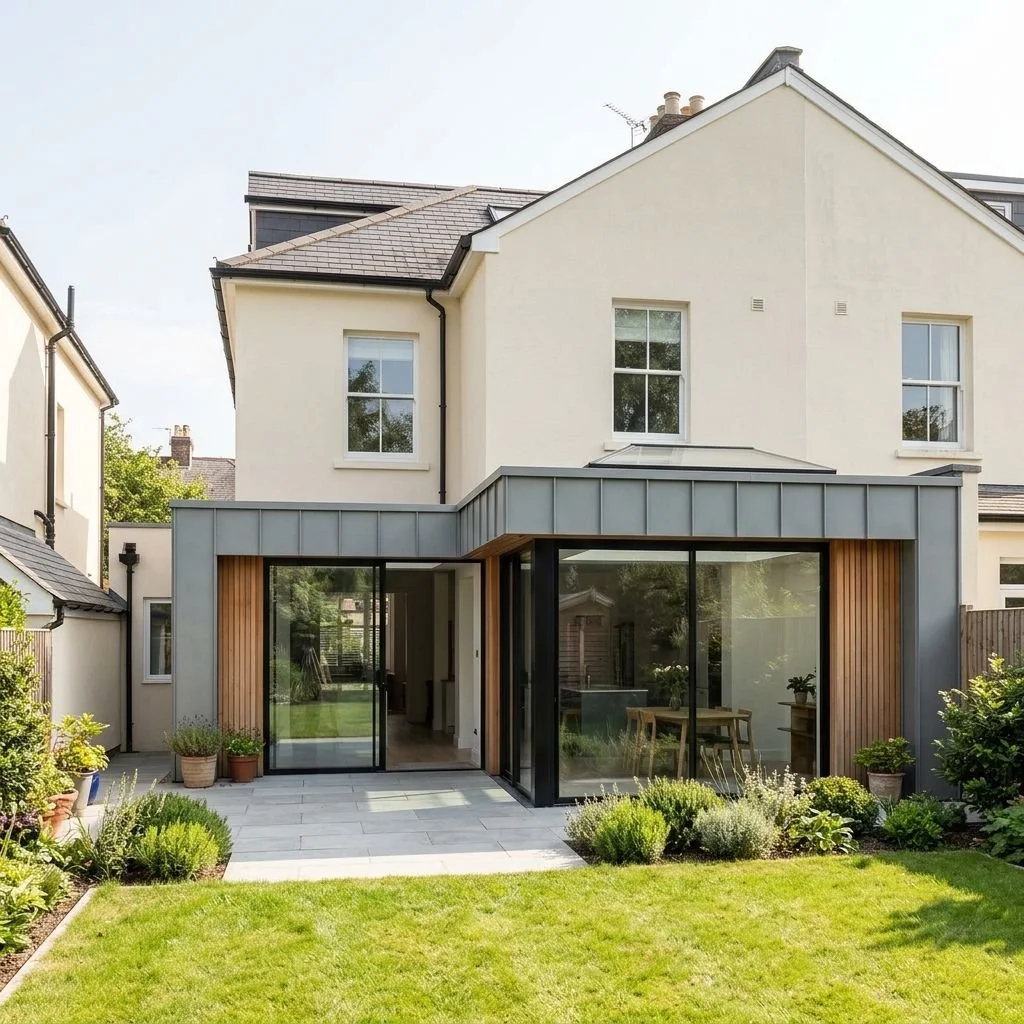
Modern industrial style rear extension
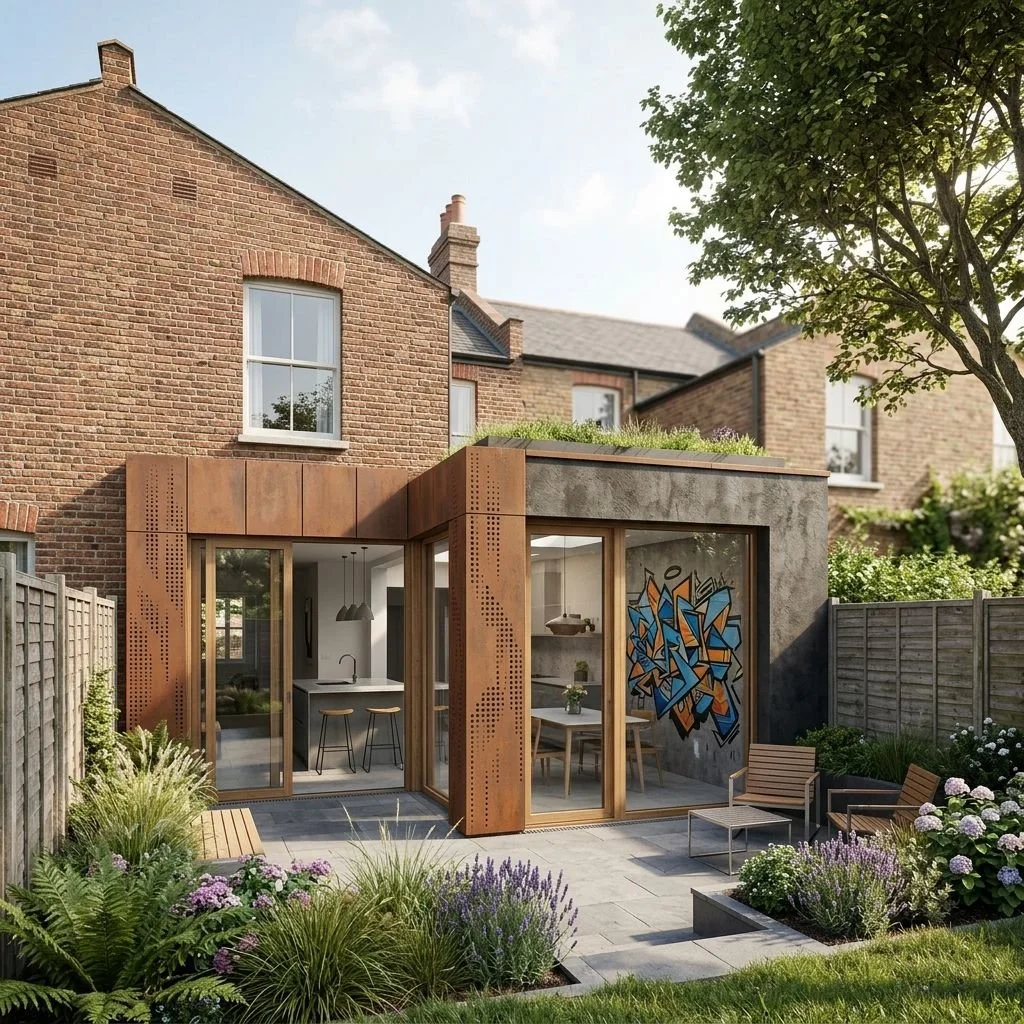
Contemporary laser cut cladding
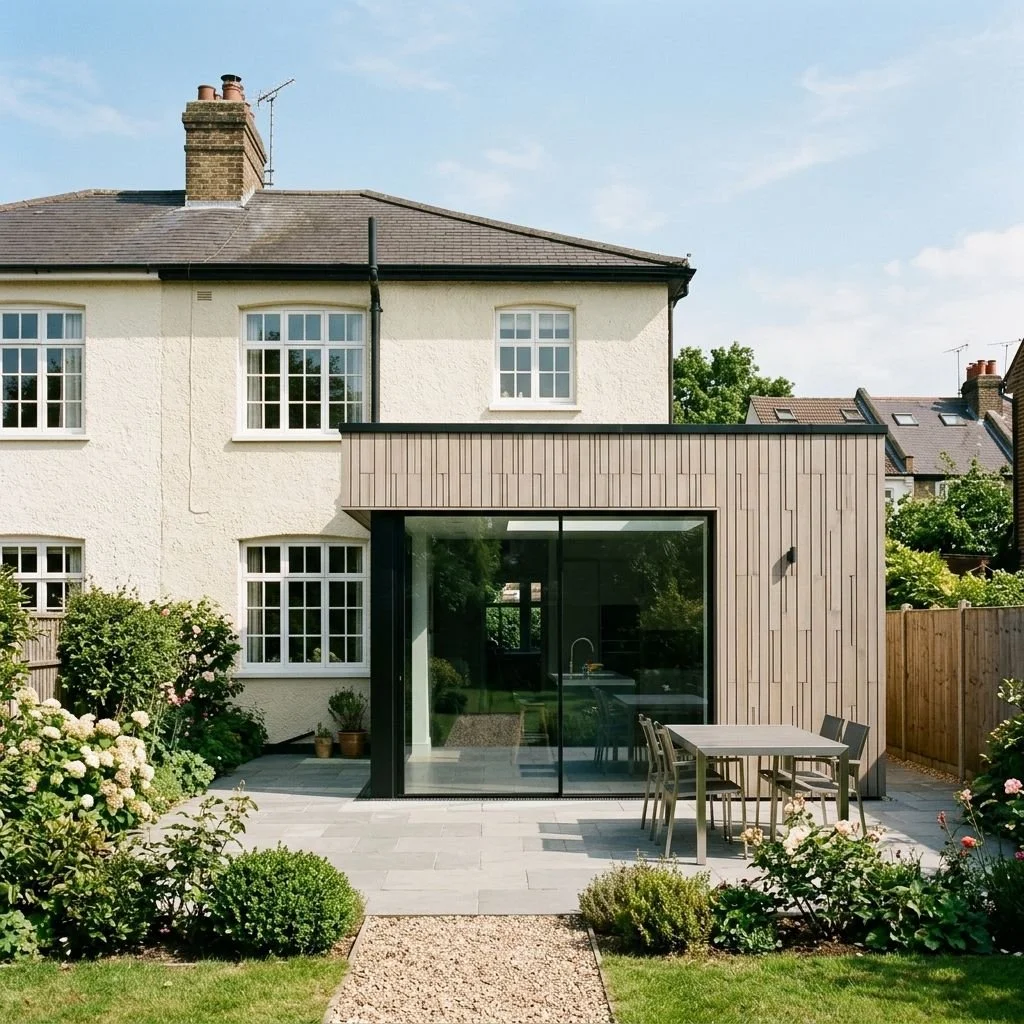
Sleek extension with patterned cladding

Green roof extension
Double-Storey Rear Extensions
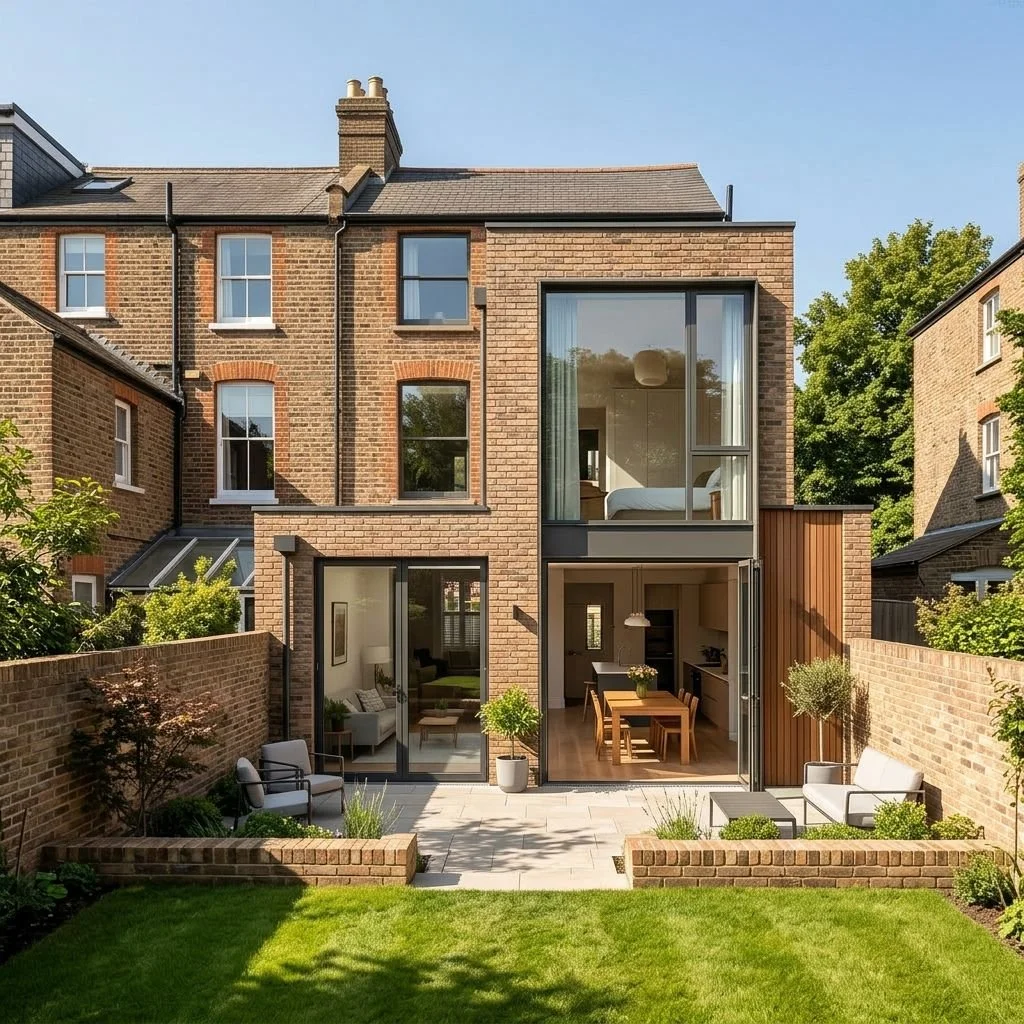
For households requiring additional accommodation across multiple floors, a double-storey rear extension may provide a more comprehensive solution. Our Two-Storey Rear Extension Design Service → explains the architectural process, planning considerations and design approach we use for residential projects.
See how these principles are applied in our Contemporary Rear Extension in Richmond →
These projects can create:
larger kitchens
additional bedrooms
new bathrooms
home offices
utility rooms
improved circulation throughout the house
Because they have a greater visual impact than single-storey extensions, they typically require more detailed assessment during the planning process.
Design considerations often include:
overlooking neighbouring properties
loss of daylight
building massing
roof design
relationship with adjoining buildings
privacy
the character of the surrounding streetscape
A well-designed proposal should balance the additional accommodation with the appearance of the existing house, ensuring the extension feels like a considered evolution of the property rather than an oversized addition.

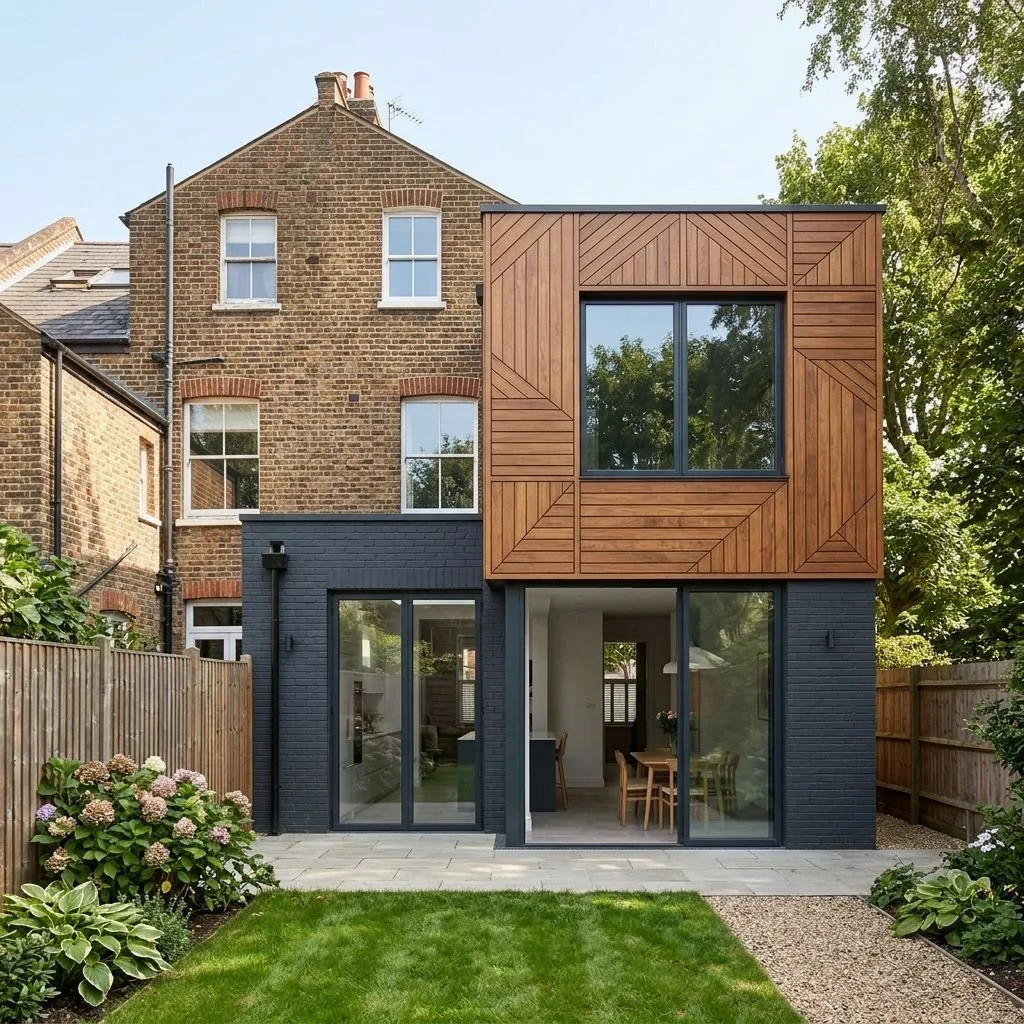
Rear Kitchen Extensions
Kitchen extensions continue to be one of the most requested forms of home improvement throughout the London Borough of Richmond upon Thames. Our Kitchen Extension Design Service → explains our design approach that we use, the architectural process and planning considerations.
See how these principles were applied in our Kitchen Extension Richmond →
Many older homes were designed with relatively small kitchens positioned at the rear of the property, separated from dining and reception rooms. While these layouts reflected historic patterns of domestic use, they often feel restrictive for contemporary households.
Extending the rear of the property allows these spaces to be reorganised into more practical layouts that improve movement throughout the home.
Popular design features include:
generous preparation areas
central kitchen islands
walk-in pantries
utility rooms
dining spaces overlooking the garden
roof glazing
large-format sliding or pivot doors
integrated storage
Rather than focusing solely on increasing floor area, successful kitchen extensions improve how the space performs throughout the day by carefully considering natural light, views, circulation and the relationship between different functional areas.
Design Principles That Shape Successful Rear Extensions
The most successful rear extensions are rarely defined by their size alone. Instead, they result from a balanced combination of thoughtful planning, proportion and attention to detail.
Key design principles typically include:
Responding to the Existing Property
Every extension should complement the proportions, scale and architectural character of the original building without attempting to imitate it unnecessarily.
Maximising Natural Daylight
Introducing additional glazing should be carefully balanced with solar gain, privacy and the orientation of the property. Rooflights, glazed openings and internal layouts all contribute to creating brighter interiors.
Improving Internal Flow
Removing poorly positioned walls, improving circulation routes and organising spaces more efficiently can often have a greater impact than simply increasing floor area.
Strengthening the Relationship with the Garden
Rear extensions provide an opportunity to create a stronger visual and physical connection between internal spaces and external areas through considered positioning of openings, landscaping and floor levels.
Selecting Appropriate Materials
Materials should complement both the existing house and the wider character of the surrounding area while providing durability and long-term performance.
The objective is not to create a standalone addition, but an extension that feels integrated with the home as a whole.
Planning Permission for Rear Extensions in the London Borough of Richmond upon Thames
Whether planning permission is required depends on the individual property and the scale of the proposed extension. While some projects may qualify under permitted development rights, others will require a full planning application.
Our Planning Permission Design Service → explains our design approach that we use, the architectural process and planning considerations. You can also find helpful our Full planning permission guide for extensions →
Factors that commonly influence the approval route include:
the depth and height of the extension
whether the property is detached, semi-detached or terraced
previous extensions or alterations
the property's planning history
whether the home is within a conservation area
whether the property is listed
the relationship with neighbouring properties
proximity to boundaries
Planning should not be viewed as a hurdle but as an opportunity to develop a proposal that responds appropriately to both the property and its surroundings. Early design decisions often determine how smoothly the planning process progresses.
Artist of Architecture prepares planning information that clearly demonstrates how a proposal responds to local planning policy, neighbouring properties and the existing character of the home.
Permitted Development Rights
Many homeowners assume every rear extension requires planning permission. In reality, some extensions can be constructed under permitted development rights, provided they satisfy specific criteria.
These rights vary depending on the property and do not apply in every situation.
Permitted development may be affected by:
previous additions to the property
flats and maisonettes
listed buildings
Article 4 Directions
conservation area restrictions
site-specific planning conditions
Even where planning permission is not required, Building Regulations approval is normally still necessary before construction begins.
Establishing the correct planning route at an early stage helps avoid unnecessary delays once design work is underway.
Rear Extensions Within Conservation Areas
The London Borough of Richmond upon Thames contains one of London's largest collections of conservation areas, reflecting its distinctive historic character and varied residential neighbourhoods.
Many homeowners considering a rear extension own properties within or close to conservation areas, including locations such as:
Richmond Green
Richmond Hill
Kew
East Sheen
Petersham
St Margarets
Barnes
Mortlake
Ham
Additional design considerations may include:
protecting the appearance of the original building
maintaining established building lines
preserving traditional materials
respecting neighbouring properties
limiting visual impact
protecting important views where relevant
Sensitive contemporary design can often sit comfortably alongside historic buildings when scale, proportions and detailing are carefully considered.
A successful proposal demonstrates an understanding of the existing property rather than competing with it.
Design Approach
Designing for Natural Light
One of the most common reasons homeowners choose a rear extension is to improve daylight throughout the ground floor.
Many period houses across the borough were designed with enclosed rear rooms that receive relatively limited natural light, particularly during the winter months.
Several design strategies can improve internal brightness, including:
rooflights
roof lanterns
carefully positioned glazing
wider openings between rooms
improved internal sightlines
open stair arrangements where appropriate
lighter interior finishes that reflect daylight
The position of the sun, neighbouring buildings and garden orientation all influence how daylight enters a property.
Rather than simply introducing larger areas of glazing, successful designs carefully balance daylight, solar gain, privacy and thermal performance throughout the year.
Creating a Better Relationship with the Garden
Rear extensions are often most successful when they strengthen the connection between the home and its outdoor space.
This does not necessarily require full-width glazing. Instead, the design should carefully consider how internal and external spaces relate to one another.
Important considerations include:
floor levels
garden access
views through the property
planting
external materials
thresholds
drainage
seasonal use
A carefully designed transition between house and garden can make both spaces feel larger and more connected.
Materials That Suit Rear Extensions
Material selection influences both appearance and long-term durability.
Within the London Borough of Richmond upon Thames, many rear extensions successfully combine traditional and contemporary materials.
Common choices include:
London stock brick
reclaimed brick
painted brickwork
natural timber cladding
zinc
aluminium glazing
stone paving
porcelain paving
lime render
natural slate
standing seam metal roofing
The most appropriate palette depends upon the character of the existing property, the surrounding context and the overall design approach.
Rather than following current trends, selecting materials that weather well and complement the original building generally produces a more enduring result.
Improving Energy Performance
A rear extension presents an opportunity to improve the environmental performance of an existing home.
While Building Regulations establish minimum standards, many homeowners choose to exceed these requirements to improve comfort and reduce long-term running costs.
Design considerations may include:
improved insulation
energy-efficient glazing
reduced thermal bridging
natural ventilation
solar shading
efficient heating systems
low-maintenance external materials
sustainable material selection
Considering energy performance during the design stage is generally more effective than attempting to introduce improvements once construction has commenced.
Structural Coordination
Although rear extensions often appear relatively simple from the outside, they require careful technical coordination before work begins.
Depending on the existing property, construction may involve:
removal of load-bearing walls
new structural steelwork
alterations to foundations
drainage diversions
roof construction
insulation detailing
waterproofing
service coordination
Comprehensive technical information helps reduce uncertainty during construction and allows contractors to price and build the project more accurately.
Close collaboration between the architecture firm, structural engineer and other consultants also helps identify potential issues before work begins on site.
Common Design Mistakes
Many extension projects encounter difficulties because key design decisions are made too late or without considering how the house functions as a whole.
Common issues include:
prioritising floor area over layout quality
overlooking daylight within existing rooms
insufficient storage
poor circulation
oversized extensions that dominate the original house
inadequate relationship with the garden
inconsistent material selection
unrealistic construction budgets
beginning design work without understanding planning constraints
A well-considered proposal addresses these issues from the outset rather than attempting to resolve them during construction.
Typical Rear Extension Costs
The cost of a rear extension varies considerably depending on the property's size, specification and complexity.
Factors influencing overall cost include:
extension size
structural alterations
existing site conditions
accessibility
specification
glazing systems
kitchen installation
external works
planning requirements
As a broad guide for projects across southwest London, homeowners may expect:
ProjectTypical Construction Cost
Small single-storey rear extension £60,000–£90,000*
Medium single-storey rear extension £90,000–£150,000*
Large single-storey rear extension £150,000–£260,000+*
Double-storey rear extension £150,000–£350,000+*
*These figures are indicative construction costs only and exclude professional fees, statutory application fees, structural engineering, specialist surveys, interior fit-out and VAT where applicable.
Obtaining accurate cost advice during the design stage helps establish a realistic project budget before planning or technical design progresses.
By working with an experienced architecture firm Artist of Architecture, homeowners can move beyond generic online estimates and develop a tailored strategy that maximises both the potential of their property and the value of their investment.

Planning a project of your own?
Explore how we approach residential architecture, what our services involve and how we help clients make informed decisions from the outset.
Artist of Architecture
Our approach, services and fees.
Why Homeowners Choose Artist of Architecture
Choosing the right extension isn't only about cost. While average extension costs provide a useful starting point, they should always be considered alongside planning requirements, structural constraints, design quality and long-term value. Understanding these factors early helps homeowners establish realistic budgets and make informed decisions before committing to detailed design or construction.
Our architecture firm Artist of Architecture can assist with:
Feasibility studies
Budget planning
Concept design
Contractor coordination and more
If you're ready to explore the possibilities for your property, our Design Service for Home Extensions explains how we approach feasibility, planning, design and technical development for residential extension projects across Richmond and South West London.
FAQs About Rear Extension Design Services in Richmond
What is a rear extension in a house?
A rear extension is an addition built onto the back of a property to increase internal floor space. It is commonly used to create larger kitchens, dining areas, or open-plan spaces that connect more directly with the garden.
How much does a rear extension cost in Richmond in 2026?
In Richmond, rear extensions typically cost between £50,000 and £240,000+, depending on size, structural complexity, glazing, and specification level. Single-storey extensions are generally more affordable, while larger or double-storey projects require higher budgets.
Do I need planning permission for a rear extension in Richmond?
Some rear extensions can be built under permitted development rights, but many require planning permission. This depends on the size of the extension, property type, proximity to boundaries, and whether the home is in a conservation area.
How long does a rear extension take in Richmond?
Most rear extension projects take around 6 to 12 months from initial design to completion. This includes design development, planning approval, technical drawings, and construction.
What is the difference between permitted development and planning permission?
Permitted development allows certain rear extensions to be built without a full planning application, provided they meet strict size and design limits. Planning permission is required when proposals exceed these limits or affect conservation areas or neighbouring properties.
What type of properties are suitable for rear extensions?
Rear extensions are suitable for most property types in Richmond, including Victorian terraces, Edwardian homes, semi-detached houses, and detached properties. Each type requires a tailored design approach based on structure and layout.
Will a rear extension add value to my Richmond property?
A well-designed rear extension can increase property value by improving space, functionality, and layout. In Richmond, demand for open-plan kitchen and dining areas means rear extensions are often considered a strong long-term investment.
What is included in a rear extension design service?
A full rear extension design service typically includes concept design, measured surveys, planning drawings, technical construction drawings, and support with planning applications and building regulations approval.
What are the most popular rear extension design ideas in Richmond?
Popular design ideas include open-plan kitchen and dining spaces, large sliding glass doors, rooflights, kitchen islands, and seamless indoor-outdoor connections to the garden.
Are rear extensions suitable for Victorian houses?
Yes, Victorian homes in Richmond are among the most common properties for rear extensions. They often benefit significantly from modern layouts that replace small, segmented rooms with brighter, open-plan spaces.
Can I stay in my home during a rear extension build?
In many cases, homeowners remain in their property during construction. However, this depends on the scale of works, structural changes, and level of disruption involved.
How do rear extensions improve natural light?
Rear extensions improve natural light through large glazing systems, rooflights, skylights, and improved spatial layouts that allow daylight to penetrate deeper into the home.
What are the biggest challenges with rear extensions?
Common challenges include planning constraints, conservation area restrictions, structural complexity, drainage relocation, and ensuring the new extension integrates well with the existing property.
Do rear extensions require structural engineering?
Yes, most rear extensions require structural engineering input, particularly when removing walls, adding large openings, or installing steel beams to support the new structure.
Why choose a professional design service for a rear extension?
A professional design service ensures the extension is well-planned, compliant with regulations, and tailored to the property. It also improves the likelihood of planning approval and helps avoid costly construction issues.
Home Extension Design in Richmond & Greater London
Artist of Architecture specialises in bespoke residential architecture, home extensions, loft conversions and interior design across Richmond, Twickenham, and Greater London.
As a boutique author-led architecture firm, every project benefits from direct collaboration, personal attention and a design approach tailored to the client’s lifestyle, vision and budget. Speak to Artist of Architecture about how to make your project happen →
Are you considering an Extension in Richmond or surrounding areas?
Book a free consultation to discuss your project.
About this page
Prepared by Vladis, Director at Artist of Architecture. Responsible for residential design, planning strategy and project delivery across extension, loft conversion and new-build schemes. Over 10 years’ experience preparing planning applications, permitted development submissions and building regulations packages with local planning authorities.
Last updated: 2026
Disclaimer: The information on this website is provided for general informational purposes only and does not constitute legal, planning, architectural, or professional advice. Planning requirements, costs, and timescales can vary depending on the property, project, and site-specific circumstances. While every effort has been made to ensure accuracy, no guarantee is given that the information is complete, current, or applicable to your situation. For advice specific to your property and project, please contact Artist of Architecture directly.
Richmond
Twickenham
Teddington
Hampton
Barnes
Kew