Home > Guides > Architecture Guides > Richmond > Kitchen Extensions Richmond: Design Ideas, Costs & Planning Permission Guide
Kitchen Extensions Richmond: Design Ideas, Costs & Planning Permission Guide 2026
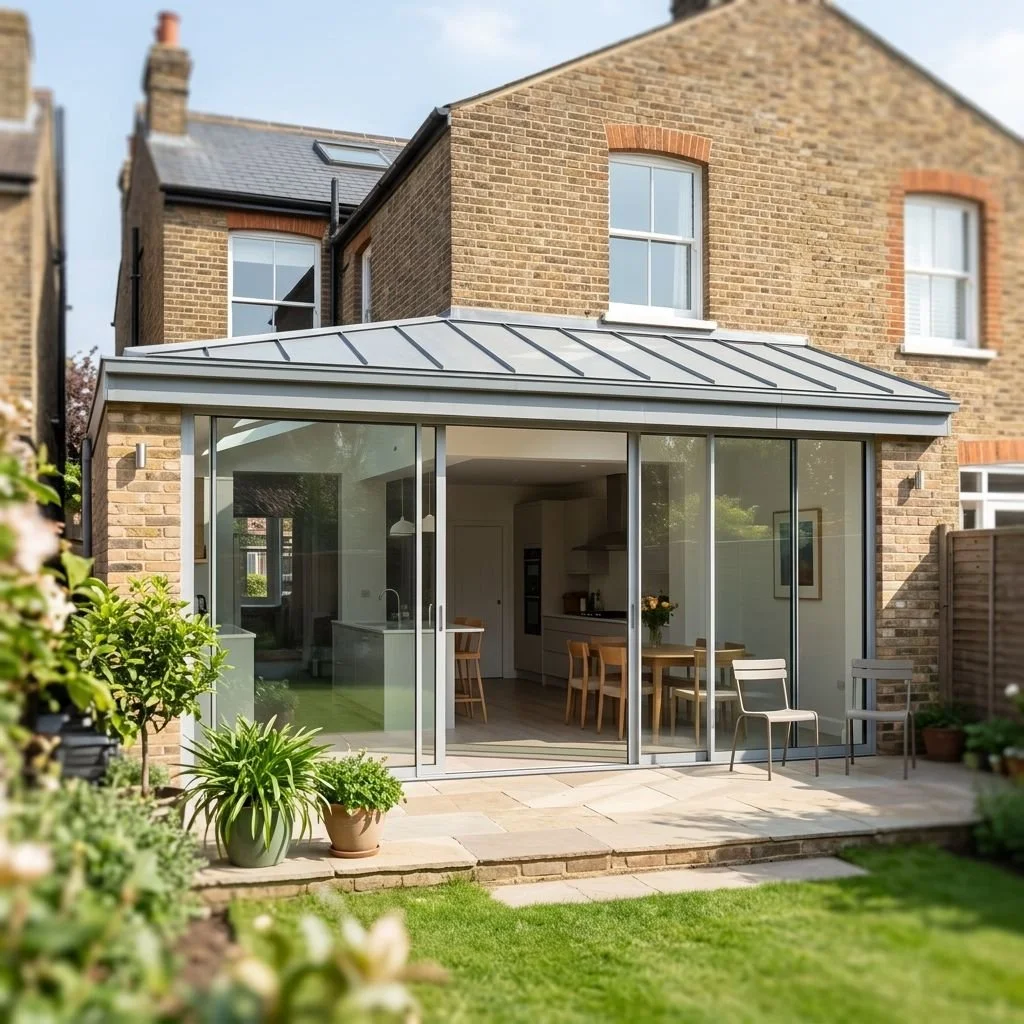
A well-designed kitchen extension can transform how a Richmond home feels and functions. By extending to the rear, using a side return, or combining both, homeowners can create a larger kitchen, improve natural light, establish a better connection with the garden, and make the ground floor work more effectively for modern family life.
For homeowners researching kitchen extensions in Richmond, rear extensions, side return extensions, house extensions in Richmond, or kitchen extension costs, the challenge is not simply to add floor area. The most successful projects balance architecture, planning, structure, energy performance, budget, and the way the home will actually be used.
This guide explains the main types of kitchen extensions in Richmond, design ideas, planning permission and permitted development, conservation-area considerations, Party Wall requirements, Building Regulations, structural design, costs, timescales, sustainability, and the architectural process from initial feasibility through to construction.
Why Are Kitchen Extensions So Popular in Richmond?
Richmond and surrounding areas contain a large number of Victorian, Edwardian and 1930s homes. Many were designed around smaller, compartmentalised kitchens and separate dining rooms rather than the open, flexible spaces expected by many households today.
A carefully designed extension can address these limitations without requiring homeowners to move.
Depending on the property and site, a kitchen extension can provide:
A larger and more practical kitchen
A dedicated dining area
Better circulation through the ground floor
More storage and worktop space
Improved access to the garden
Greater levels of natural daylight
Flexible space for family life and entertaining
Opportunities to improve energy performance
A more coherent relationship between the original house and garden
This is particularly relevant in areas such as Richmond Hill, Kew, East Sheen, Barnes, Petersham, Mortlake, Twickenham, Ham, North Sheen, Teddington and Hampton.
For many homeowners, extending also offers a way to improve an existing property while remaining in a neighbourhood they already know and value.
What Type of Kitchen Extension Is Best for a Richmond Home?
There is no single solution that works for every property. The best approach depends on the width and depth of the existing house, garden size, orientation, neighbouring properties, planning constraints, structural arrangement and the homeowner's priorities.
1. Rear Kitchen Extensions
A rear extension projects from the back of the property into the garden.
It is one of the most common ways to create a larger kitchen-dining space and can work particularly well where the existing kitchen is located at the rear of the house.
Typical design features include:
Open-plan kitchen and dining areas
Large sliding or bi-fold doors
Rooflights or roof lanterns
Kitchen islands
Direct garden access
Improved circulation between existing and new spaces
The depth of the extension needs to be considered carefully. Maximising floor area does not necessarily produce the best room. The relationship between the extension, existing house and garden can be more important than simply adding as many square metres as possible.
2. Side Return Kitchen Extensions
Side return extensions make use of the narrow passage or alley alongside many Victorian and Edwardian terraced properties.
Instead of extending substantially further into the garden, the side return widens the existing ground-floor footprint.
This can provide:
A wider kitchen
More useful circulation space
Space for a kitchen island
Additional roof glazing
Better connection between front and rear rooms
More efficient use of previously underused external space
Side returns can be particularly effective where the existing kitchen feels narrow.
3. Wraparound Extensions
A wraparound extension combines a rear extension with a side return shaped addition.
This approach can produce a substantial transformation of the ground floor, providing greater flexibility for:
Kitchen, Dining, Family seating, Utility areas, Storage, Garden access
Because a wraparound extension affects a larger part of the property, planning, structural design, drainage, construction and budget considerations become more significant.
4. Double-Storey Extensions
Although less common for kitchen-only projects, a double-storey extension can make sense when additional accommodation is required upstairs as well as downstairs.
For example, the new ground-floor kitchen could be combined with an additional bedroom, bathroom, office or other room above.
This is a substantially larger undertaking and generally requires more extensive planning, structural and construction work.
Kitchen Extension Design Ideas for Richmond Homes
A successful kitchen extension should not simply be a large room containing a kitchen. The design should consider how people move through the house, where daylight comes from, how the garden is accessed, and how different activities coexist.
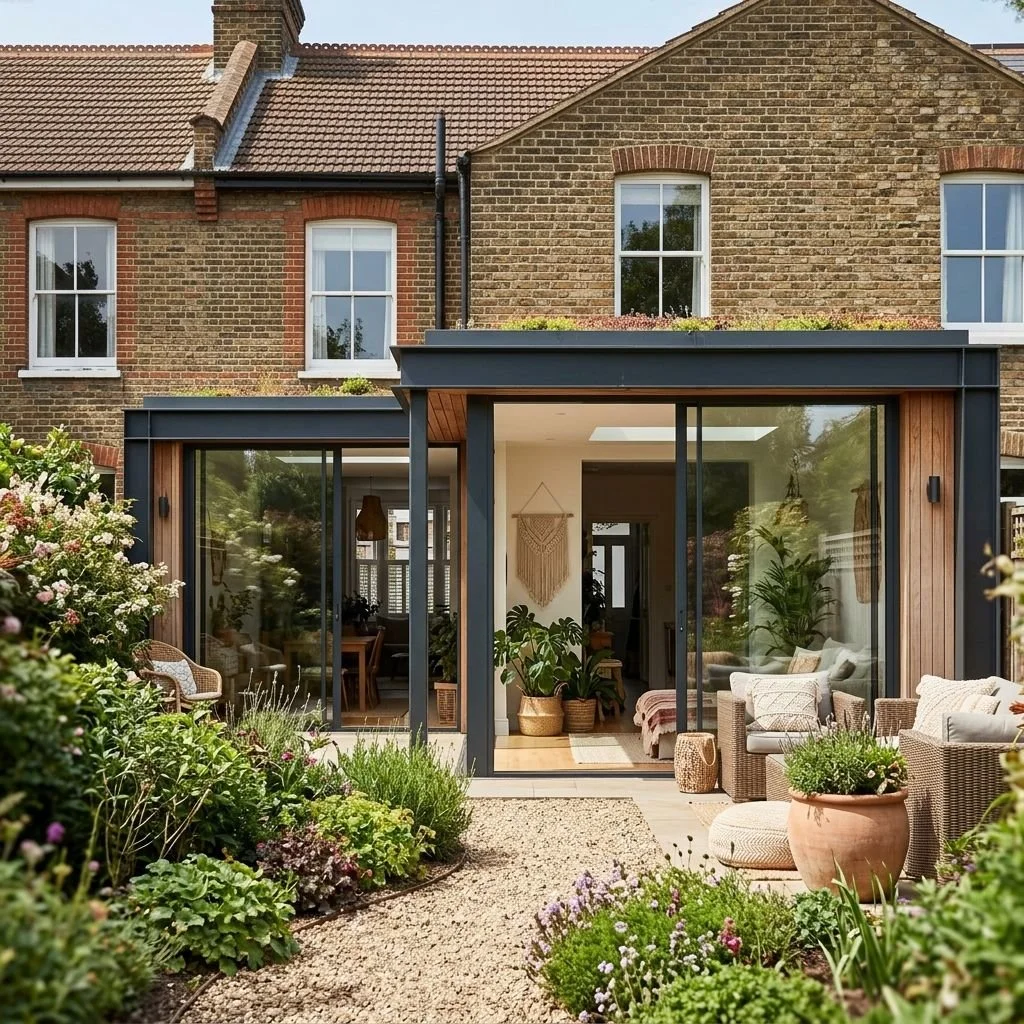
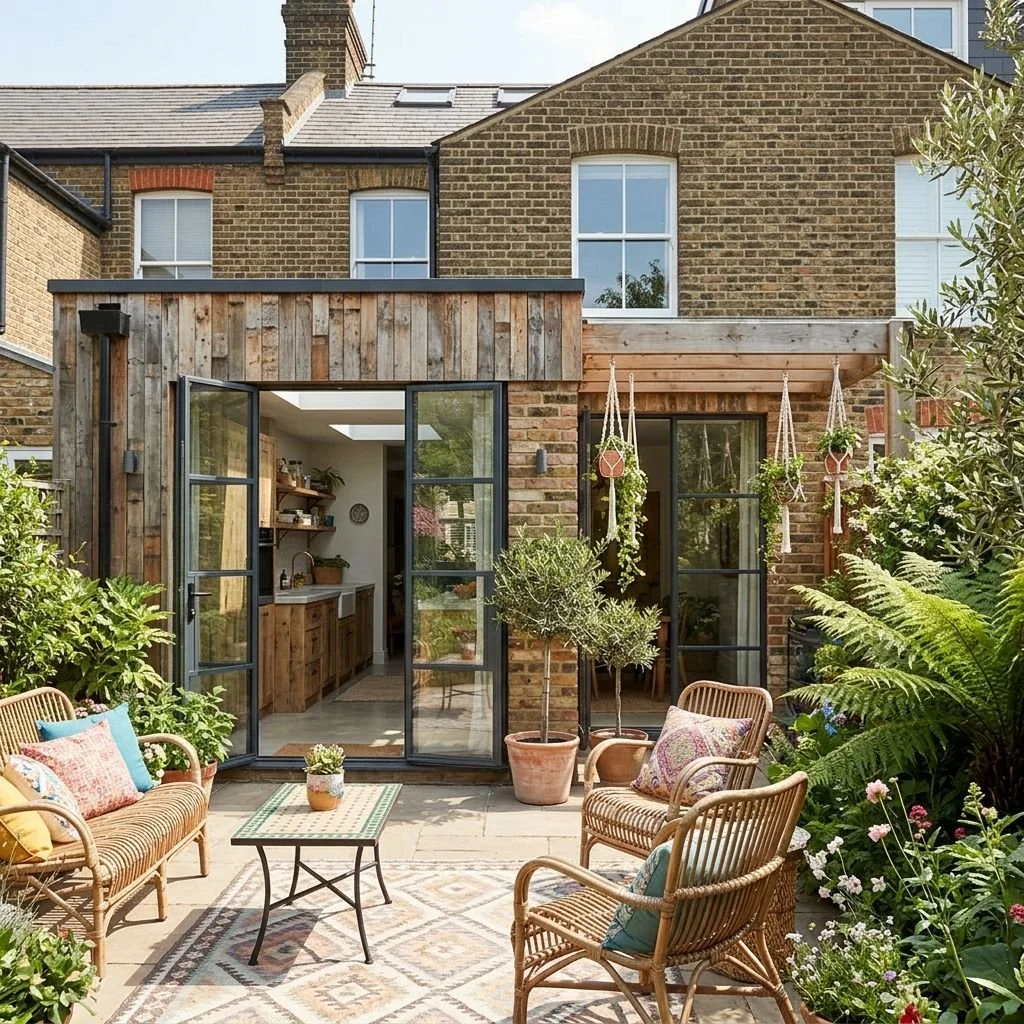
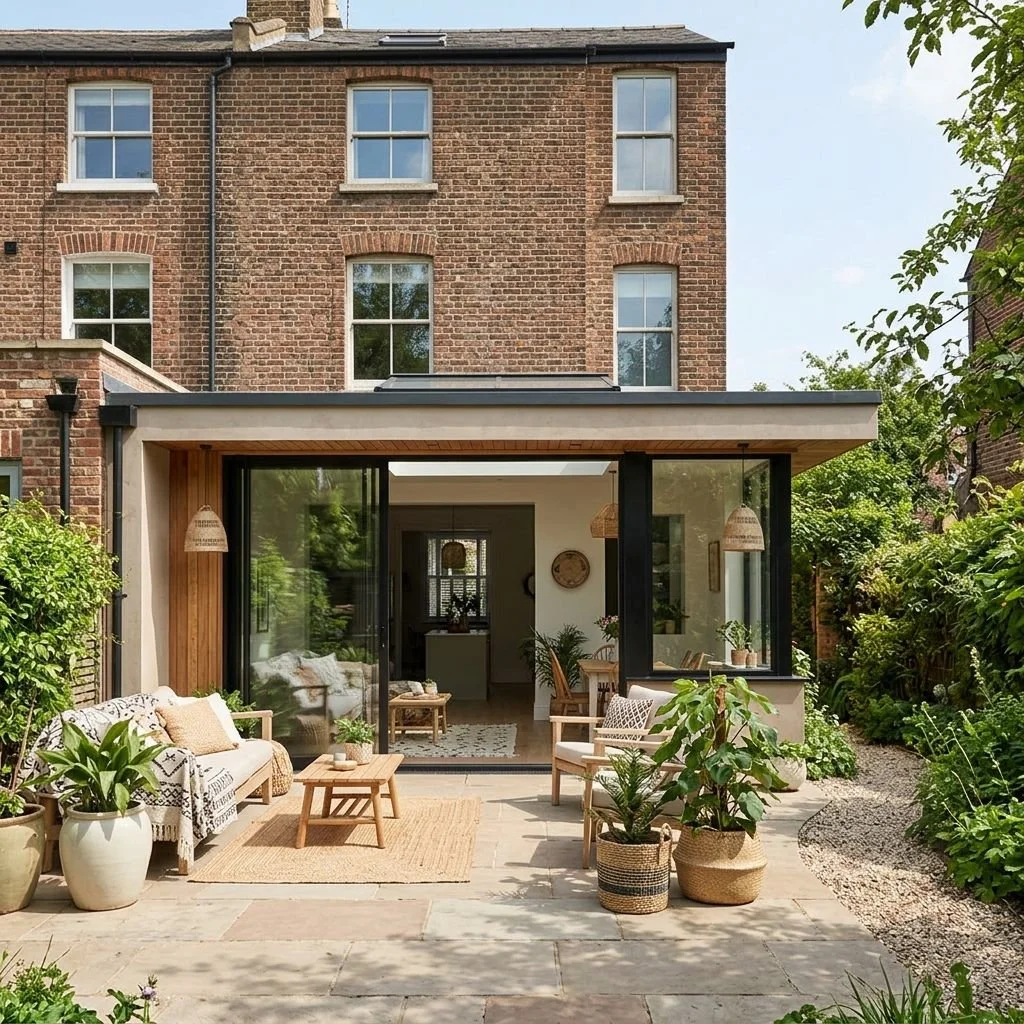
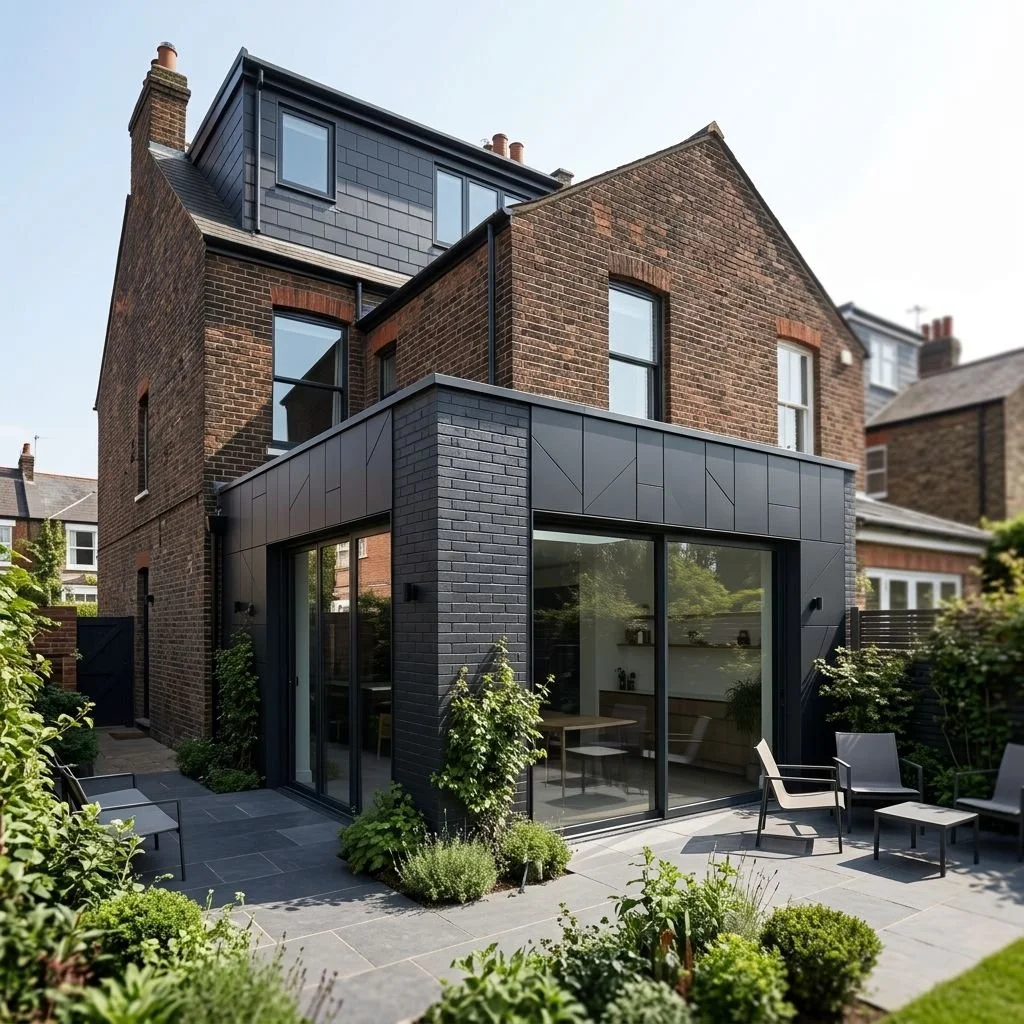
Open-Plan Kitchen and Dining Areas
Open-plan layouts remain popular because they allow cooking, dining and social interaction to happen within a connected space.
However, open-plan does not have to mean one completely undifferentiated room.
Subtle zoning can separate different functions using:
Furniture arrangement
Kitchen islands
Changes in ceiling height
Lighting
Flooring
Joinery
Partial walls or glazed screens
This can create a space that feels open while remaining practical and comfortable.
Zoning Within an Open-Plan Space
A large kitchen extension can accommodate several activities without requiring separate rooms.
For example:
Cooking zone → dining zone → family/social zone → garden
Good planning creates logical movement between each area while avoiding unnecessary circulation space.

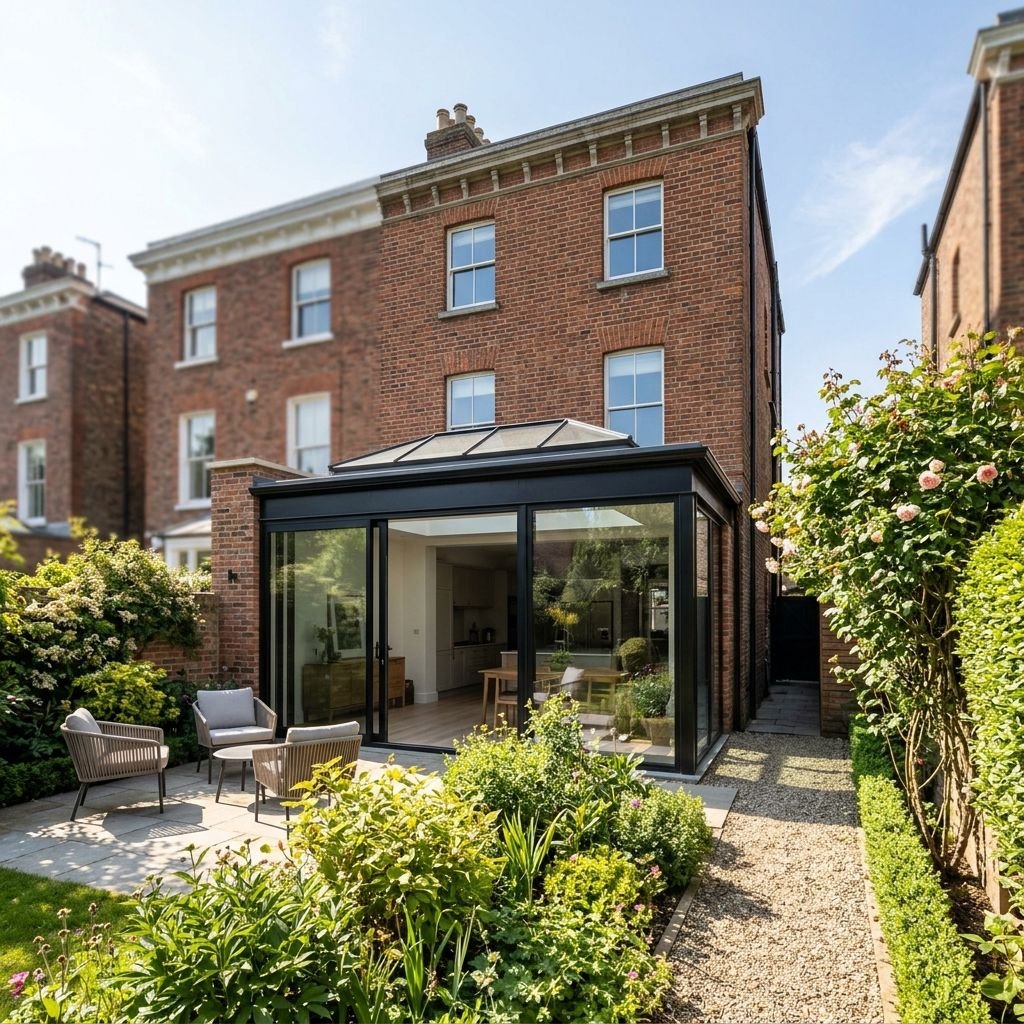
Kitchen Islands
A well-positioned island can become the central element of a kitchen extension.
Depending on its size and layout, it can provide:
Food preparation space
Storage
Seating
A breakfast area
A social focal point
Sufficient circulation space around the island is essential. An oversized island can actually make a kitchen less comfortable to use.
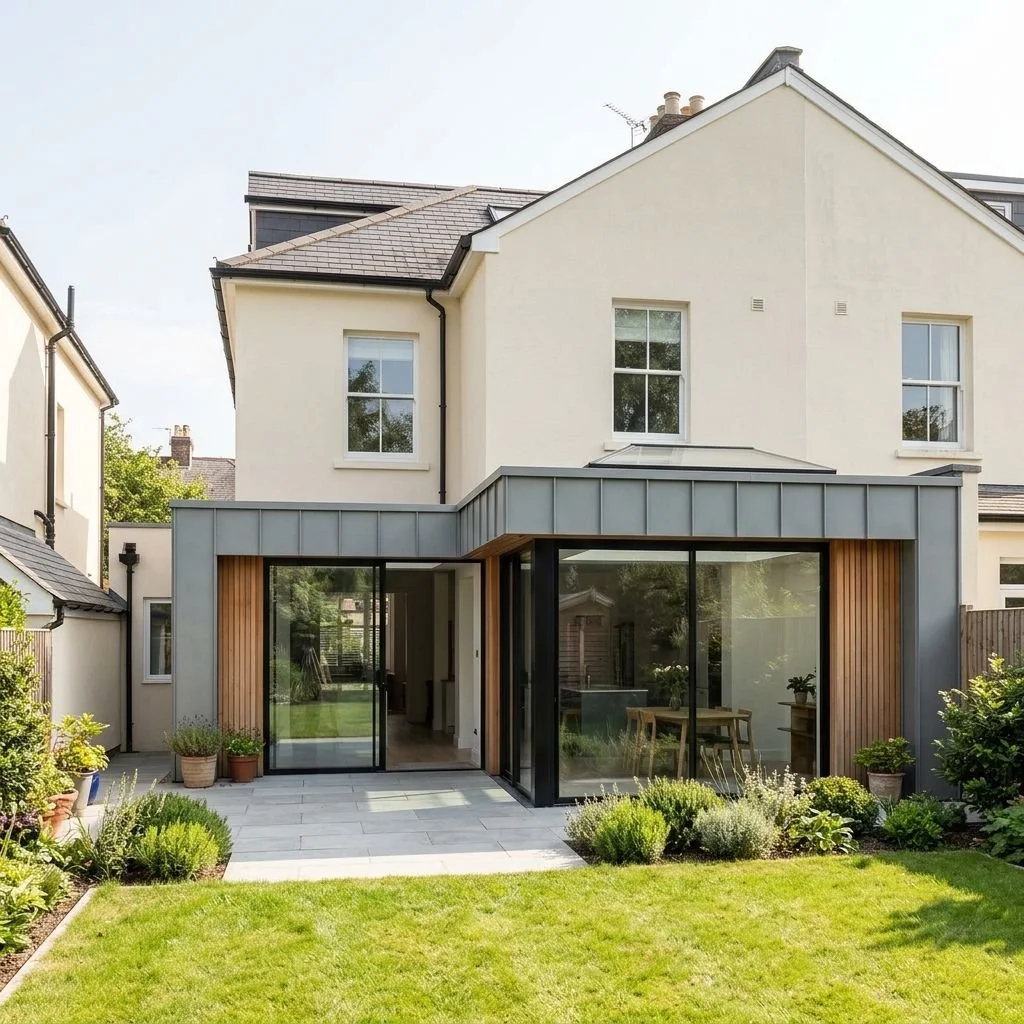
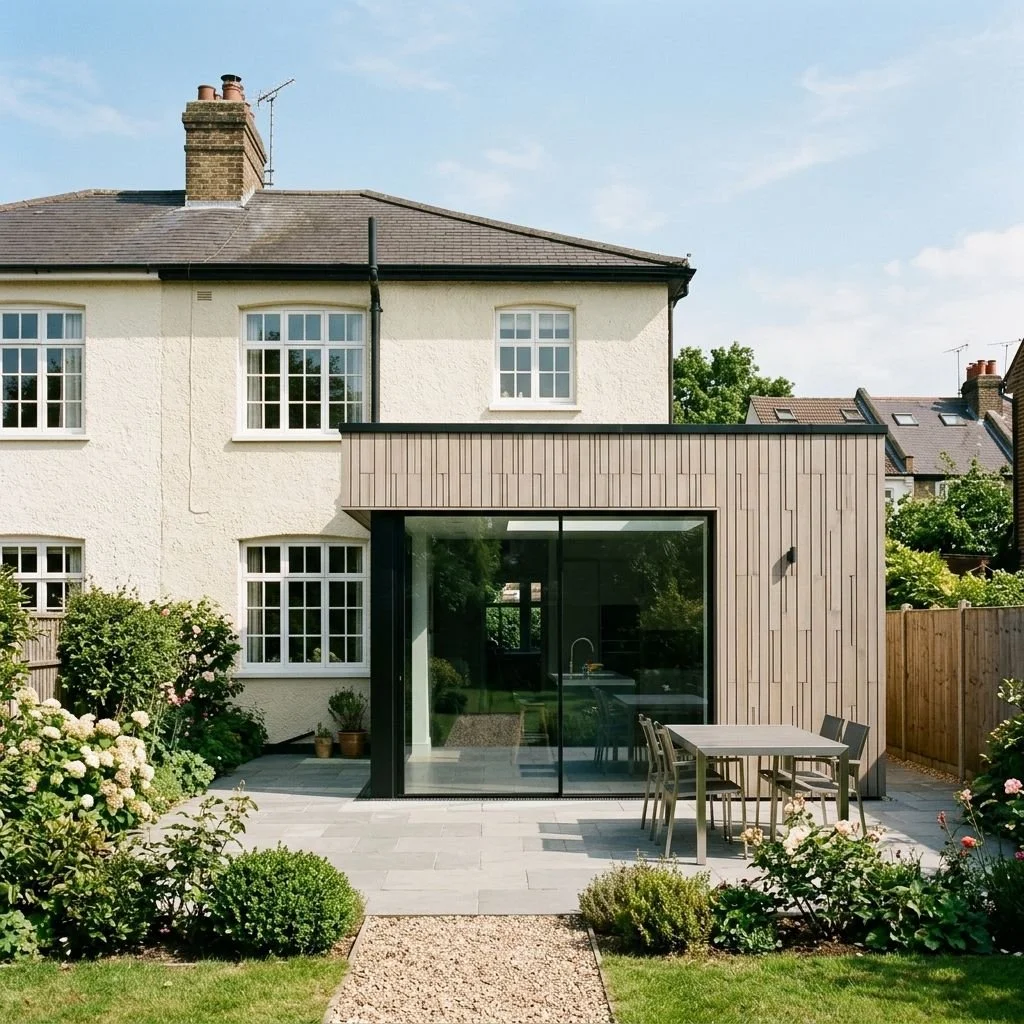
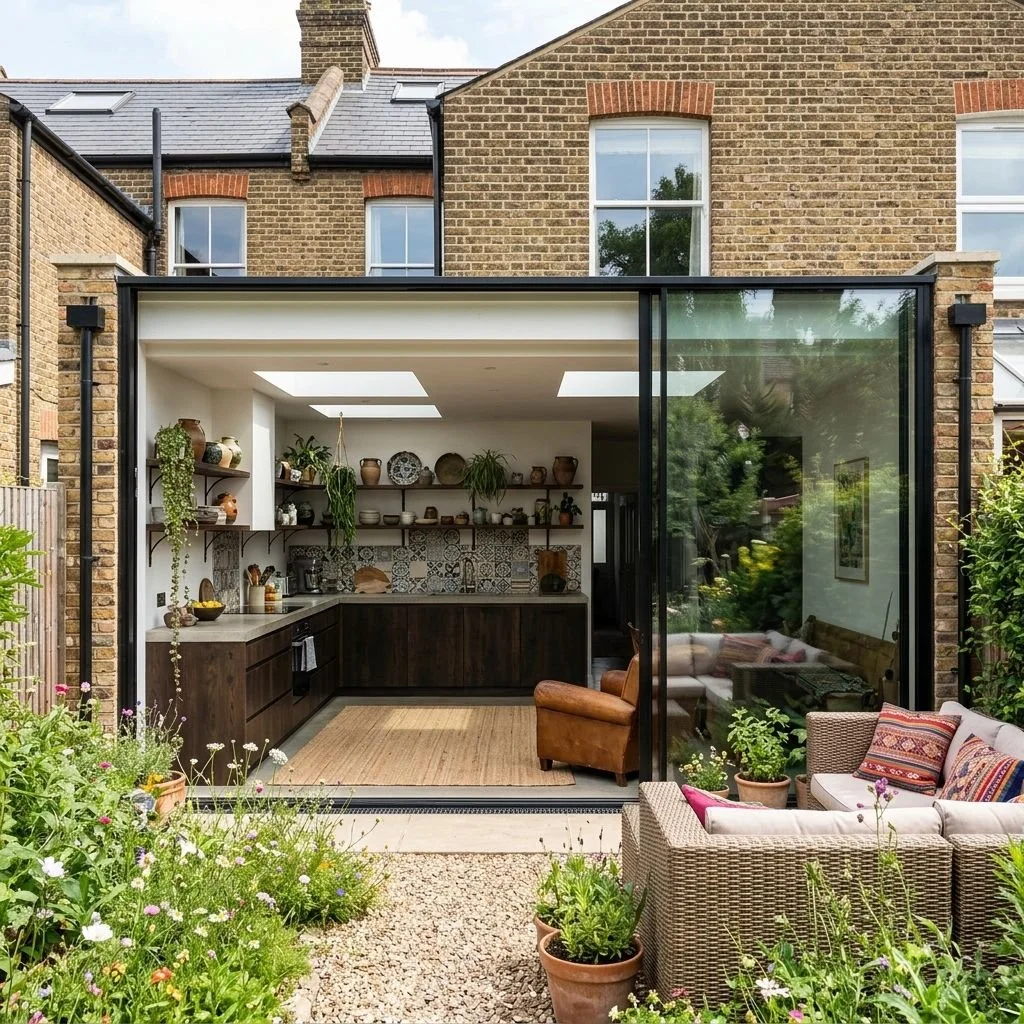
Full-Width Glazing
Large glazed doors at the rear of an extension can substantially improve the relationship between the kitchen and garden.
Sliding doors, bi-fold doors and other large-format glazing systems can provide:
More daylight
Garden views
Easier outdoor access
A stronger visual connection with landscaping
Glazing should nevertheless be designed with thermal performance and summer overheating in mind.
Rooflights and Roof Lanterns
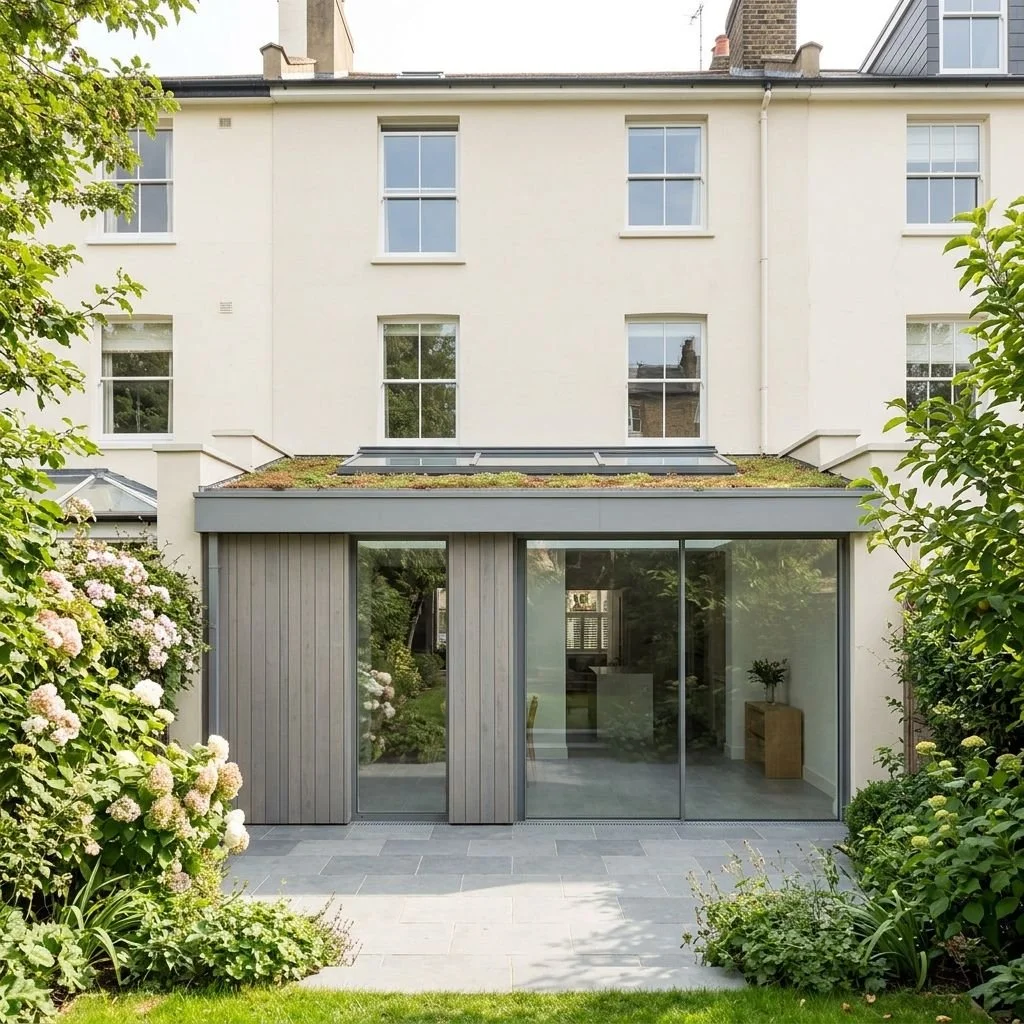
Roof glazing can be particularly useful where an extension creates a deeper floor plan and daylight from the rear doors cannot reach the centre of the room.
Options include:
Linear rooflights
Roof lanterns
Multiple smaller rooflights
Clerestory glazing
The position of roof glazing should be considered alongside the kitchen layout, lighting strategy and solar exposure.

How to Maximise Natural Light
Natural light is one of the biggest advantages of extending a Richmond home, particularly where the original ground floor is dark or enclosed.
A combination of strategies can be used:
Large rear glazing
Rooflights
Roof lanterns
Clerestory windows
Internal glazed screens
Light-coloured surfaces
Carefully positioned openings between existing and new spaces
The aim should be balanced daylight, rather than simply installing the largest possible area of glass.
The orientation of the property, neighbouring buildings, trees and surrounding structures should ideally be considered when deciding where and how daylight should enter the extension.
Preventing Overheating in a Kitchen Extension
Large areas of south- or west-facing glazing can introduce significant solar gain during warmer months.
This can create uncomfortable internal temperatures if overheating is not considered during design.
Possible strategies include:
Solar-control glazing
External shading
Roof overhangs
Pergolas or brise soleil
Carefully proportioned glazing
Openable rooflights
Cross-ventilation
Night-time ventilation
Appropriate thermal mass
Overheating should be considered at the early design stage rather than treated as an issue after construction.
Kitchen Layout and Ergonomics
Good kitchen design is about more than fitting appliances into the available area.
The relationship between the principal work areas should be considered carefully.
These commonly include:
Refrigerator
Sink
Hob
Preparation surfaces
Oven
Storage
Dishwasher
The traditional kitchen work triangle can be useful, but contemporary kitchens often work better when designed around activity zones.
For example: Food preparation, Cooking, Cleaning, Storage, Breakfast/seating, Dining.
Clear circulation is equally important, particularly around islands and between the kitchen and garden.
Connecting the Kitchen to the Garden
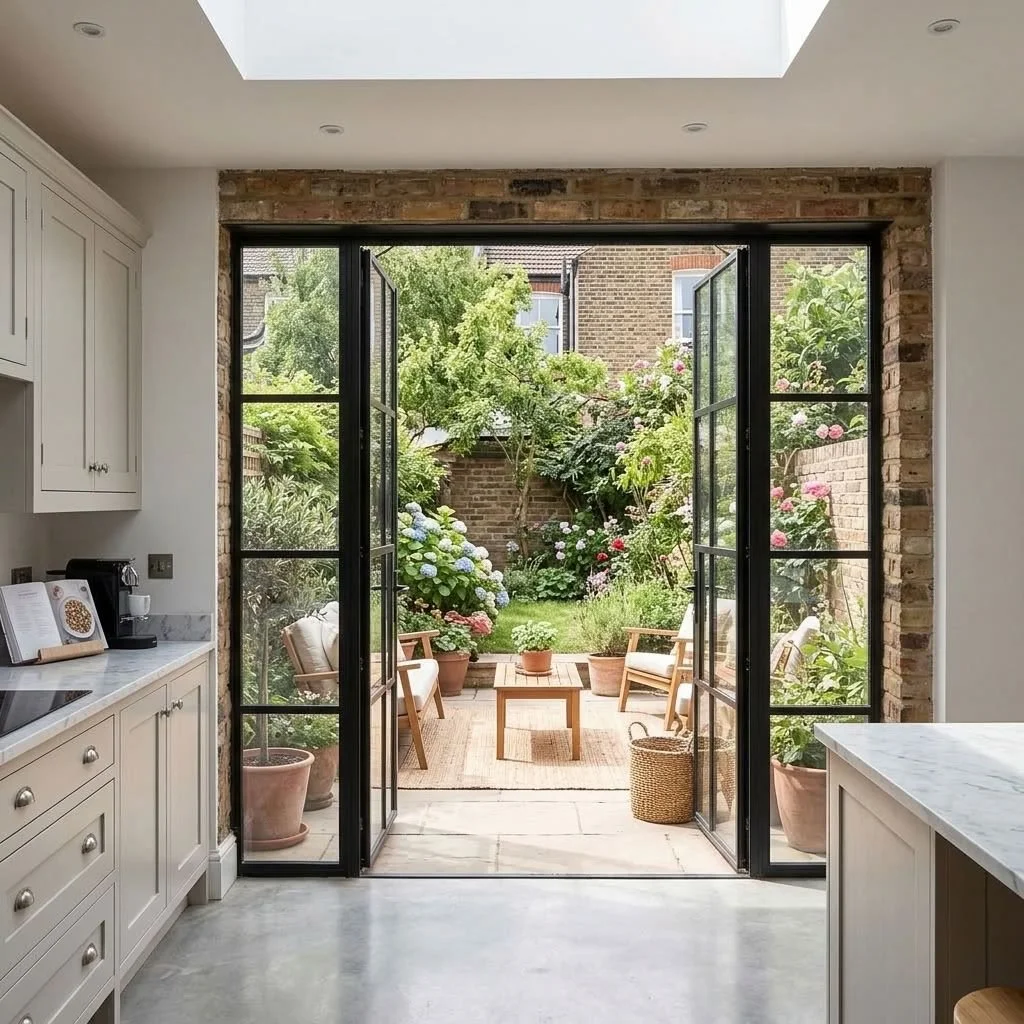
One of the defining characteristics of many successful Richmond extensions is a strong relationship between the kitchen and the garden.
This can be enhanced through:
Large glazed doors
Flush or carefully detailed thresholds
Consistent or complementary floor finishes
Coordinated landscaping
Garden views from the kitchen island
Outdoor dining areas positioned close to the kitchen
The objective is to create a seamless connection between the kitchen and garden, making the outdoor space feel like a natural continuation of the home rather than a separate area beyond it.
Planning Permission for Kitchen Extensions in Richmond
Planning requirements vary from property to property.
Some extensions may benefit from Permitted Development rights, while others require a planning application.
Whether a project can proceed without planning permission depends on factors including:
Extension dimensions
Height
Position on the property
Existing extensions
Boundary relationships
Property type
Design
Materials
Planning history
Whether the property is listed
Whether the property is within a conservation area or another area subject to additional controls
For this reason, before starting any work we establish with homeowners their planning position before committing to detailed design or construction.
An initial planning assessment can help identify potential constraints and establish which route may be appropriate for the proposed project.
Conservation Areas in Richmond
Richmond contains a number of conservation areas and historically sensitive neighbourhoods.
Where additional planning controls apply, the design may need to respond carefully to:
Existing architectural character
Roof forms
Building proportions
Materials
Boundary treatments
Views from public areas
Relationship with neighbouring properties
A contemporary extension can still work successfully beside a period property, but its scale, proportions, detailing and relationship to the original building need to be carefully considered.
Listed Buildings
If a property is listed, additional restrictions and approvals may apply.
A listed building should therefore be assessed at the feasibility stage before assumptions are made about what can be altered or extended.
The requirements can vary depending on the listing and the proposed works, so specialist advice may be appropriate where alterations could affect the significance or character of the building.
Permitted Development vs Planning Permission
Permitted Development is not the same as having unrestricted permission to extend.
An extension under Permitted Development still needs to satisfy the applicable rules and limitations.
Depending on the project, these can relate to:
Size
Height
Location
Roof design
Boundary relationships
Materials
Existing extensions
A project that falls outside the relevant rights may require planning permission.
An early planning assessment can therefore identify potential constraints before significant design fees or construction costs are committed.
Building Regulations for Kitchen Extensions
Planning permission and Building Regulations are separate matters.
Even where an extension does not require planning permission, the construction will generally still need to comply with applicable Building Regulations.
These requirements can cover areas including:
Structural stability
Fire safety
Thermal performance
Insulation
Ventilation
Drainage
Electrical and other building services
Energy efficiency
Technical drawings and structural information are normally required to demonstrate how the proposed construction will comply.
Party Wall Requirements
Party Wall matters are particularly relevant to terraced and semi-detached properties.
Depending on the proposed works and their relationship to adjoining properties, the Party Wall etc. Act 1996 may apply.
Potential works covered by the Act can include certain building work on or near a boundary and excavation close to neighbouring buildings.
Where the Act applies, the correct notices and procedures need to be followed before the relevant work begins.
A Party Wall surveyor may be appointed where required.
This should be considered early because Party Wall procedures can affect the project programme.
Structural Design for Kitchen Extensions
Creating a large open-plan kitchen frequently involves structural alterations to the existing building.
Depending on the property, the project may require:
Steel beams
New structural openings
Alterations to load-bearing walls
New foundations
Drainage alterations
Structural calculations
Temporary works during construction
A structural engineer should be involved where required to ensure the existing and proposed structures work safely together.
Structure can also influence the architectural design. For example, the position and depth of a steel beam can affect ceiling levels, roof design and the visual character of the new space.
Ventilation and Indoor Air Quality
Kitchen extensions need an effective ventilation strategy.
Cooking produces moisture, heat and airborne pollutants, while modern construction can create more airtight buildings.
A suitable design may incorporate:
Mechanical kitchen extraction
Background ventilation
Openable windows or rooflights
Cross-ventilation
Appropriate mechanical ventilation systems
Ventilation should be coordinated with the architectural and mechanical design rather than added as an afterthought. The location of the extractor, duct routes, external terminals and relationship with neighbouring properties should be considered.
Energy Efficiency and Sustainable Design
A kitchen extension provides an opportunity to improve the thermal performance of the home.
Potential measures include:
High-performance insulation
Energy-efficient glazing
Improved airtightness
Thermal-bridge reduction
Efficient heating systems
LED lighting
Zoned heating controls
Durable materials
Passive solar design
Natural ventilation
The appropriate specification depends on the existing property, budget and overall energy strategy.
Underfloor Heating
Underfloor heating can be particularly suitable for open-plan kitchen extensions.
Potential advantages include:
Even heat distribution
Greater freedom in furniture placement
Compatibility with many tile and stone floor finishes
Low-temperature operation
Compatibility with some heat-pump systems
However, the appropriate heating system should be selected based on the building's overall heat-loss calculations rather than assuming one solution is suitable for every property.
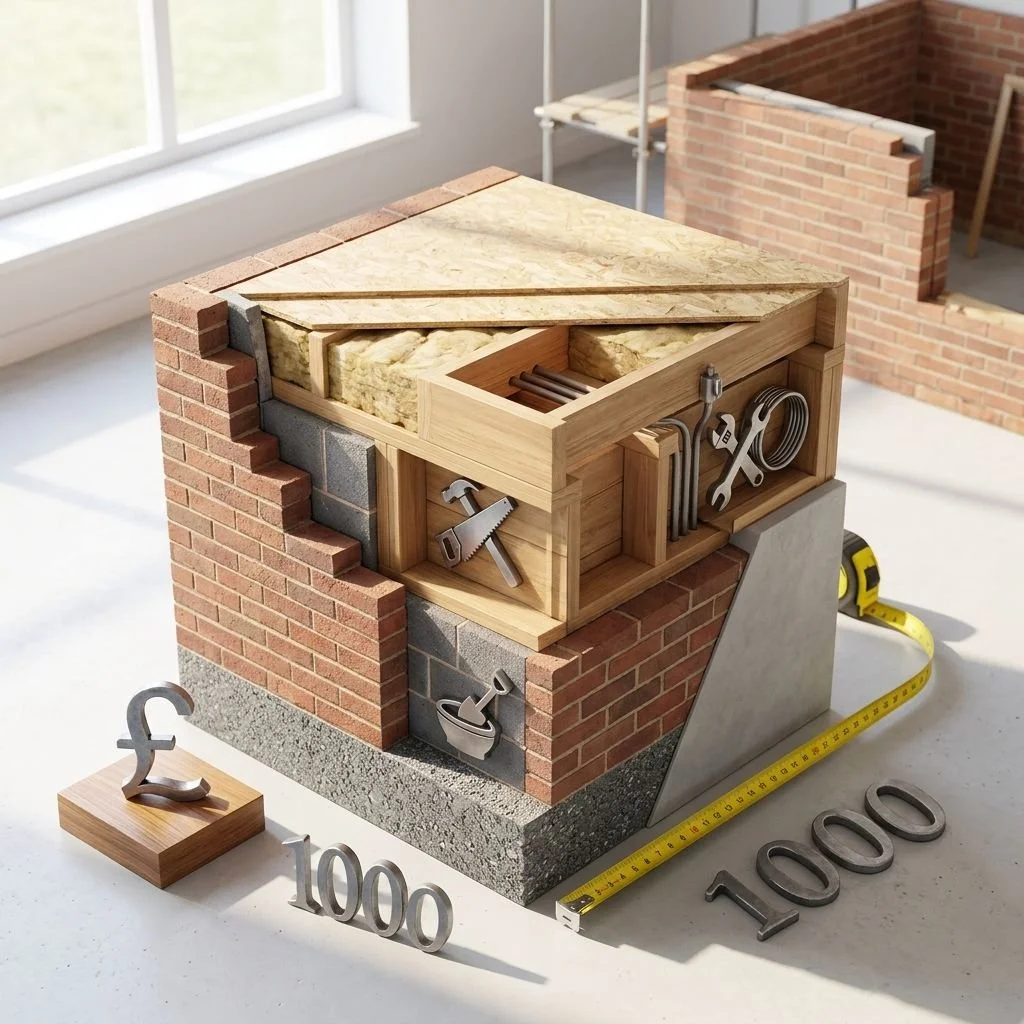
Kitchen Extension Costs in Richmond in 2026
There is no single fixed price for a kitchen extension in Richmond.
The final cost can vary considerably depending on the size of the project, structural work, access, specification, glazing, kitchen, finishes, professional fees and site conditions.
Indicative figures from the two original articles range from approximately:
Small kitchen extensions: £60,000–£100,000+
Medium extensions: £100,000–£180,000+
Large extensions: £180,000–£300,000+
Double-storey extensions: £200,000–£400,000+
Another way of considering cost is by approximate construction cost per square metre:
Standard specification: around £2,800–£4,500/m²
Mid-range specification: around £4,500–£6,500/m²
High-specification projects: around £6,500–£8,500+/m²
These figures should be treated as indicative rather than quotations. Actual construction prices can vary substantially depending on the project and market conditions.
Professional fees, statutory costs, kitchen and appliance costs, landscaping and other project expenses usually sit outside a construction cost-per-square-metre figure.
For this reason, a realistic project budget should be established before the design becomes too advanced.
What Increases the Cost of a Kitchen Extension?
Important cost drivers include:
Extension size
Structural complexity
Ground conditions
Drainage
Site access
Steelwork
Foundations
Large-format glazing
Roof design
Kitchen cabinetry
Appliances
Flooring
Joinery
Bathroom or utility additions
Conservation requirements
Professional fees
Contractor specification
External landscaping
The kitchen itself can also represent a substantial proportion of the overall project budget, particularly where bespoke cabinetry, stone worktops and premium appliances are specified.
How to Control a Kitchen Extension Budget
A controlled budget does not necessarily mean compromising on architectural quality.
Costs can often be managed through early decisions such as:
Keeping the structural arrangement relatively simple
Avoiding unnecessary changes to existing drainage
Choosing glazing systems appropriate to the design rather than automatically selecting the most expensive option
Retaining useful existing elements
Selecting durable mid-range materials
Prioritising expenditure on features with the greatest functional impact
Planning kitchen and joinery requirements early
Allowing an appropriate contingency
The earlier these decisions are made, the easier it is to manage the overall project.
How Long Does a Kitchen Extension Take in Richmond?
A typical kitchen extension can take approximately 6–12 months from initial design through to completion, although projects vary considerably.
A simplified programme might include:
Initial feasibility and briefing
Approximately 1–3 weeks depending on the project.
Concept and design development
Approximately 4–9 weeks.
Planning
Where planning permission is required, the statutory determination period and the complexity of the application can affect the programme.
Technical design
Approximately 4–8 weeks, depending on the level of detail and coordination required.
Construction
Approximately 12–24 weeks for many single-storey projects, although complex projects can take longer.
The total programme can increase where there are planning complications, Party Wall matters, structural issues, specialist materials or difficult site conditions.
The Kitchen Extension Design Process
A structured design process can reduce risk, clarify costs and help homeowners make informed decisions before construction begins.
01 Initial Consultation
The first stage is about understanding your property, priorities and aspirations for the project.
- Your objectives
- Budget
- Property requirements
- Lifestyle needs
- Potential constraints
- Desired timescale
02 Feasibility Assessment
The property is assessed to establish what may be achievable and to identify potential planning, structural and site constraints.
- Planning constraints
- Conservation considerations
- Existing structure
- Site dimensions
- Access
- Potential extension size
- Initial budget
03 Concept Design
Once the opportunities and constraints are understood, different layout and design options can be explored and refined.
- Kitchen layouts
- Extension proportions
- Roof forms
- Glazing
- Garden relationship
- Storage
- Dining and family zones
04 Planning
Where required, planning drawings and supporting documents are prepared and submitted to the relevant local authority.
05 Building Regulations & Technical Design
When both combined together the design is developed into coordinated construction information, incorporating the technical requirements needed to take the project forward.
- Structural engineering
- Building Regulations
- Construction details
- Insulation
- Drainage
- Services
- Materials and specifications
06 Tendering & Contractor Selection
Depending on the service provided, suitable contractors can be approached and project costs assessed against the developed design and specification.
07 Construction
During construction, design coordination and appropriate project support can help ensure the finished extension reflects the approved design and agreed specification.
Want to understand how the process could work for your property?
Our Design Process ExplainedCommon Kitchen Extension Mistakes
Kitchen extensions involve a range of design, planning and construction considerations. Several common mistakes can lead to unnecessary costs, compromises or difficulties during the build.
Underestimating the Overall Budget
Construction costs are only one part of the overall budget. Professional fees, kitchen and appliance costs, structural engineering, planning, Party Wall matters, drainage, landscaping and other associated expenses should all be considered from the outset.
Designing Before Understanding the Property
An attractive initial concept may not prove practical once the property's structure, planning constraints, drainage, neighbouring buildings and site conditions are properly understood. A thorough assessment of the existing property should inform the design from the beginning.
Prioritising Floor Area Over Layout
Adding more square metres does not necessarily create a better kitchen. The quality of the layout can be more important than the overall footprint, with circulation, storage, daylight, furniture placement and connections to the garden all requiring careful consideration.
Ignoring Overheating
Large areas of glazing can provide excellent daylight and a strong connection to the garden, but they can also result in excessive heat gain during warmer months. Solar control, shading and ventilation should be considered as part of the design rather than added later.
Treating Ventilation as an Afterthought
Kitchen extraction and general ventilation need to be properly integrated into the design. Their location, duct routes, external terminals and relationship with the structure should be considered at an early stage.
Failing to Consider Neighbouring Properties
The relationship with neighbouring properties can have a significant influence on an extension. Boundaries, Party Wall matters, overlooking, privacy, access and construction logistics should all be considered before the design is finalised.
Leaving Technical Design Too Late
Structural design, drainage, insulation, junctions and construction details need to be coordinated before work begins. Resolving these issues early can help reduce changes, delays and unexpected costs during construction.
Why Early Architectural Advice Matters
Working with an architectural designer from an early stage can help identify potential issues before they become problems. A coordinated approach to design, planning and technical considerations can provide greater clarity before construction begins. Discuss your kitchen extension with us →
How Can a Kitchen Extension Add Value to a Richmond Property?
A well-designed extension can improve a property's usability and market appeal by creating more functional and versatile space.
Potential benefits include:
A more desirable kitchen-dining arrangement
Better ground-floor circulation
Improved natural light
A stronger connection to the garden
Modern energy-performance improvements
Increased storage
More flexible accommodation for families
However, the financial return varies depending on the property, location, specification and wider market conditions. An extension should therefore be designed around long-term usability, quality and suitability, rather than assuming that every pound spent will translate directly into an equivalent increase in property value.
Can You Stay in Your Home During Construction?
It is common for residents to remain in their property while construction works are underway.
However, whether this is practical depends on the scale of the works and how much of the existing property is affected.
For a substantial kitchen extension, the temporary loss of the kitchen, heating, water services or access can make remaining at home difficult.
Homeowners should discuss this with the contractor before construction begins and establish:
Temporary kitchen arrangements
Access routes
Security
Dust and noise management
Temporary services
Construction programme
Kitchen Extensions Across Richmond and South West London
Kitchen extension projects are commonly undertaken across Richmond and surrounding South West London locations, including:
Richmond Hill
Richmond town centre
Kew
East Sheen
Barnes
Petersham
Mortlake
Twickenham
Ham
North Sheen
Teddington
Hampton
Projects are also undertaken in nearby areas of south-west London including Kingston upon Thames, Fulham, Wandsworth, Surbiton and Wimbledon.
Each location contains a different mix of property types, conservation areas, site conditions and planning considerations. A site-specific assessment is therefore important before establishing what can be achieved.
Why Architectural Design Matters
A kitchen extension is more than a construction project. It changes how the entire ground floor works.
Good design should coordinate:
Architecture
Planning
Structure
Kitchen layout
Natural light
Artificial lighting
Ventilation
Thermal performance
Materials
Garden connection
Budget
For Richmond homes in particular, the relationship between the original building and the new extension can be an important part of the design.
The new addition does not necessarily need to imitate the existing property. It should, however, in order to obtain planning permission more easily respond thoughtfully to the building, its proportions, materials, context and surroundings.
A successful project should feel intentional rather than simply appended to the back of the house.

Planning a project of your own?
Explore how we approach residential architecture, what our services involve and how we help clients make informed decisions from the outset.
Artist of Architecture
Our approach, services and fees.
Kitchen Extension Design in Richmond, Chiswick, Kingston, Wimbledon and surrounding areas.
Artist of Architecture specialises in bespoke residential architecture, including kitchen extensions, kitchen additions, house extensions, rear kitchen extensions, kitchen conversions and interior design across Richmond upon Thames, Richmond, Twickenham, Barnes, Hampton, Kingston upon Thames, Wimbledon, Wandsworth and surrounding areas.
As an author-led architecture practice, Artist of Architecture works closely with clients to develop beautiful architecture, tailored design that respond to the character of each property, as well as the client's lifestyle, budget and long-term requirements.
Whether you are considering a side-return extension in Richmond, a rear kitchen extension, a wraparound extension or a wider ground-floor transformation, early design advice can help establish what is realistically achievable before significant costs are committed.
From the initial kitchen extension ideas and design development through obtaining kitchen extension planning permission to kitchen construction, we focus on creating well-considered spaces around your needs while complementing the existing character of your home.
Kitchen Extensions Richmond FAQs
How much does a kitchen extension cost in Richmond in 2026?
Indicative costs can range from approximately £60,000 for a smaller project to £300,000 or more for larger, highly specified extensions. Double-storey projects can exceed £400,000. The actual cost depends on size, structure, glazing, specification, kitchen, site conditions and professional requirements.
Do I need planning permission for a kitchen extension in Richmond?
Not necessarily. Some extensions may qualify for Permitted Development rights, while others require planning permission. The answer depends on the property's location, dimensions, planning history, design and other factors. Conservation-area and listed-building restrictions may also apply.
What is the most popular type of kitchen extension in Richmond?
Rear and side return extensions are both common. Side returns can be particularly effective for Victorian and Edwardian terraces because they use previously underutilised side space, while rear extensions can provide more substantial additional floor area.
What is a side return extension?
A side return extension uses the narrow strip of land alongside a property to widen the existing ground floor. It can create a larger kitchen while limiting the amount of garden lost to the extension.
What is a rear kitchen extension?
A rear kitchen extension projects from the back of the house into the garden. It is commonly used to create larger kitchen-dining spaces with substantial glazing and improved garden access.
What is a wraparound extension?
A wraparound extension combines a rear extension with a side return, creating an L-shaped addition. It can significantly increase ground-floor space and provide greater flexibility for kitchen, dining and family areas.
Do kitchen extensions require Building Regulations approval?
Planning permission and Building Regulations are separate. An extension must comply with applicable Building Regulations requirements even where planning permission is not required.
Do I need a Party Wall Agreement?
Potentially. The Party Wall etc. Act 1996 can apply to certain works affecting shared walls, boundaries or nearby foundations. The exact requirements depend on the proposed work and property.
How long does a kitchen extension take?
Many projects take approximately 6–12 months from initial design to completion. The actual programme depends on planning, technical design, Party Wall procedures, procurement and construction complexity.
What is the best layout for a kitchen extension?
The best layout depends on the property and household. Effective designs generally provide logical zones for cooking, preparation, cleaning, storage and dining while maintaining comfortable circulation.
How can I make my kitchen extension brighter?
Large rear glazing, rooflights, roof lanterns, clerestory windows and carefully positioned internal openings can increase daylight. The design should aim for balanced light rather than simply maximising glazing.
How do I prevent overheating?
Solar-control glazing, external shading, carefully designed glazing ratios, cross-ventilation, openable rooflights and appropriate thermal design can all help reduce overheating risk.
Is underfloor heating suitable for kitchen extensions?
It can be. Underfloor heating provides an even heat distribution and can work well with tile, stone and other suitable floor finishes. Its suitability should be considered as part of the home's overall heating strategy.
Are kitchen extensions suitable for Victorian and Edwardian homes?
Yes. They can be particularly effective because they can address narrow rear kitchens, segmented layouts and poor connections with gardens. The design should nevertheless respond appropriately to the original property's character.
What increases the cost of a kitchen extension?
Major cost drivers include structural alterations, foundations, drainage, difficult access, large-format glazing, high-end kitchens and joinery, specialist materials, conservation requirements and complex construction.
Can a kitchen extension include a utility room?
Yes. Utility rooms can be incorporated into the extension or wider ground-floor redesign. Separating laundry and service functions from the main kitchen can help keep an open-plan space organised.
What flooring works well in a kitchen extension?
Common choices include porcelain tiles, natural stone, engineered timber and other durable flooring systems. Compatibility with underfloor heating, maintenance requirements and the overall interior design should be considered.
Can I extend my kitchen without moving house?
Yes. A kitchen extension can allow homeowners to improve their existing property rather than relocating. Whether extending is financially preferable depends on the individual property, project budget and alternative housing options.
Do I need an architectural designer for a kitchen extension?
The level of professional input required varies by project. An architectural practice can help with feasibility, spatial planning, planning applications, technical design and coordination with structural engineers and contractors.
Planning a Kitchen Extension in Richmond?
The first step is to understand the opportunities and constraints of your property.
An initial consultation can help you explore:
Whether your proposed extension is likely to require planning permission
How much additional space may be achievable
Potential structural considerations
Kitchen and ground-floor layout options
Natural-light opportunities
Energy-efficiency strategies
Indicative budget considerations
The likely design and construction process
Contact Artist of Architecture to discuss your Richmond kitchen extension and arrange an initial consultation.
About this page
Prepared by Vladis, Director at Artist of Architecture. Responsible for residential design, planning strategy and project delivery across extension, loft conversion and new-build schemes. Over 10 years’ experience preparing planning applications, permitted development submissions and building regulations packages with local planning authorities.
Last updated: 2026
Disclaimer: The information on this website is provided for general informational purposes only and does not constitute legal, planning, architectural, or professional advice. Planning requirements, costs, and timescales can vary depending on the property, project, and site-specific circumstances. While every effort has been made to ensure accuracy, no guarantee is given that the information is complete, current, or applicable to your situation. For advice specific to your property and project, please contact Artist of Architecture directly.
Related resources
Continue exploring:
Richmond
Twickenham
Teddington
Hampton
Barnes